Clear Sky Science · en
An innovative chitosan-coated aquatic feed pellets production from coastal waste using top-spray fluidized bed drying
Turning Coastal Leftovers into Valuable Feed
Along many coastlines, mountains of shrimp shells, crab shells, and seaweed pile up as waste from seafood processing. This study shows how those leftovers can be transformed into high‑quality feed pellets for farmed fish and shrimp. By cleverly drying and coating the pellets, the researchers not only recycle nutrient‑rich waste, but also make more durable feed that stores well, wastes less, and could help make aquaculture more sustainable and affordable.
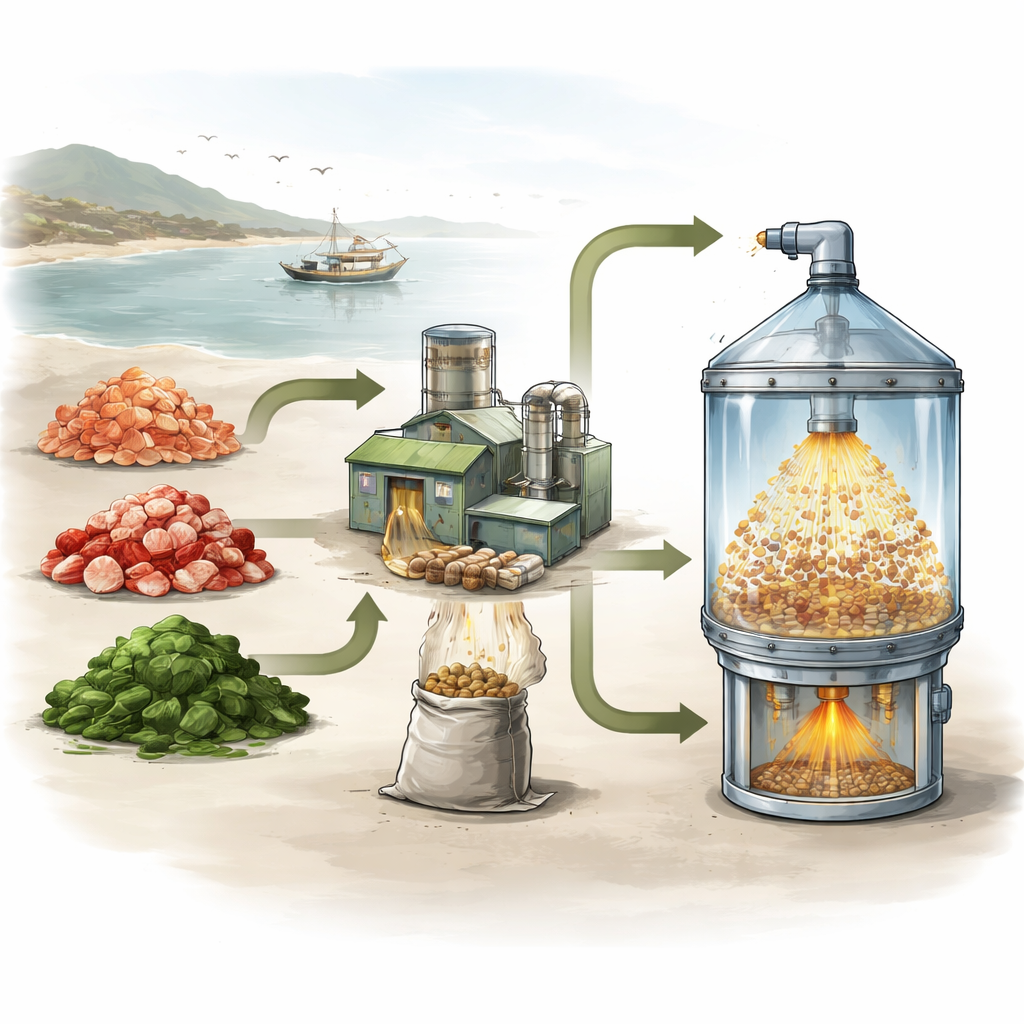
From Shells and Seaweed to Tiny Fish Meals
The team began by grinding three kinds of coastal waste—shrimp shells, crab shells, and spirulina seaweed—and mixing them into three different pellet recipes. Spirulina supplied concentrated protein and healthy fats, while the shells added extra protein and useful minerals. The goal was to replace much of the traditional fish meal normally used in aquafeeds, cutting costs and pressure on wild fish stocks. All recipes produced small cylindrical pellets with protein and fat levels suitable for healthy fish growth, and one recipe with more crab shell (called recipe A) offered the best overall nutritional balance.
Drying Pellets Faster and Using Less Energy
Freshly made pellets are wet and fragile, so they must be dried carefully. Instead of slow oven or tray drying, the researchers used a hybrid fluidized‑bed system assisted by a halogen lamp. In this setup, hot air blows upward to suspend the pellets like a gently boiling pot, while near‑infrared light helps warm them from within. By testing air temperatures from 70 to 110 °C, they found that higher temperatures removed water much more quickly without overheating the feed. At 110 °C, the pellets reached a safe low moisture level of under 12% in about 10 minutes—cutting drying time by almost six hours compared with traditional methods and lowering the energy used per kilogram of water removed.
Solving the “Crumbly Pellet” Problem
There was a catch: the fastest drying that saved energy also tended to make the pellets more brittle. Recipe A, though rich in nutrients, had a relatively low “pellet durability index,” meaning it broke apart more easily when handled or tumbled. Fragile pellets can crumble during transport or dissolve quickly in water, wasting feed and polluting fish tanks or ponds. To tackle this, the researchers added a second step: coating the dried pellets with a thin film of chitosan, a natural substance obtained from crab shells that is already known for its film‑forming and antimicrobial properties.
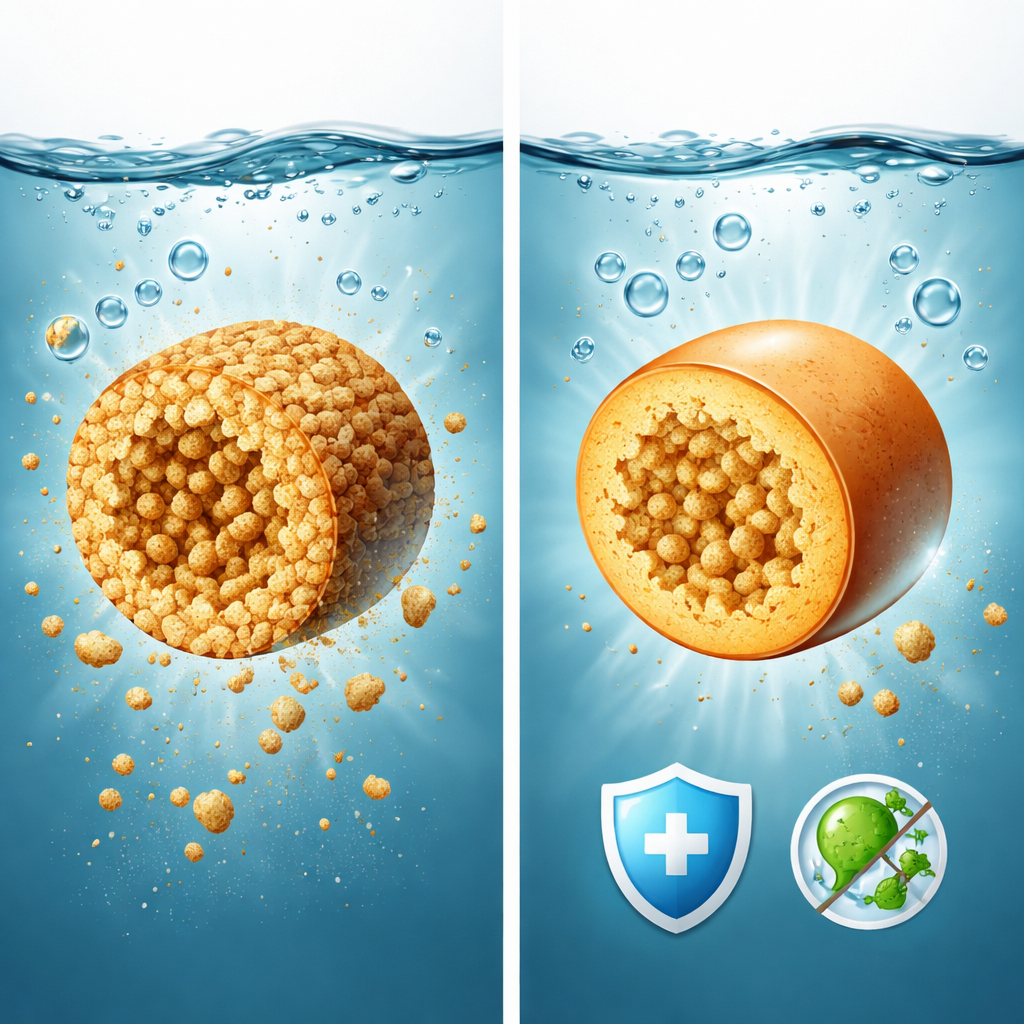
A Gentle Spray That Strengthens and Protects
The coating was applied in a top‑spray fluidized bed: air lifted the pellets while a fine mist of chitosan solution rained down from above and dried almost instantly. Using a statistical optimization method, the team tuned three key settings—the chitosan concentration, spray rate, and air temperature—to minimize both drying time and electrical energy use. The best combination used a modest chitosan level (about 0.7% by weight in the solution), a relatively low spray rate, and the highest air temperature tested (110 °C). Under these conditions, coating took just over eight minutes and consumed only about a third of a kilowatt‑hour per kilogram of pellets.
Smoother Pellets, Slower Dissolving, and Less Mold
Microscope images revealed that the chitosan formed a smooth, continuous shell around the pellets, sealing many of the pores seen in uncoated feed. This translated into practical gains: the durability index jumped by about 36 percentage points, easily surpassing common quality targets, while the fraction of pellet material that dissolved in water dropped by roughly a third. That means the feed holds together longer in ponds, giving fish more time to eat it and reducing nutrient loss to the water. Although there was some reduction in measured protein and fiber—likely because the mildly acidic coating solution and heat altered some proteins—the overall nutritional profile remained well within ranges known to support good fish growth. Importantly, coated pellets also inhibited the growth of Aspergillus mold in lab tests, suggesting better safety and shelf life in storage.
What This Means for Fish Farmers and the Coast
In everyday terms, this work outlines a way to turn smelly piles of seafood waste into sturdy, long‑lasting fish feed pellets using efficient drying and a thin, natural coating. The process saves energy, improves pellet strength, reduces how quickly feed falls apart in water, and offers extra protection against spoilage fungi. While the exact recipe and machine settings would need fine‑tuning for full‑scale factories and different types of coastal waste, the message is clear: with smart engineering, what once was thrown away along the shore can become a valuable ingredient in more sustainable aquaculture.
Citation: Maikaew, J., Srisang, N., Tambunlertchai, S. et al. An innovative chitosan-coated aquatic feed pellets production from coastal waste using top-spray fluidized bed drying. Sci Rep 16, 5166 (2026). https://doi.org/10.1038/s41598-026-35937-0
Keywords: aquafeed, coastal waste, chitosan coating, fish farming, sustainable aquaculture