Clear Sky Science · en
Urine bis(Monoacylglycerol)Phosphate and risk of freezing of gait in parkinson’s disease
Why a simple urine test could matter for walking
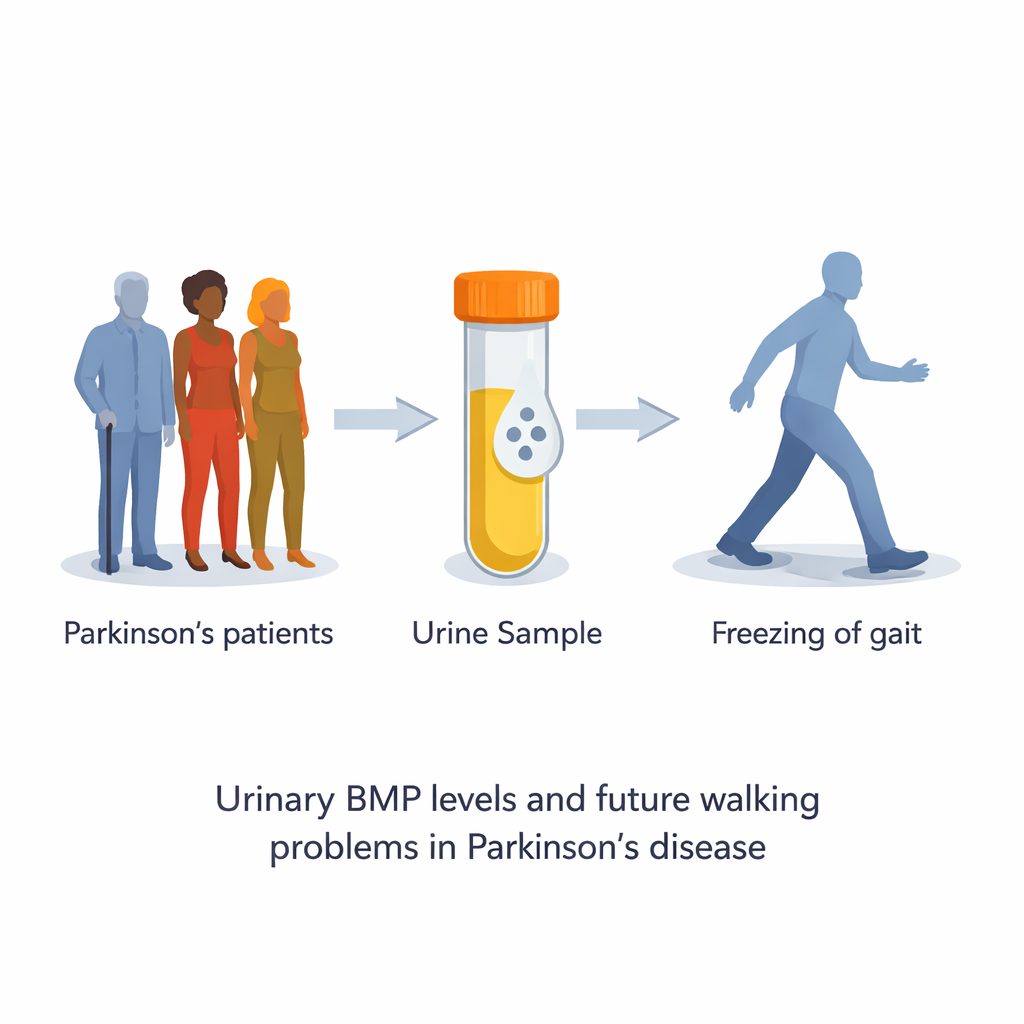
For many people with Parkinson’s disease, one of the most frightening symptoms is “freezing of gait” – sudden moments when the feet feel glued to the floor. These episodes can cause falls, injuries, and a loss of independence. This study explores whether a routine urine test, measuring a fatty molecule called BMP, could help doctors predict which newly diagnosed patients are most likely to develop freezing of gait in the years ahead.
A closer look at walking problems in Parkinson’s
Freezing of gait tends to appear as Parkinson’s disease progresses, affecting more than half of people with advanced illness. It is not just a simple movement problem: it is linked to changes in balance, thinking, and attention. Being able to forecast who is at higher risk early on could help patients plan their lives, guide closer monitoring, and eventually steer treatments aimed at preventing disabling walking problems before they start.
The role of a little-known molecule in urine
The researchers focused on a molecule called bis(monoacylglycerol) phosphate, or BMP, which lives inside tiny recycling compartments in our cells. Earlier work showed that people carrying certain changes in the GBA gene – already known to raise the risk of Parkinson’s disease – often have higher BMP levels in their urine. In this study, 354 people with early Parkinson’s disease, none of whom had freezing of gait at the start, provided urine samples so scientists could measure specific forms of BMP, especially one called 2,2′-di-22:6-BMP. Participants were then followed for up to five years to see who went on to develop freezing of gait.
Tracking who developed freezing of gait
Over the follow-up period, 147 of the 354 participants developed freezing of gait. When the researchers compared people who did and did not develop this symptom, they found that those who later froze had higher BMP levels in their urine at the beginning of the study and were more likely to carry GBA gene variants. Using standard time-to-event analyses, they showed that baseline levels of the 2,2′-di-22:6-BMP form remained a statistically significant predictor of future freezing of gait, even after accounting for age, motor symptom severity, thinking scores, brain scan results, and other known risk factors.
High BMP, gene changes, and rising risk
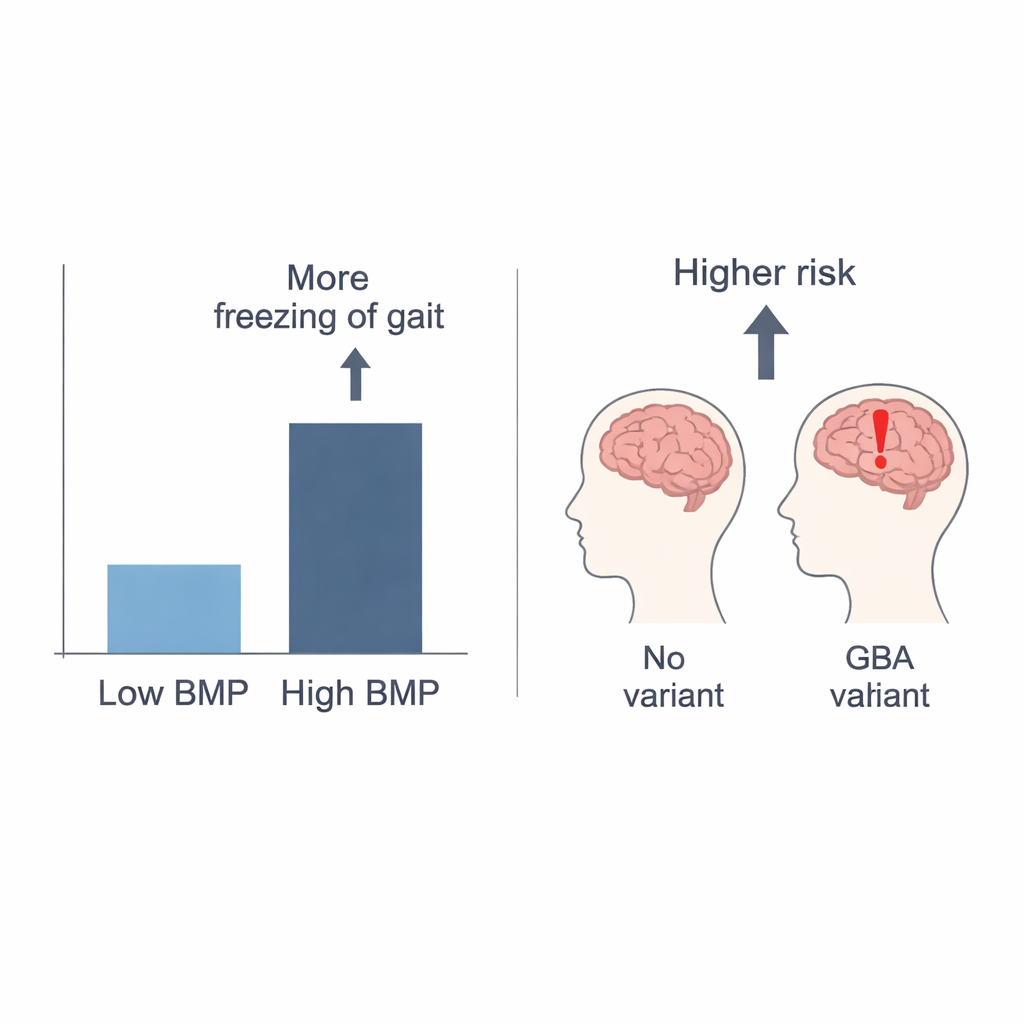
To better understand how BMP and the GBA gene work together, the team divided patients into “low BMP” and “high BMP” groups based on their urine test results. In the high-BMP group, those with GBA variants were much more likely to develop freezing of gait than those without these variants, and this link remained strong even after adjusting for other factors. In contrast, among people with low BMP levels, GBA variants did not clearly change the risk of freezing. This pattern suggests that BMP levels and GBA gene status each contribute their own piece to the overall risk picture, likely reflecting underlying problems in the brain’s waste-clearing and recycling systems.
What this could mean for patients and care
For people living with Parkinson’s disease, these findings hint that a simple, non-invasive urine test might someday help identify those at higher risk of troublesome walking freezes. Although the increase in risk linked to BMP levels is modest on its own, the test is easy to perform and could be combined with other measures—such as movement scores, cognitive tests, and brain imaging—to build more accurate prediction tools. The authors conclude that higher baseline levels of a specific BMP form in urine are associated with faster development of freezing of gait, and they call for more research to confirm these results and to uncover exactly how BMP is involved in the changes in the brain that lead to this disabling symptom.
Citation: Sang, S., Yang, N. Urine bis(Monoacylglycerol)Phosphate and risk of freezing of gait in parkinson’s disease. Sci Rep 16, 5049 (2026). https://doi.org/10.1038/s41598-026-35930-7
Keywords: Parkinson’s disease, freezing of gait, urine biomarker, BMP lipid, GBA gene