Clear Sky Science · en
Dietary patterns and sperm DNA fragmentation in idiopathic infertile men: A case-control study
Food Choices and Future Families
Many couples today struggle to conceive, and in nearly half of these cases, a man’s reproductive health plays a key role. This study asks a simple but powerful question: could everyday eating habits quietly damage the DNA carried by sperm, and might better food choices help protect a couple’s chances of having a baby?
What the Researchers Wanted to Know
Instead of looking at single nutrients like vitamin C or zinc, the researchers focused on whole eating patterns—the way foods are typically combined in real life. They studied men with “idiopathic” infertility, a term used when routine tests look normal and doctors cannot pinpoint a clear cause. In these men, a more sensitive test can reveal breaks in the sperm’s DNA, known as sperm DNA fragmentation. High levels of this damage are linked to lower fertilization rates and higher miscarriage risk, even when basic sperm counts look fine.
How the Study Was Done
The team recruited 300 men aged 18 to 50 from a fertility clinic in Tehran, Iran, all diagnosed with idiopathic infertility. Half had high levels of sperm DNA damage, and half had low levels. Each man completed a detailed food questionnaire covering the previous year, and the researchers grouped 168 foods into broader categories. Using statistical methods, they uncovered three common eating patterns in this group and then asked: which patterns showed up more often in men with high DNA damage, and which patterns tended to appear in men with healthier sperm DNA?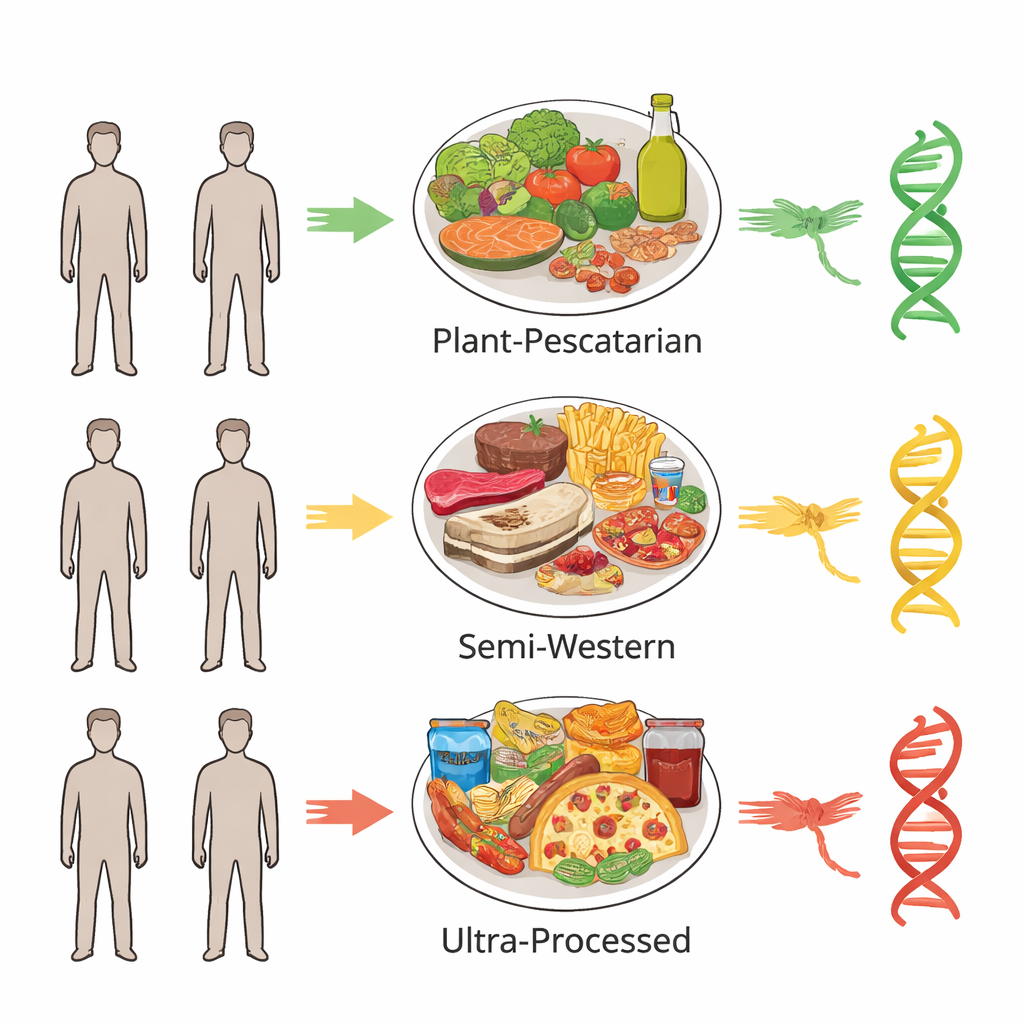
Three Everyday Eating Patterns
The first pattern, called Plant-Pescatarian, featured plenty of vegetables, fruits, fish, olives and likely olive oil. The second, labeled Semi-Western, mixed refined grains such as white bread with solid fats, sweets and pickled foods. The third, Ultra-Processed, centered on fried potatoes, sugary drinks, salty snacks and processed meats like sausages or hot dogs. Together, these three styles captured how many of the men typically ate, from mostly plant- and seafood-based meals to diets dominated by factory-made, convenience foods.
Which Diets Were Linked to Healthier Sperm DNA?
After taking into account age, body weight, smoking, exercise and total calories, clear patterns emerged. Men who most closely followed the Plant-Pescatarian pattern had far lower odds of high sperm DNA fragmentation than those who ate this way the least. In contrast, men whose diets leaned heavily toward Semi-Western or Ultra-Processed foods were much more likely to have high levels of DNA breaks, and the risk climbed steadily as their intake of these foods increased. The results fit with what scientists know about oxidative stress—an imbalance between harmful molecules and the body’s defenses. Plant-rich, fish-containing diets supply natural antioxidants and healthy fats that help neutralize damage, while fried and processed foods tend to fan the flames of inflammation and oxidative stress.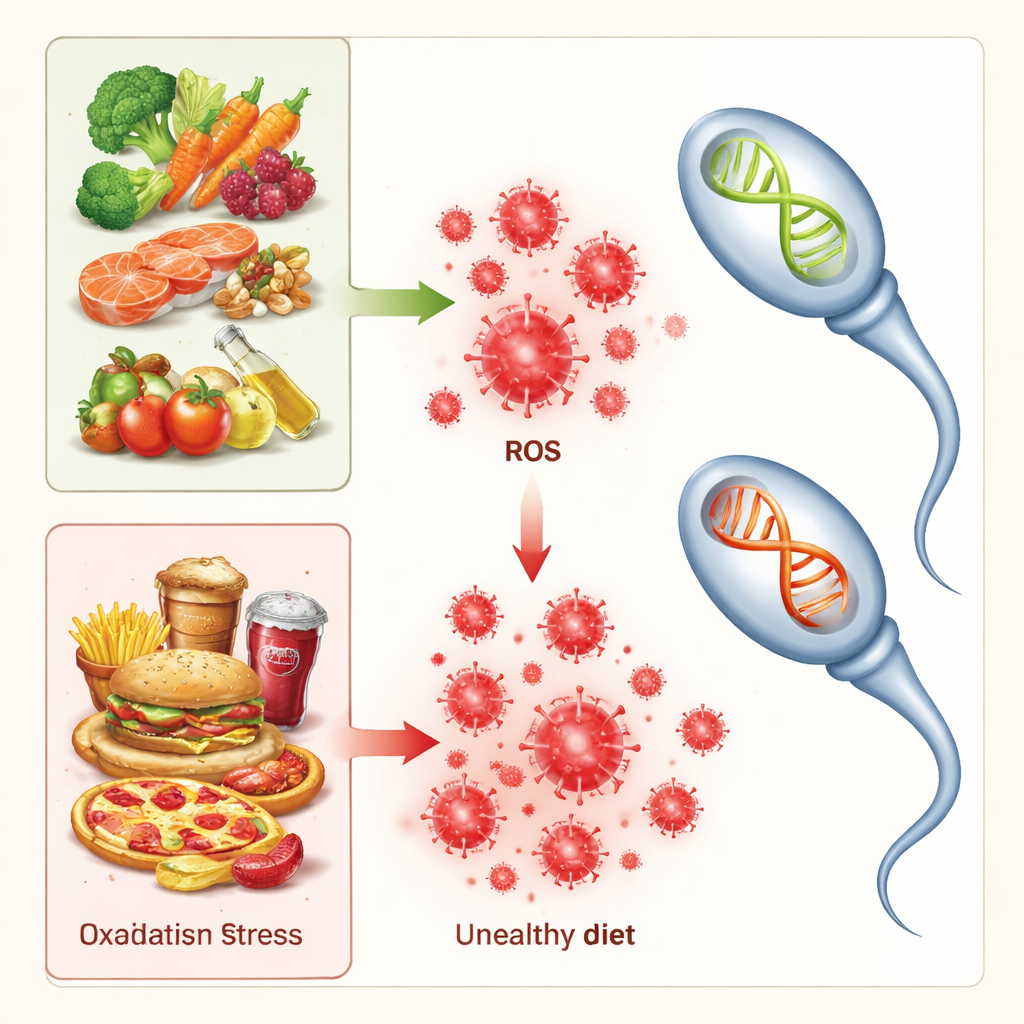
What This Means for Men and Couples
Because this was an observational case-control study, it cannot prove that changing diet will fix sperm DNA damage or guarantee pregnancy. It is also based on self-reported food intake in one country, which means results may differ elsewhere. Still, the dose–response pattern—better sperm DNA with more plant- and seafood-based eating, and worse DNA with more processed foods—suggests diet is more than a bystander. The authors argue that nutrition counseling should be part of routine care for men with unexplained infertility and that future trials should test whether shifting toward a plant-pescatarian style can measurably improve sperm DNA and fertility outcomes.
A Take-Home Message for the Dinner Table
For a lay reader, the core message is straightforward: what ends up on a man’s plate can leave a mark on the DNA his sperm carries. Meals built around vegetables, fruits, fish, and heart-healthy oils were linked to less sperm DNA damage, while diets packed with refined grains, fried foods, sugary drinks and processed snacks were linked to more. Though more research is needed to prove cause and effect, these findings support a practical, hopeful step for would-be fathers: moving gradually toward a more plant- and seafood-focused, minimally processed diet may be one simple way to help protect the genetic health of future children.
Citation: Ganji, M., Eslamian, G., Amirjannati, N. et al. Dietary patterns and sperm DNA fragmentation in idiopathic infertile men: A case-control study. Sci Rep 16, 5982 (2026). https://doi.org/10.1038/s41598-026-35928-1
Keywords: male infertility, dietary patterns, sperm DNA fragmentation, oxidative stress, processed foods