Clear Sky Science · en
The impact of urine output trajectory on clinical outcomes in female patients with genitourinary infections in the intensive care unit
Why a Simple Measure Matters
When women land in the intensive care unit (ICU) with serious urinary or kidney infections, doctors must quickly judge who is in the most danger. This study shows that something as ordinary as the pattern of urine output over the first few days can act like an early warning system. By looking not just at how much urine is made, but how that amount changes over time, the researchers found distinct groups of patients with very different chances of survival and kidney damage.
Infections That Turn Dangerous
Urinary and genital tract infections are common in women, and most are easily treated. But in some cases, bacteria climb up to the kidneys, spill into the blood, and trigger a life‑threatening reaction called sepsis. In the ICU, these severe infections often go hand in hand with acute kidney injury, where the kidneys suddenly struggle to filter waste and maintain fluid balance. Because women’s anatomy and hormones differ from men’s, they tend to get more genitourinary infections, yet past research has often lumped both sexes together, hiding important differences. This study focused only on adult women in the ICU with such infections, asking whether early urine patterns could help flag those headed for trouble.
Following the Flow Over Time
The team used data from MIMIC‑IV, a large public database of ICU patients, and identified 1,289 women who had been admitted with genitourinary infections and stayed at least three days. For each woman, they calculated urine output every 12 hours during the first three days, adjusting for body weight. A statistical method called “latent class growth modeling” then grouped women according to how their urine output rose or fell over time. The researchers also tracked who died within 28 days and who developed acute kidney injury in the ICU, while taking into account age, illness severity, other diseases, and treatments like ventilation or kidney support machines. 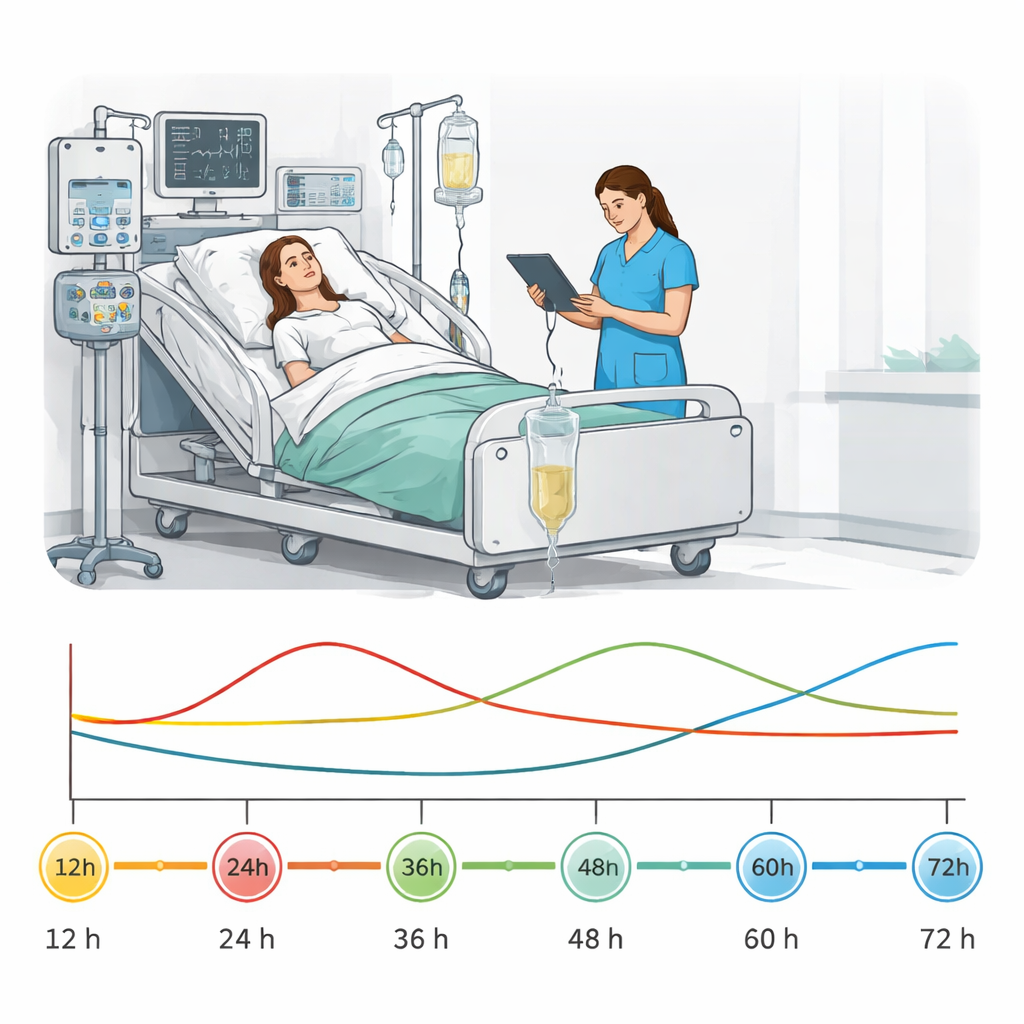
Four Distinct Urine Patterns
The analysis revealed four clear urine output “trajectories.” Most patients (about two‑thirds) had persistently low urine output over the three days. A smaller group started high and then steadily declined. Another small group stayed consistently high and even increased. The remaining patients began with low urine output that then rose over time. These patterns were not just academic curves on a graph: they lined up with very different outcomes. Women whose urine stayed low had the worst 28‑day survival, followed by those whose urine started high but dropped, and then those who stayed high. The best outlook belonged to those who began low but improved. Even after adjusting for many other risk factors, the women with persistently low output were more than four times as likely to die within 28 days as those whose urine rose, and they were far more likely to suffer acute kidney injury.
Early Warnings for Kidney Trouble
When the researchers looked specifically at kidney damage, they again found that women with persistently low urine output had the highest risk of acute kidney injury. The pattern held even in sensitivity checks designed to rule out timing quirks in the data. Interestingly, a rising urine output pattern could go hand in hand with more diagnosed kidney injury but still better overall survival, hinting that early, easily spotted kidney problems may be more treatable than those that appear later and more quietly. The team also tested whether watching urine for just two days instead of three would work nearly as well. The shorter window performed almost as accurately in predicting death, suggesting that useful warnings can emerge within the first 48 hours of ICU care. 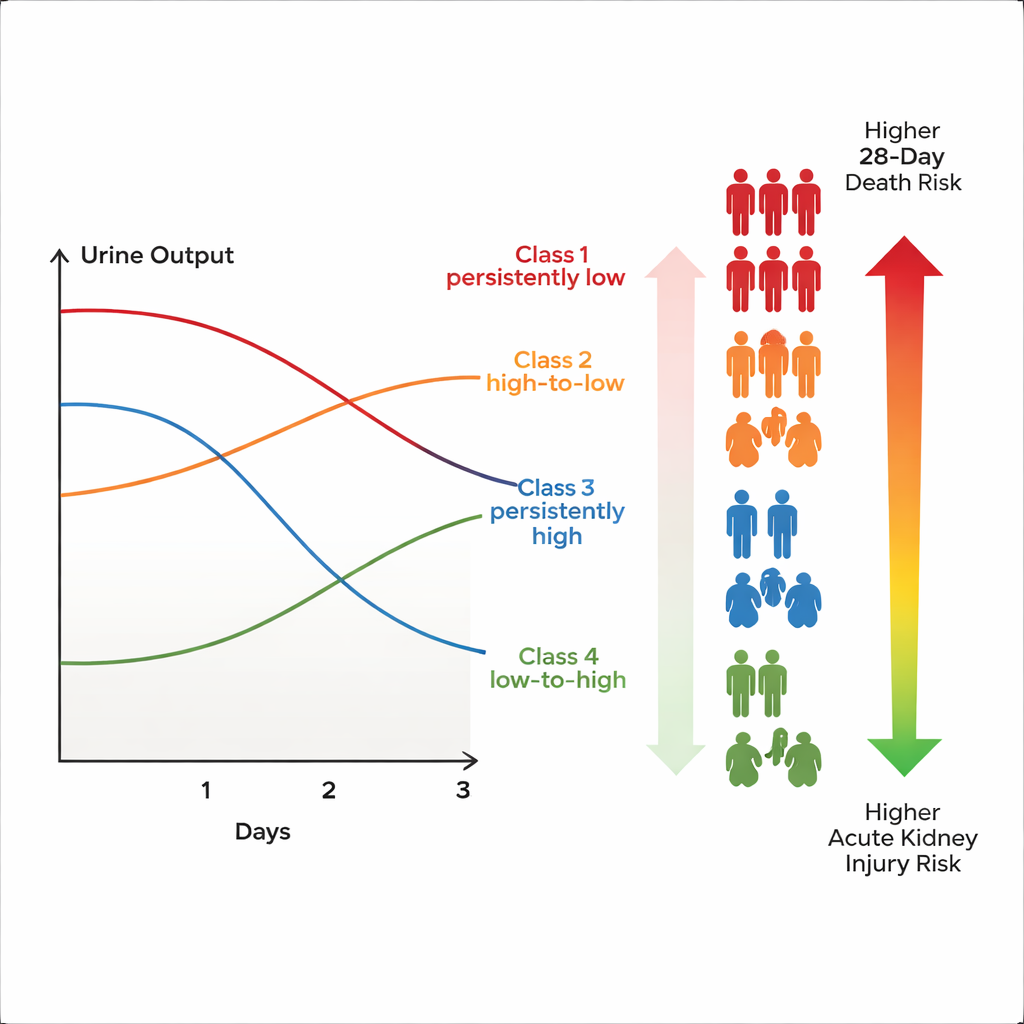
What This Means for Patients and Clinicians
For a layperson, the message is straightforward: in critically ill women with serious urinary or kidney infections, the way urine output changes over the first few days offers important clues about who is at greatest risk. Persistently poor urine flow signals danger, while a trend from low to higher output is reassuring. Because urine is already measured hourly in the ICU, doctors and nurses can use these patterns without new machines or costly tests. Paying close attention to urine trends, rather than just single readings, may help clinicians step in earlier with fluids, antibiotics, or kidney‑support treatments, improving the odds for women facing these dangerous infections.
Citation: Chen, Wh., Xu, J., Zheng, Lt. et al. The impact of urine output trajectory on clinical outcomes in female patients with genitourinary infections in the intensive care unit. Sci Rep 16, 5651 (2026). https://doi.org/10.1038/s41598-026-35926-3
Keywords: urinary tract infection, acute kidney injury, urine output, intensive care, sepsis