Clear Sky Science · en
Research on the damage mechanism and reservoir protection drilling fluid system of Jurassic reservoir in Zhenbei oilfield
Why protecting hidden oil rocks matters
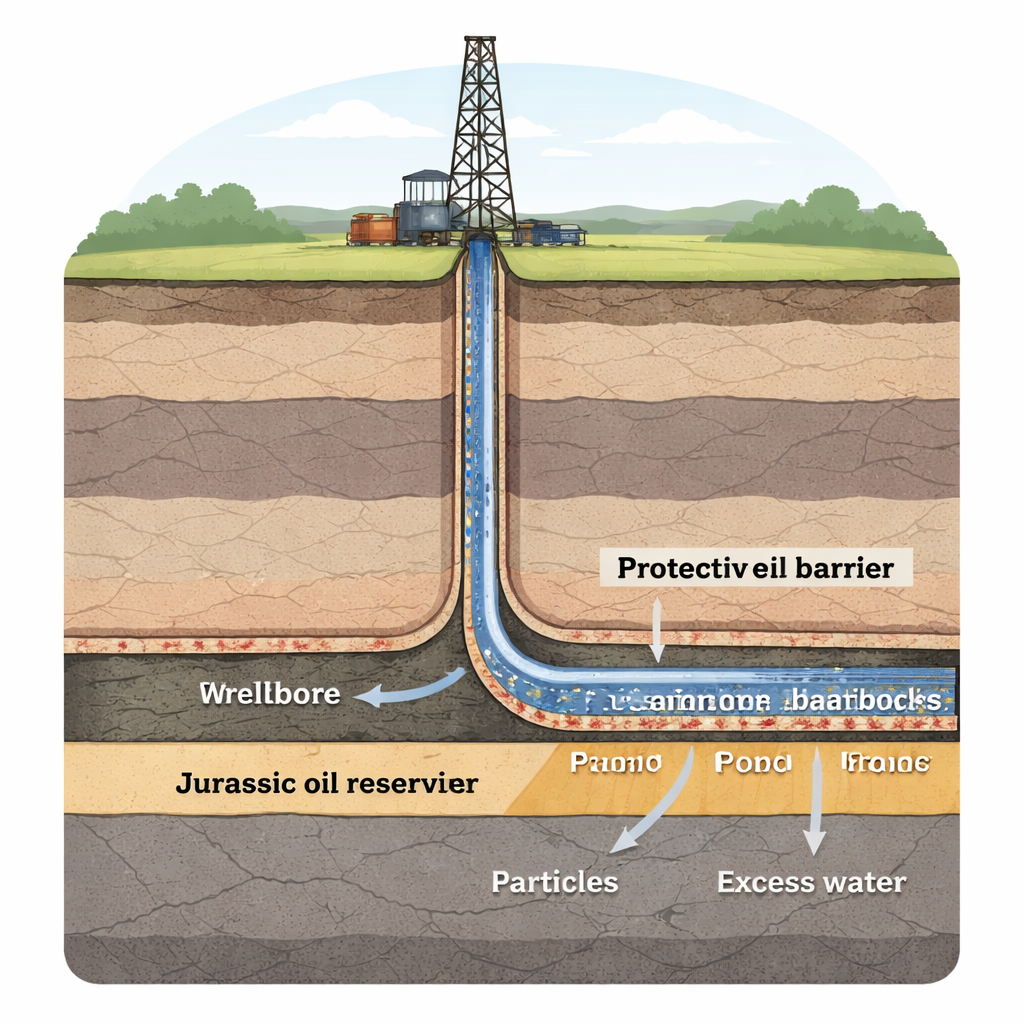
Deep beneath north-central China, thick layers of rock from the Jurassic period quietly hold huge stores of oil. Tapping these resources is vital for meeting energy needs, but the very act of drilling can damage the rocks and trap the oil in place. This study from Zhenbei Oilfield in the Ordos Basin looks at why these reservoirs are so easily harmed and describes a new type of drilling fluid designed to shield them, keep their tiny passageways open, and boost oil production in real wells.
The challenge of tight underground highways
The rocks in these Jurassic reservoirs are like natural stone sponges. They contain small spaces, or pores, and narrow channels between them that let oil flow. Measurements from hundreds of samples show that these rocks typically have modest pore space and medium ability to transmit fluids. That combination makes them valuable but fragile: there is enough connected pore space to produce oil, yet the channels are narrow enough that any extra particles or water pushed in from the drilling fluid can easily plug them and cut off flow.
Clay dust and water: a hidden source of damage
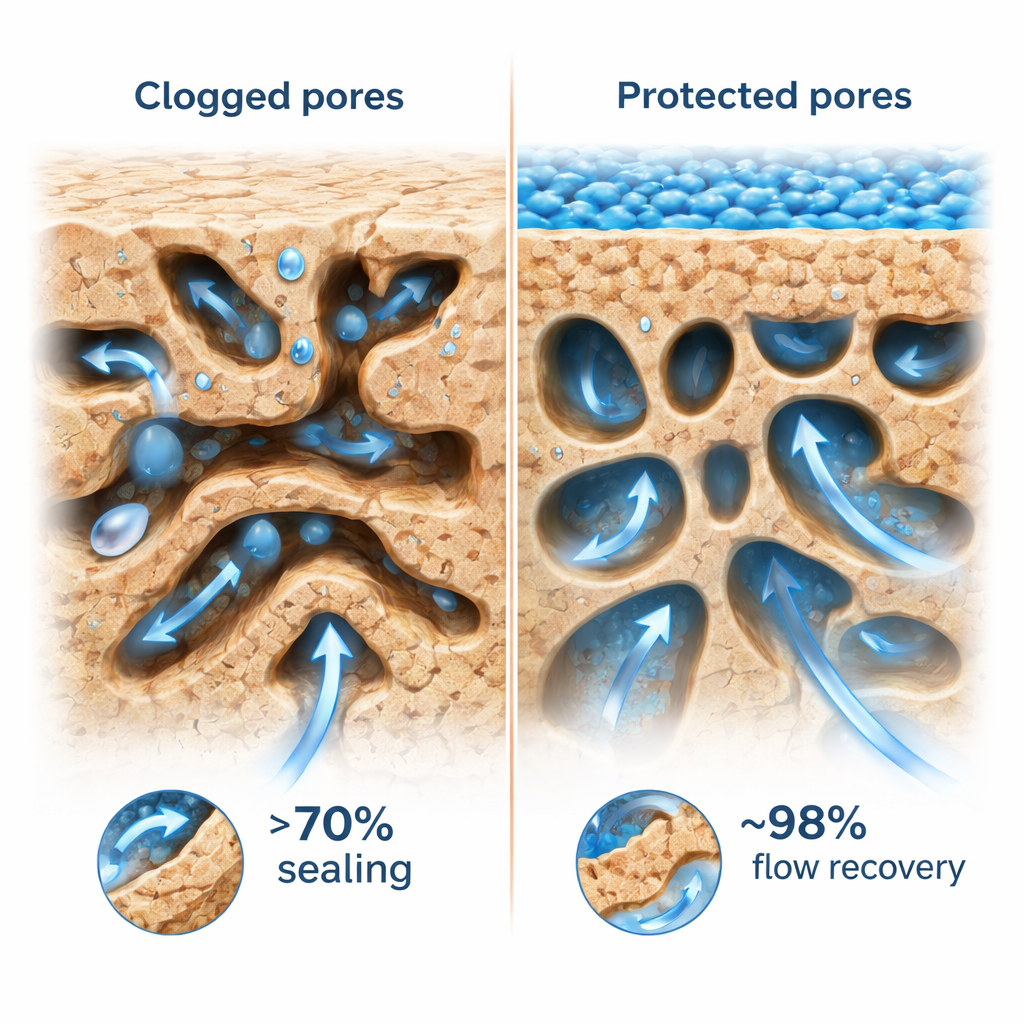
By examining the rock under microscopes and with X‑ray tests, the researchers found that the reservoir is mainly made of quartz and feldspar grains held together with clay minerals such as kaolinite. Kaolinite is mechanically weak and easily broken into tiny flakes when fast‑moving fluid sweeps past. Sensitivity tests showed that the rock is most vulnerable to changes in flow speed and to fresh water. When drilling fluids surge through the rock, they can strip off clay particles and drag them into the narrow throats, where they lodge and block the path. Fresh water can also make clays swell. Together, these effects turn open micro‑passages into clogged bottlenecks, sharply reducing how easily oil can move.
Designing a protective drilling recipe
To fight this damage, the team engineered a drilling fluid system that acts more like a temporary bandage than a permanent plug. They screened several additives and settled on an oil‑soluble temporary plugging material called G325 and a “self‑degradable” agent that limits fluid loss. The grains in these materials were carefully sized to match the average pore openings in the Jurassic rocks, so they form a tight, thin layer at the rock face rather than invading deeply. Lab tests showed that this combination sharply reduced how much fluid leaked into rock samples and sealed more than 70% of potential leak paths, while still allowing the plugging layer to break down later in oil. When cores treated with this fluid were flushed with oil, their ability to transmit flow bounced back to about 98% of the original level, indicating that the rock’s internal pathways remained largely intact.
From laboratory bench to real wells
The ultimate test was in the field. The new drilling fluid system was used in Jurassic reservoirs at Zhenbei’s 11th oil production plant and compared with earlier wells drilled using conventional fluids. After the change, average test production from the Jurassic layer in that area jumped from roughly 12 to nearly 19 cubic meters of oil per day—a gain of more than 50%. In horizontal wells where the same rock layer was tapped in similar locations, wells drilled with the protective fluid outperformed their neighbors by about 50–80%. These results suggest that preventing microscopic damage during drilling can have a very visible impact at the surface.
Keeping the pores open for the long run
In simple terms, this work shows that oil‑bearing rocks can be damaged less if we treat them gently from the start. By understanding that easily broken clay and narrow pores make the Jurassic reservoirs sensitive to fast flow and fresh water, the researchers were able to craft a drilling fluid that briefly seals the rock, limits invasion, and then dissolves away in oil. The approach keeps the rock’s tiny channels open, so more of the oil can move freely to the wellbore. For energy producers, this means better yields from existing fields; for the broader public, it means more efficient use of underground resources with fewer wasted wells.
Citation: Wang, J., He, W., Zhang, M. et al. Research on the damage mechanism and reservoir protection drilling fluid system of Jurassic reservoir in Zhenbei oilfield. Sci Rep 16, 6887 (2026). https://doi.org/10.1038/s41598-026-35924-5
Keywords: Jurassic oil reservoir, drilling fluid, reservoir damage, clay fines migration, Ordos Basin