Clear Sky Science · en
Dual impact of squalene-adjuvanted influenza vaccine on immunity and glucose homeostasis in obese mice
Why flu shots may work differently in people with obesity
Seasonal flu vaccines are designed with a “one size fits all” mindset, yet people with obesity face higher risks from infections and often respond less well to vaccines. This study in mice asks a pressing question with clear human echoes: can we boost flu protection in obesity without worsening blood sugar control, a problem already common in this group? By comparing two types of flu vaccines in obese mice, the researchers uncover a trade-off between stronger immunity and unhealthy spikes in blood sugar.
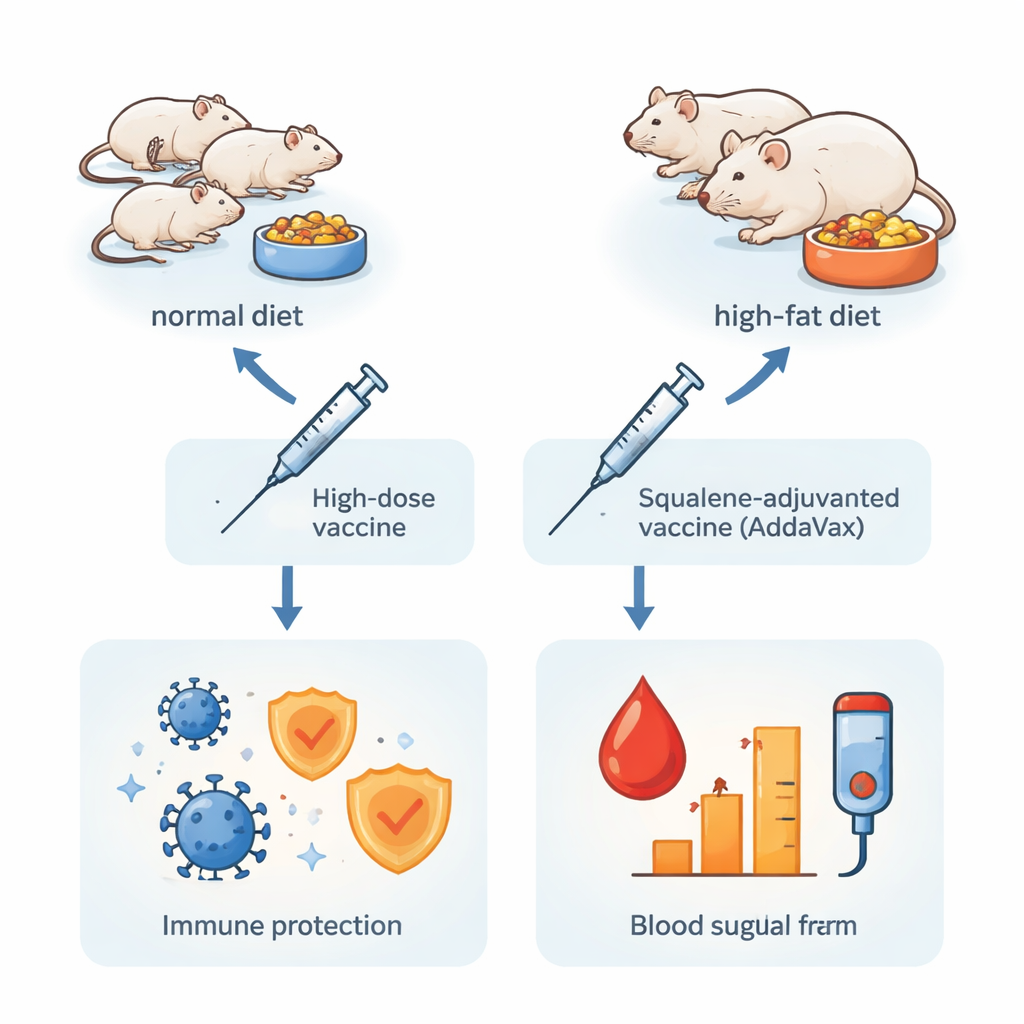
Two vaccine strategies put to the test
The scientists worked with mice made obese by a long-term high-fat diet and compared them with lean mice on normal chow. All animals received a split influenza vaccine based on a common lab strain of flu virus. One group got a “high-dose” version, containing more viral protein. Another group received a lower dose of vaccine combined with a squalene-based booster called AddaVax, similar in concept to adjuvants already used in some human flu shots. After two injections, the mice were exposed to live flu virus to see how well each vaccine strategy protected them and how it affected their metabolism.
Stronger antibodies, but a blood sugar cost
Blood tests showed that obesity blunted the body’s response to standard split flu vaccine. Obese mice given high-dose vaccine did not produce many flu-specific antibodies, and they failed to maintain a healthy pool of long-lived antibody-producing cells in their bone marrow. Adding the squalene adjuvant changed this picture. Obese mice that received the adjuvanted vaccine developed much higher levels of flu-fighting antibodies, including key antibody types that help clear virus from the lungs. However, this benefit came with a warning sign: two weeks after the booster shot, these same obese mice developed marked hyperglycemia, with fasting blood sugar levels above 400 mg/dL, while obese mice that were unvaccinated or given high-dose vaccine alone did not show this spike.
Protection in the lungs and changes in immune cells
When challenged with flu, adjuvanted vaccine offered the best shield, especially in lean mice. Lean animals that received vaccine plus squalene lost virtually no weight, had 100% survival, and carried very low levels of virus in their lungs. Obese mice given the adjuvanted vaccine still fared better than unvaccinated obese mice: they avoided weight loss, all survived, and their lung viral loads and inflammation scores were clearly reduced, though not to lean levels. In these animals, inflammatory molecules such as TNF-alpha, IL-6, and interferon-gamma were lower in the lungs and airway fluid after infection, consistent with milder disease.
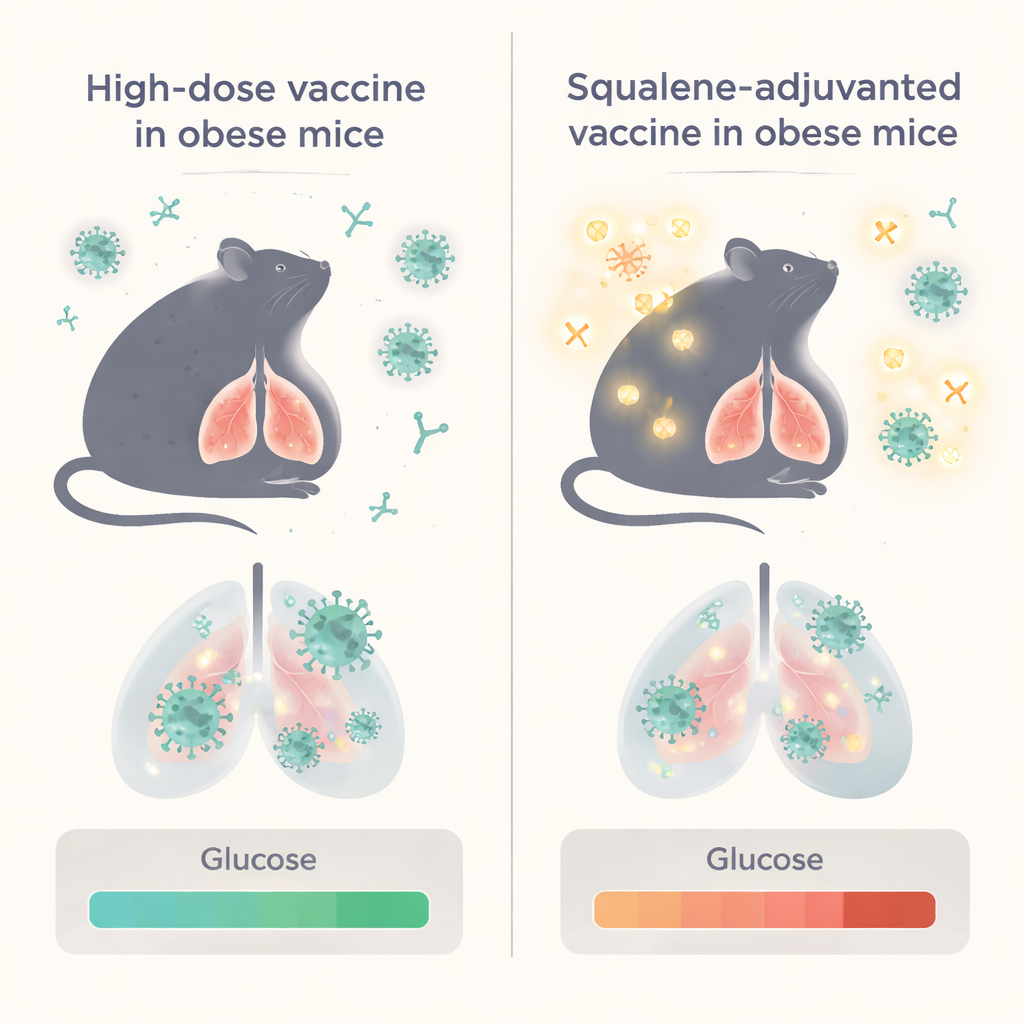
Hidden immune trade-offs inside fat and bone marrow
Digging deeper, the researchers found that high-dose vaccine and adjuvanted vaccine shaped immune memory in different ways in obese mice. After infection, most vaccinated groups showed strong antibody-producing cells in the bone marrow, a hallmark of durable protection. Obese mice that received only the high-dose vaccine were an exception: instead of building antibody factories in bone marrow, they mainly showed a rise in a specific antibody type (IgG2c) in the spleen, which may be linked to harmful, self-directed immune responses in obesity. These high-dose–vaccinated obese mice also had more T cells infiltrating visceral fat, a sign of ongoing, metabolism-disrupting inflammation, without clear gains in viral control.
What this means for future flu shots
Taken together, the study shows that adding a squalene-based booster to flu vaccine can overcome some of the immune sluggishness seen in obesity, leading to better antibody responses and stronger protection against flu in mice. But in these obese animals, the same approach sharply worsened blood sugar, highlighting a delicate balance between activating the immune system and aggravating metabolic disease. For people living with obesity or type 2 diabetes, this work suggests that vaccine formulas and doses may need to be tailored, aiming to boost protection while carefully monitoring effects on glucose control. Rather than assuming that strategies successful in older adults or other vulnerable groups will automatically translate, the findings argue for vaccines specifically designed and tested with metabolic health in mind.
Citation: Ahn, S.Y., Jo, SM., Ho, T.L. et al. Dual impact of squalene-adjuvanted influenza vaccine on immunity and glucose homeostasis in obese mice. Sci Rep 16, 6011 (2026). https://doi.org/10.1038/s41598-026-35917-4
Keywords: influenza vaccine, obesity, squalene adjuvant, hyperglycemia, immune metabolism