Clear Sky Science · en
The triglyceride HDL cholesterol ratio predicts sarcopenia risk in an aging National cohort from China
Why muscle loss in aging matters
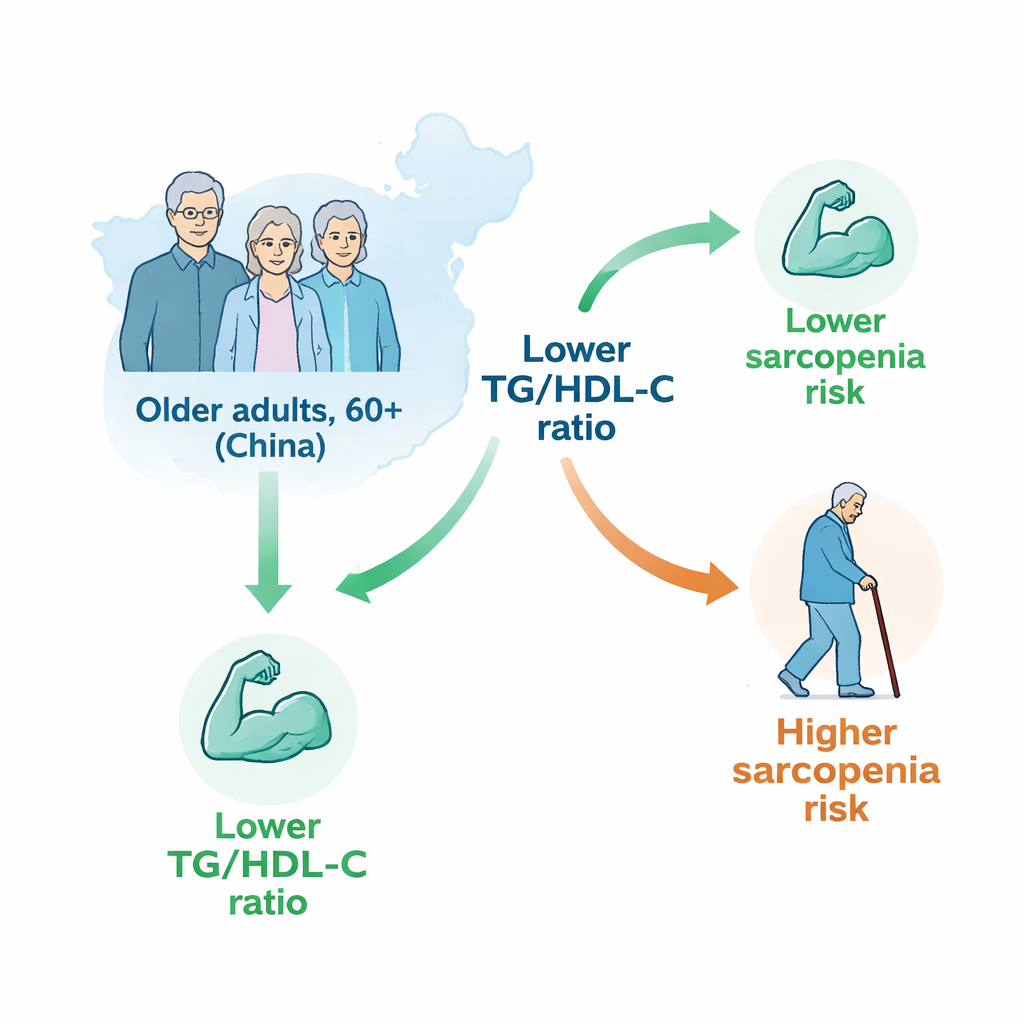
As people grow older, many quietly lose muscle and strength, making daily tasks—from climbing stairs to carrying groceries—harder and riskier. This age-related muscle loss, called sarcopenia, raises the chances of falls, disability, and even early death. With China’s rapidly aging population, understanding who is most at risk is crucial. This study asks a simple but important question: can a routine blood fat measure, the ratio of triglycerides to “good” HDL cholesterol, help flag older adults who are more or less likely to lose muscle over time?
A simple blood test as a clue
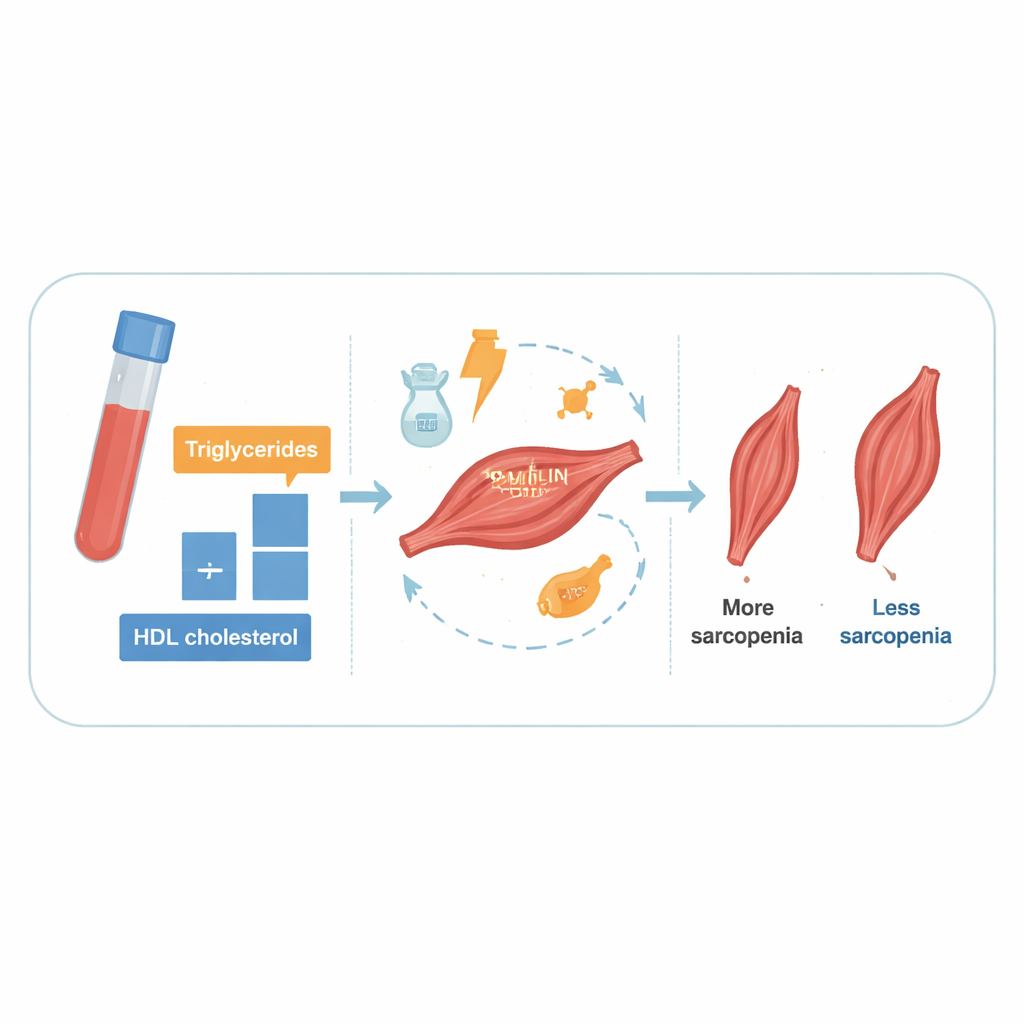
The researchers focused on the triglyceride/HDL cholesterol (TG/HDL-C) ratio, a number already used in clinics to reflect how the body handles fats and to hint at insulin resistance, a trouble spot in sugar and energy use. Unlike complex lab techniques, this ratio comes from a standard blood test that is inexpensive and widely available. Because insulin resistance and disturbed energy metabolism are suspected contributors to muscle loss, the team wondered whether this everyday measure might also predict who will develop sarcopenia.
Following thousands of older adults over time
The study drew on data from the China Health and Retirement Longitudinal Study, a large national survey that tracks the health of adults across the country. Researchers selected 2,481 men and women aged 60 and older who did not have sarcopenia in 2011 and followed them for four years. They measured handgrip strength, walking speed, and estimated muscle mass using body measurements and a formula tested in Chinese adults. At the same time, they collected fasting blood samples to calculate each person’s TG/HDL-C ratio and recorded lifestyle details such as smoking, drinking, and existing illnesses.
Higher ratio, surprisingly lower muscle-loss risk
By 2015, 196 participants had developed sarcopenia. When the researchers compared people with different TG/HDL-C ratios, they found an unexpected pattern: those with moderately higher ratios were less likely to develop muscle loss. After accounting for age, sex, education, living area, smoking, drinking, blood sugar, kidney markers, and coexisting diseases, people in the third and fourth highest groups of TG/HDL-C ratio had substantially lower odds of sarcopenia than those in the lowest group. When treated as a continuous number, each step up in the ratio was linked to a small but significant reduction in risk. The relationship was not straight-line but L-shaped: once the ratio rose above roughly 2.2, the odds of sarcopenia dropped and then leveled off.
Differences between men and women
The protective link was especially strong in older men, while it was weaker and not statistically clear in women. The authors suggest that biological differences in how male and female muscles use fats and sugars may play a role. Men tend to rely more on quick-burning sugar pathways, whereas women’s muscles often lean more on fat burning, influenced by sex hormones. In a lifestyle dominated by low to moderate activities such as walking, housework, and community dancing, having slightly more circulating triglycerides—still within normal ranges—might supply extra fuel for muscles in some older adults, helping them preserve strength and function.
What this could mean for healthy aging
This work does not recommend raising blood fats on purpose, nor does it overturn existing advice about heart and metabolic health. Instead, it highlights that, in this large group of Chinese elders, very low triglycerides combined with relatively high HDL cholesterol were tied to a greater chance of muscle loss, while moderate levels within the normal range seemed protective, especially for men. Because the TG/HDL-C ratio comes from an ordinary blood test, it may become one of several simple markers doctors use to spot older adults who might benefit from closer monitoring, tailored exercise, and nutrition strategies to keep their muscles strong as they age.
Citation: Ye, W., Chen, S., Jiang, D. et al. The triglyceride HDL cholesterol ratio predicts sarcopenia risk in an aging National cohort from China. Sci Rep 16, 5086 (2026). https://doi.org/10.1038/s41598-026-35907-6
Keywords: sarcopenia, older adults, cholesterol and triglycerides, insulin resistance, healthy aging