Clear Sky Science · en
Periapical healing after single-visit non-surgical endodontic retreatment in patients with hypertension: a retrospective study
Why blood pressure matters for your teeth
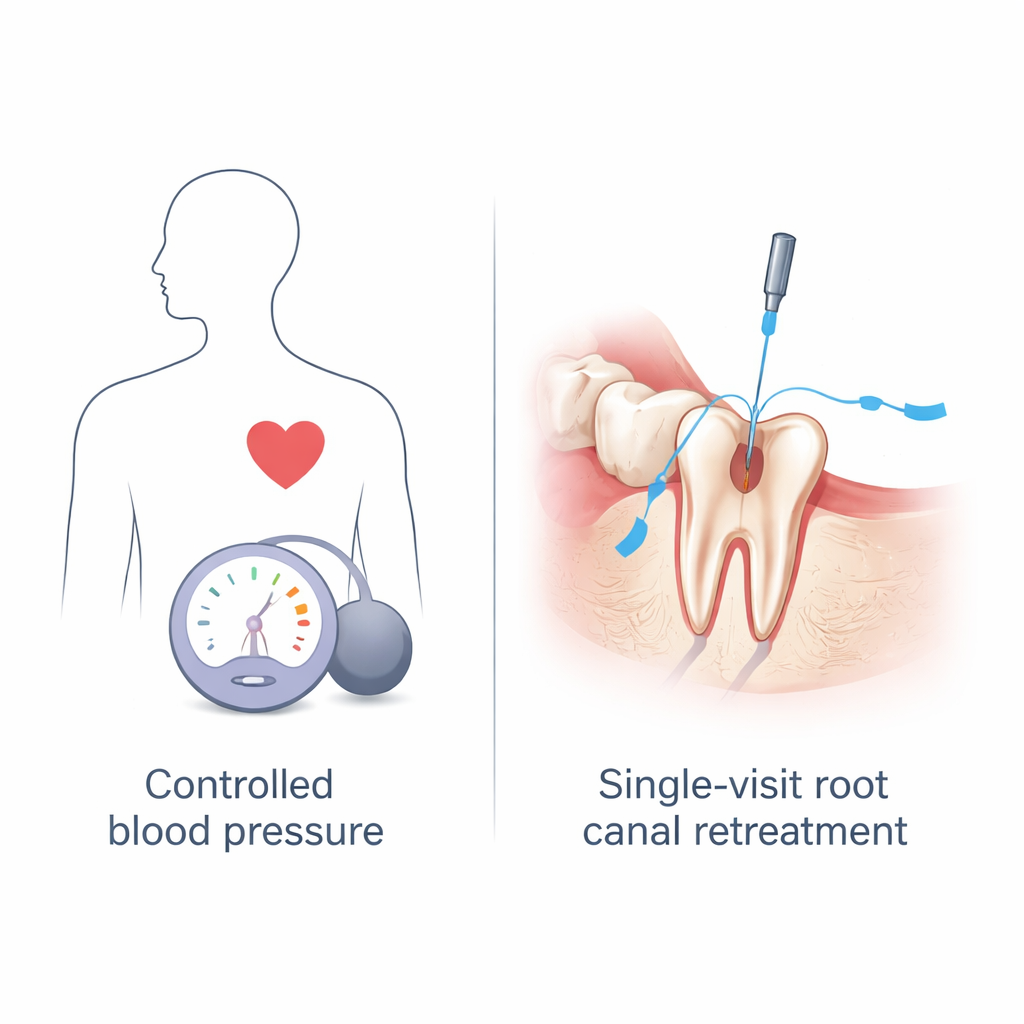
High blood pressure and root canal problems might seem like issues for different doctors, but they are more connected than they appear. People with hypertension often need extensive dental care, and both conditions involve inflammation and bone changes. This study asked a simple, practical question: if you have well‑controlled high blood pressure, will that make it harder for the bone around the tip of a previously root‑treated tooth to heal after a repeat root canal procedure done in a single visit?
When a root canal needs a second chance
Sometimes a tooth that has already had a root canal treatment develops a lingering infection at the tip of the root, known as apical periodontitis. This can happen if bacteria remain in the canal, if the filling is inadequate, or if parts of the canal system were missed. Instead of pulling the tooth, dentists can perform non‑surgical endodontic retreatment, reopening the tooth, removing the old filling, disinfecting the canal, and sealing it again. Increasingly, this retreatment is completed in a single appointment, which many patients prefer because it is faster, less disruptive, and reduces the chances of bacteria re‑entering between visits.
Designing a fair comparison
To test whether hypertension interferes with healing after retreatment, the researchers examined records and X‑rays from 44 adults treated at a university dental clinic. All had single‑rooted lower premolar teeth with clear signs of infection at the root tip and had undergone repeat root canal treatment in a single visit, followed by at least six months of X‑ray follow‑up. Half of the patients had well‑controlled hypertension and no other systemic disease, managed with standard blood pressure medications and monitored by physicians. The other half were medically healthy. The dentists used the same instruments, cleaning solutions, and filling materials for every tooth, then restored the teeth with high‑quality fillings to avoid leakage.
Measuring healing in pictures and numbers
Healing was judged entirely from dental X‑rays, not from symptoms. Two trained endodontists scored the dark area around each root tip using a standard five‑step scale called the Periapical Index, and they also measured the largest diameter of each lesion in millimeters using imaging software. A tooth was counted as successful if the X‑ray showed a healthy or clearly improving area at the root tip. Statistical tests then compared outcomes between people with and without hypertension and looked for other factors that might predict success, such as age, sex, length of follow‑up, and starting lesion size.
What the study discovered
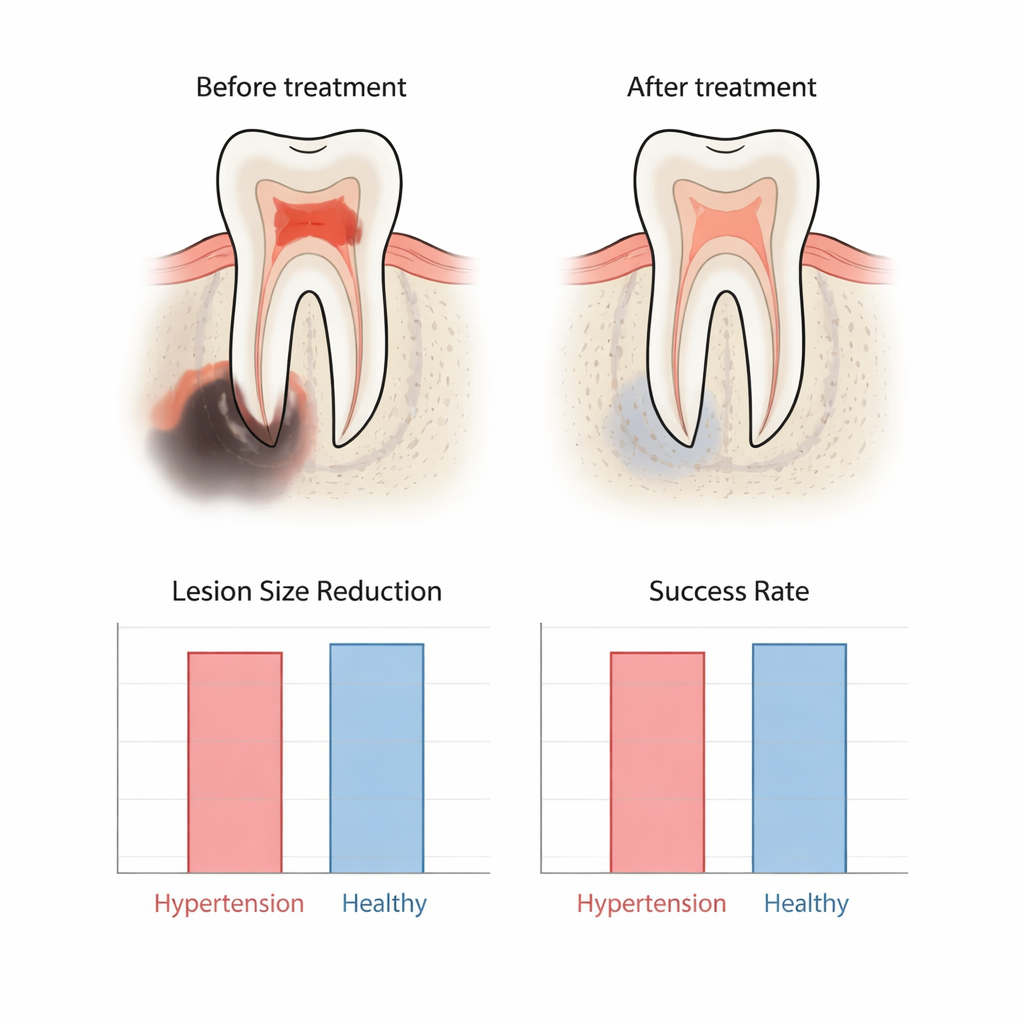
The key finding was that teeth in patients with controlled high blood pressure healed just as well as those in healthy individuals. The size of the dark area around the root tip shrank significantly over time in both groups, and the overall success rate of retreatment was high—about 88 percent across all patients. There were no meaningful differences between groups in how much the lesions shrank, how often they fully healed, or how long healing took. Instead, the single strongest predictor of outcome was how large the lesion was before treatment: the bigger the starting problem, the greater the chance that some radiographic signs of disease would remain. Age, sex, follow‑up duration, and the presence of hypertension itself did not significantly change the odds of healing.
What this means for patients and dentists
For patients living with well‑managed high blood pressure, these results are reassuring. When blood pressure is kept under control and modern retreatment techniques are used carefully—thorough cleaning, effective disinfection, and well‑sealed fillings—the bone around an infected root tip can heal as predictably as it does in people without hypertension. The study suggests that dentists need not avoid single‑visit retreatment in such patients, but they should pay close attention to the initial size of the lesion on X‑rays when discussing prognosis. In everyday terms, having controlled hypertension does not by itself doom a retreated tooth; what matters more is how big the problem looks at the start and how carefully the tooth is treated.
Citation: Doğan Çankaya, T., Işık Aydın, M. & Uğur Aydın, Z. Periapical healing after single-visit non-surgical endodontic retreatment in patients with hypertension: a retrospective study. Sci Rep 16, 5554 (2026). https://doi.org/10.1038/s41598-026-35905-8
Keywords: hypertension, root canal retreatment, apical periodontitis, periapical healing, dental radiography