Clear Sky Science · en
A study of mental health status and its influencing factors in normal weight obesity population
When a "Normal" Weight Hides a Health Risk
Many people take comfort in a normal number on the bathroom scale, assuming it means they are safely out of the danger zone for weight-related illness. This study shows that looks—and even standard weight charts—can be deceiving. A growing group of adults appear to have a healthy weight by body mass index (BMI) but carry too much hidden fat. Researchers in Beijing asked whether this “normal weight obesity” might quietly raise not just physical risks, but also stress levels and mental health problems.
A Hidden Form of Obesity
Doctors usually judge weight using BMI, a simple ratio of weight to height. But BMI cannot tell whether those kilos are mostly muscle or fat, or where that fat sits in the body. The team focused on adults whose BMI fell in the normal range but whose body fat percentage was high—above 20% for men and 28% for women. This pattern, called normal weight obesity (NWO), is surprisingly common and has been tied to diabetes, heart disease, and other metabolic troubles. The new question was whether NWO also goes hand-in-hand with greater emotional strain and physical complaints linked to stress.
How the Study Was Done
Researchers recruited 1,181 adults coming for routine health checkups at a large hospital in Beijing between 2019 and 2022. All had a normal BMI, but detailed body scans divided them into an NWO group (824 people) and a comparison group with normal body fat (357 people). Each volunteer filled out two detailed questionnaires: one measuring a wide range of psychological symptoms, and another gauging stress in daily life—covering sleep, mood, concentration, and bodily tension. At the same visit, staff drew blood and measured blood pressure and other routine lab values to capture signs of inflammation, metabolism, and hormone activity. 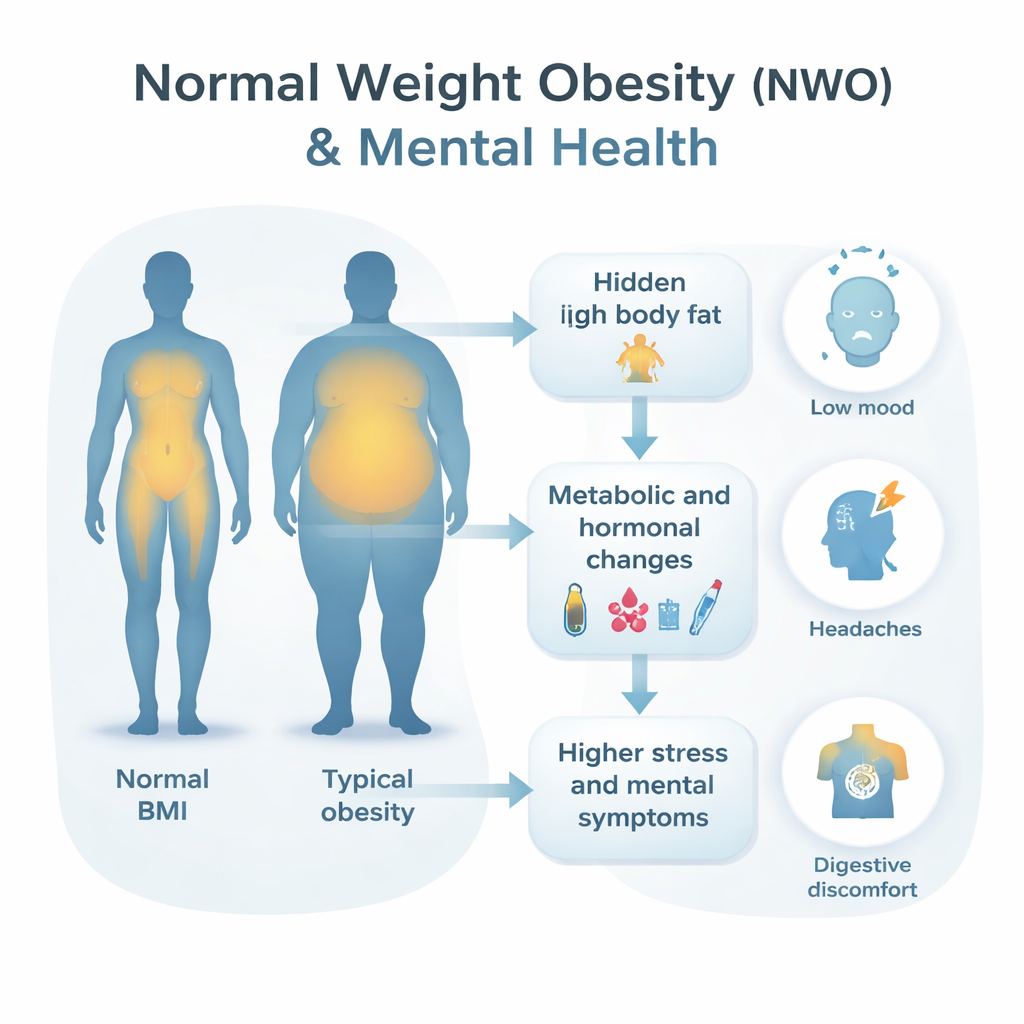
Stress in the Mind and the Body
The results painted a clear pattern. People with NWO scored higher on the mental health checklist overall and, in particular, on “somatization” symptoms—physical complaints such as headaches, palpitations, or stomach problems that often arise from psychological strain rather than detectable organ disease. Almost twice as many people with NWO crossed the threshold for problem-level somatization compared with their normal-fat peers. On the stress questionnaire, the NWO group reported greater overall stress, especially in how their bodies felt and how clearly they could think. Statistical tests showed a strong link between higher stress scores and more intense somatic symptoms in the NWO group, suggesting that ongoing stress and bodily discomfort travel together in these individuals.
Clues from Blood Tests
Blood tests offered biological hints about what might be going on beneath the surface. Compared with the normal-fat group, people with NWO had higher blood pressure, more unfavorable cholesterol and triglyceride levels, higher uric acid, and shifts in thyroid-related hormones—changes that often mark a body under chronic strain. Some of these markers, such as certain blood fats, showed direct relationships with the severity of somatic symptoms. When the researchers built a model to ask who was most likely to show marked somatization, two factors stood out: being middle-aged or older, and having NWO. In other words, even among people whose BMI looked fine, carrying too much hidden fat was independently tied to a greater burden of body-centered distress. 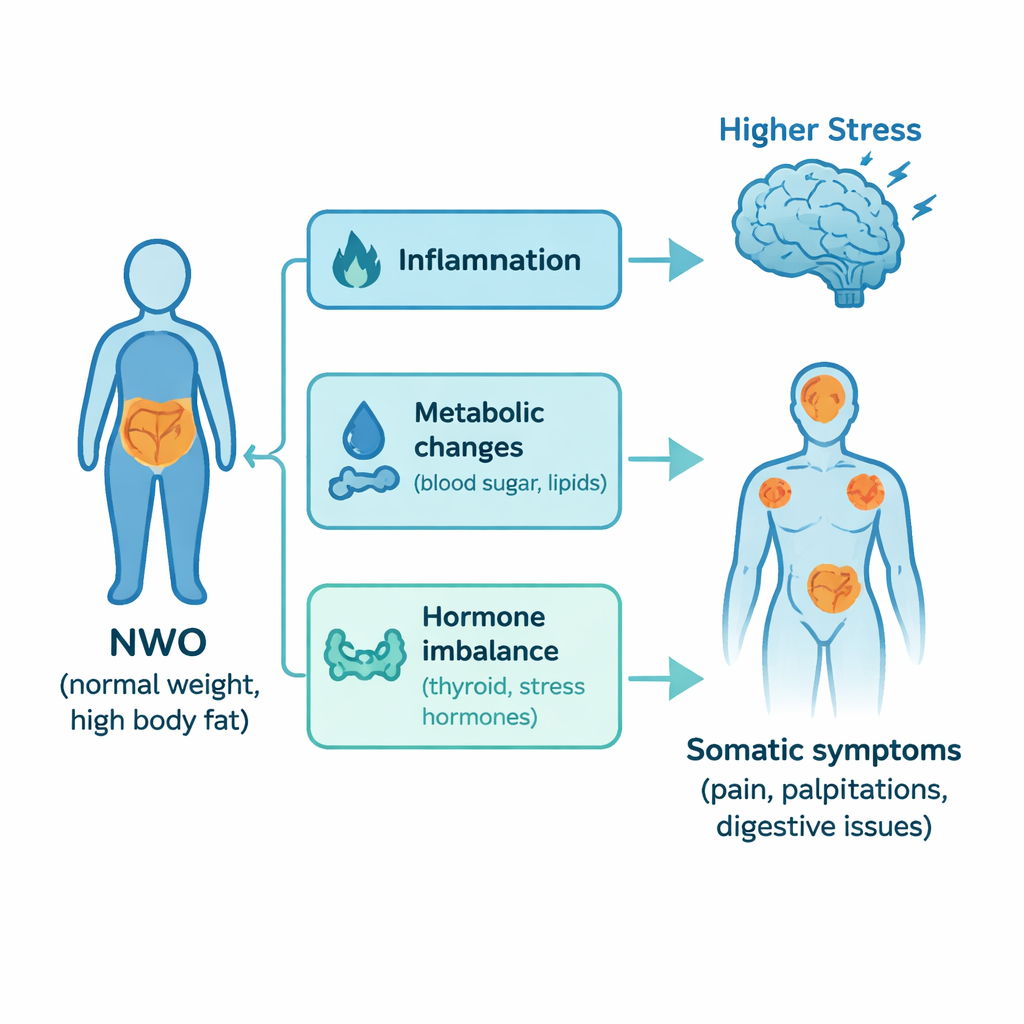
What This Means for Everyday Health
For the average reader, the message is that a normal BMI does not always mean “all clear” for either physical or mental health. People with normal weight obesity may live with higher stress, more unexplained physical discomfort, and early shifts in blood measures that hint at future disease. The study cannot yet prove cause and effect, but it strongly suggests that checking body fat, routine lab results, and mental well-being together could catch problems earlier. Recognizing NWO may allow doctors to offer lifestyle changes, stress management, and psychological support before silent strain in the body and mind grows into full-blown illness.
Citation: Che, Y., Jia, G., Gao, J. et al. A study of mental health status and its influencing factors in normal weight obesity population. Sci Rep 16, 5318 (2026). https://doi.org/10.1038/s41598-026-35897-5
Keywords: normal weight obesity, hidden body fat, stress and health, somatic symptoms, mental health