Clear Sky Science · en
Association between self-regulatory modes and alexithymia mediated by mindfulness and cognitive reappraisal
Why feelings can be so hard to read
Many people struggle to know what they feel, to put those feelings into words, or to tell the difference between a tight chest from stress and one from climbing the stairs. This difficulty, known as alexithymia, is tied to many mental and physical health problems. The article explores why some people have more trouble with emotional awareness than others, focusing on everyday motivation styles—whether we tend to overthink and compare, or simply move forward—and on simple mental habits like paying attention to the present moment and reframing our thoughts.
Two ways we tend to go after our goals
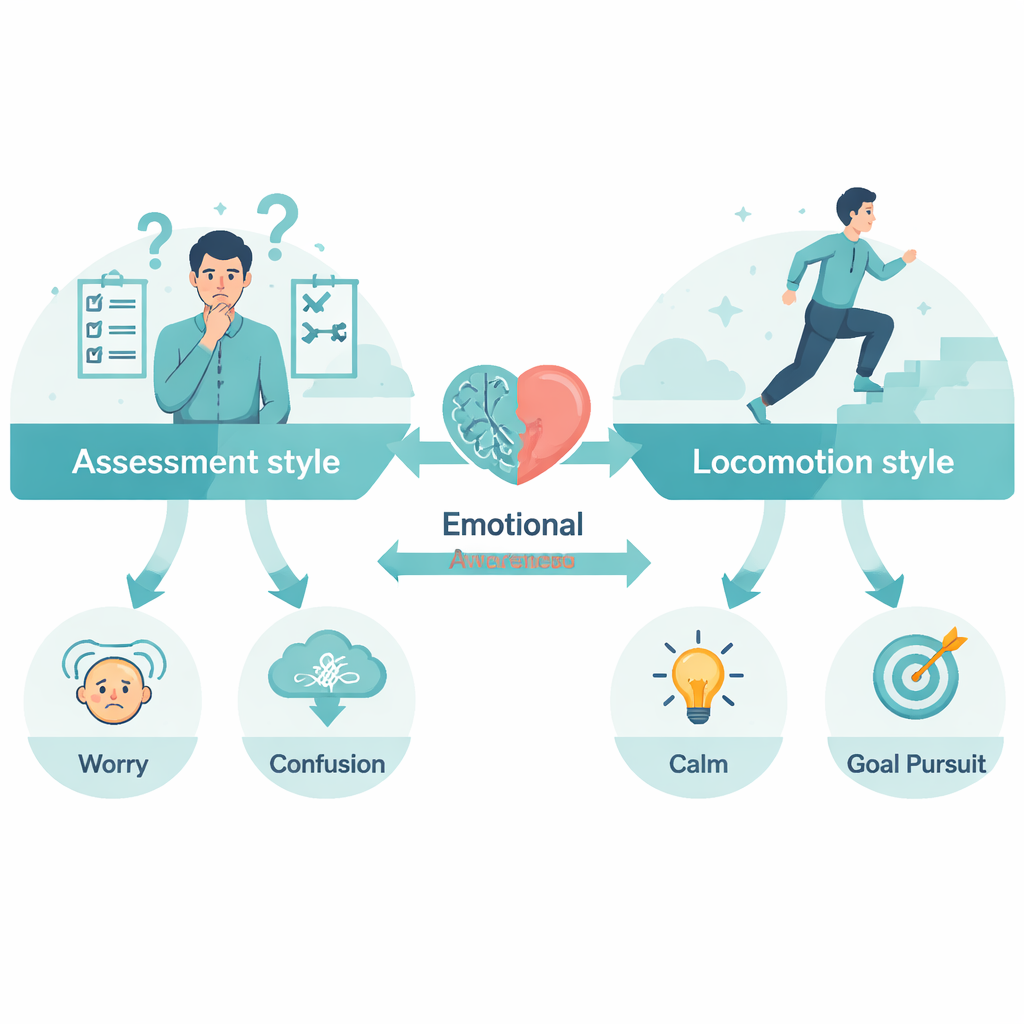
The researchers focus on two common self-regulation styles. In the "assessment" style, people constantly judge how well they are doing, compare themselves with others, and worry about making the right choice. This can fuel self-doubt and harsh self-criticism. In the "locomotion" style, people emphasize action and progress: starting tasks quickly, keeping momentum, and not getting stuck in second-guessing. These styles are not diagnoses but tendencies that most of us show to different degrees, and earlier work has linked locomotion with higher self-esteem and emotional intelligence, and assessment with more anxiety and rigid thinking.
When overthinking blocks emotional clarity
Alexithymia has three parts: difficulty identifying feelings, difficulty describing feelings, and a strong focus on outside facts rather than inner experience. Treating it as one lump can hide important differences, so the authors examine each part separately. In two online studies of adults from the general population, they find that people high in assessment tend to report more trouble identifying and describing their feelings. By contrast, those high in locomotion tend to show less of these problems. Interestingly, both styles have little to do with the third part—externally focused thinking—supporting the idea that alexithymia is largely about a breakdown in how emotions are represented and translated into words.
Mindfulness as a bridge to better feeling awareness
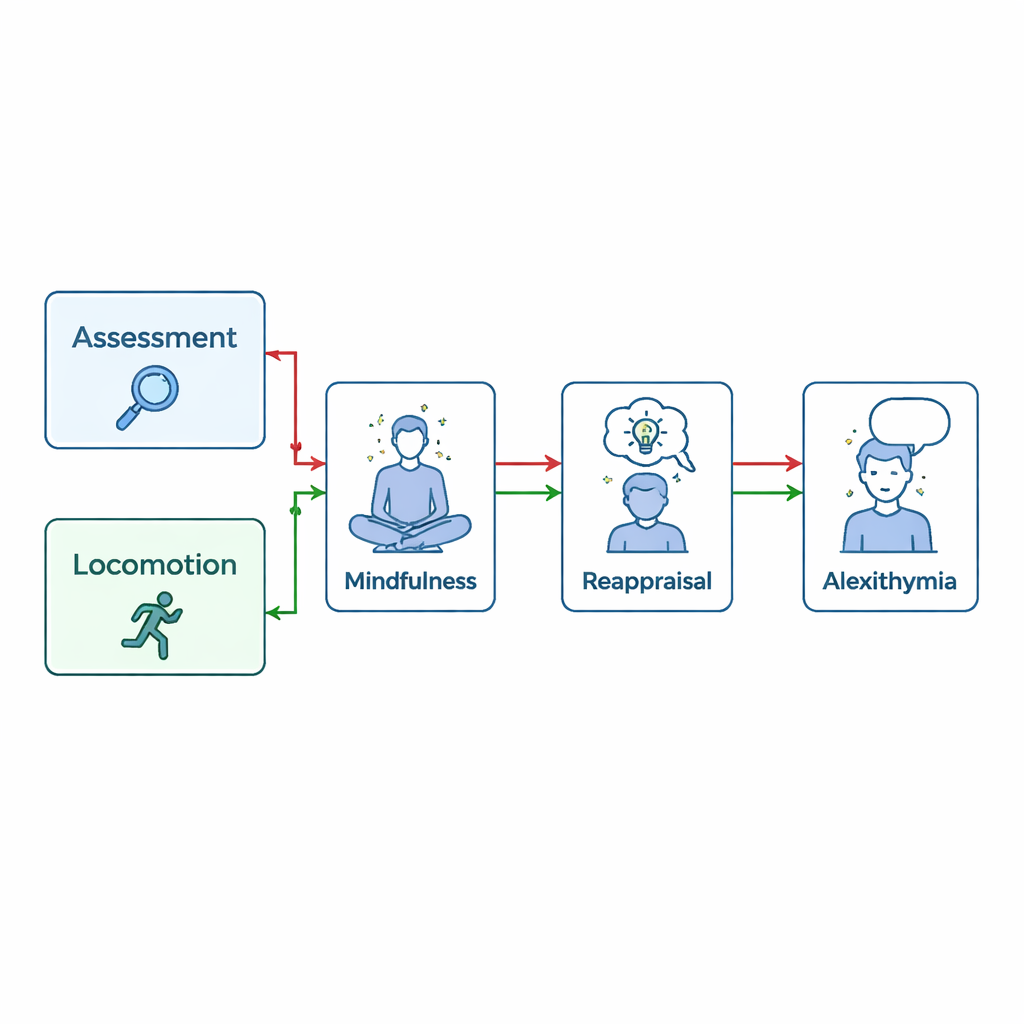
The team then asks how these motivation styles connect to alexithymia. They focus on two mental skills that can be trained. Mindfulness means paying steady, non-judgmental attention to what is happening inside and around us; cognitive reappraisal means deliberately viewing a situation in a new, less upsetting way. In both studies, people who scored higher on mindfulness reported fewer alexithymia traits. Statistical models showed that mindfulness partly explained why locomotion was linked to lower alexithymia and fully explained why assessment was linked to higher alexithymia. In other words, over-assessing goes along with reduced mindful awareness, which in turn goes with more difficulty noticing and describing feelings.
Reframing thoughts helps, but only after noticing feelings
In the second study, the authors added cognitive reappraisal to the picture. People high in locomotion said they used reappraisal more often, while those high in assessment used it less. Reappraisal was tied to lower alexithymia overall. Yet the pattern was uneven: for assessment, both lower mindfulness and lower reappraisal helped explain higher alexithymia. For locomotion, mindfulness was the main pathway; reappraisal added only a weaker link. This suggests that being present to bodily sensations and early emotional signals may be a necessary first step before more effortful "thinking differently" can work, especially for people who tend to over-evaluate themselves.
What this means for everyday life and treatment
Put simply, the studies suggest that people who constantly judge and compare themselves may lose touch with their inner signals, while those who stay in motion with a mindful focus on the present are better able to recognize and express emotions. Training mindfulness—and then, for some, adding cognitive reappraisal—could therefore be tailored to a person’s motivation style. For someone highly assessment-oriented, learning to notice sensations without judgment may open the door to clearer feelings and more effective coping, while for someone high in locomotion, mindfulness may fine-tune an already action-focused approach. Although the research is correlational and based on non-clinical samples, it points toward personalized, motivation-aware strategies to help people who find their own feelings a mystery.
Citation: Shalev, I., Yaakobi, E. Association between self-regulatory modes and alexithymia mediated by mindfulness and cognitive reappraisal. Sci Rep 16, 5725 (2026). https://doi.org/10.1038/s41598-026-35882-y
Keywords: alexithymia, mindfulness, emotion regulation, personality, cognitive reappraisal