Clear Sky Science · en
Deep learning analysis of particle content in extracted slow-release morphine: longer boiling reduces large fragments while retaining morphine extraction
Why this research matters for public health
Many people who are dependent on opioids inject drugs, sometimes by breaking down slow‑release morphine tablets that were never designed to go into a vein. Along with the drug, these improvised preparations can carry tiny solid fragments that travel through the bloodstream and damage blood vessels, the heart, and other organs. This study asks a practical, life‑and‑death question: when people do extract morphine this way, are there ways of preparing it that lower the number of harmful particles without dramatically reducing the drug content? The answers can help clinicians and harm‑reduction workers give better, evidence‑based advice aimed at reducing medical complications, not at promoting drug use.
How people turn tablets into injections
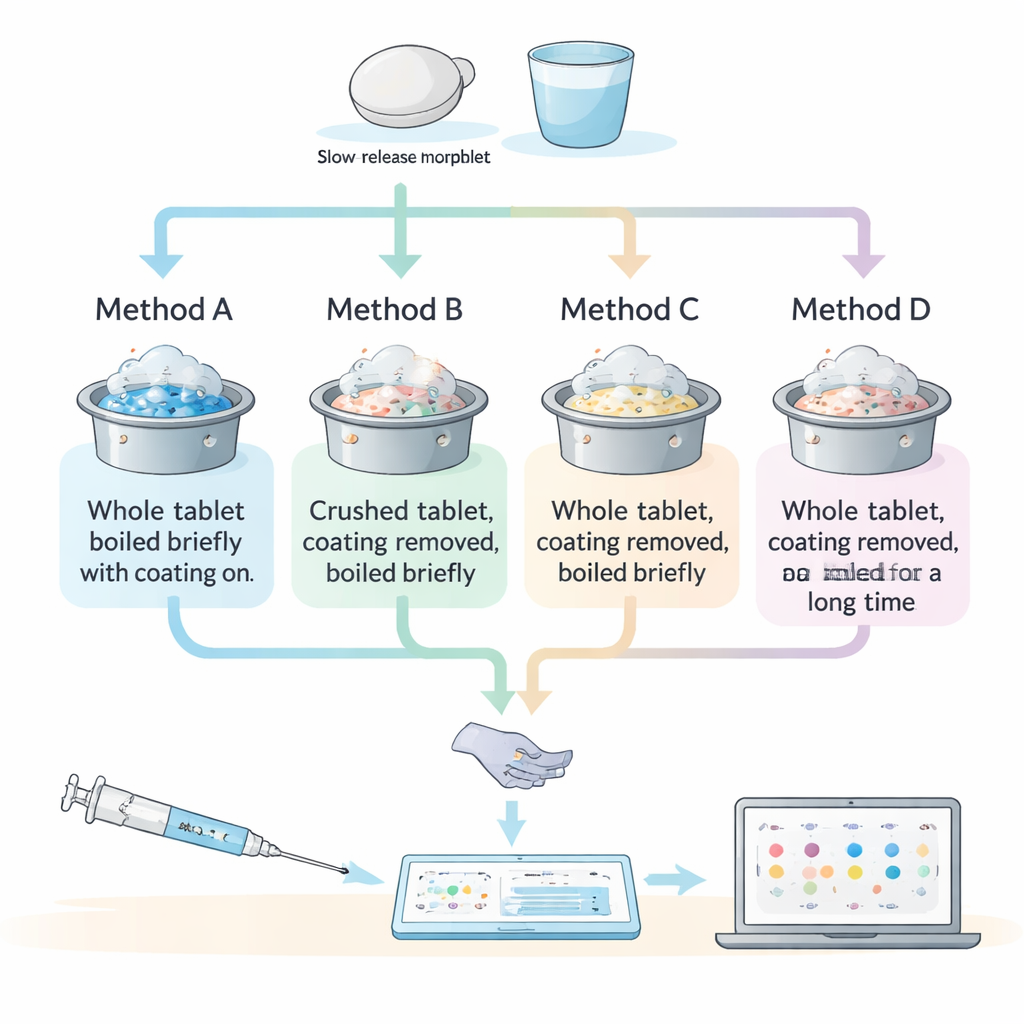
The researchers focused on Dolcontin, a slow‑release morphine tablet used in Norway. Drawing on reports from local drug users, they recreated four common preparation methods. All started with a tablet heated in a small metal cup with water, then drawn through a cotton ball before it would hypothetically go into a syringe. In Method A, the whole tablet, coating and all, was boiled briefly. Method B removed the colored coating and crushed the tablet before a short boil. Method C removed the coating but boiled the tablet whole for a short time. Method D also removed the coating but boiled the whole tablet for a much longer time. These controlled variations allowed the team to separate the effects of crushing, coating removal, and boiling duration on both morphine content and particle pollution.
Measuring drug content and hidden debris
To see how much morphine each method actually delivered, the team used a highly sensitive laboratory technique that measures drug molecules in liquid samples. They analyzed not only the main extract but also what could still be rinsed out of the cotton filter, giving a realistic estimate of how much morphine might be available for injection. To understand the particle problem, they mounted drops of the filtered liquid on microscope slides and scanned them at high resolution. Instead of counting fragments by hand, they turned to deep learning: two computer vision networks were trained to recognize and outline every solid particle. A specialized image analysis program then sorted each fragment into four size groups, from under 100 micrometers (about the width of a human hair) to more than 500 micrometers, and calculated how many particles of each size were present per unit area.
What the study found about morphine yield
All four methods recovered most of the morphine in the tablet. Overall recovery ranged from about 81 percent for the longest‑boiled method (Method D) to just over 91 percent for the crushed‑tablet method (Method B). In practical terms, the difference in extracted morphine between the worst and best methods was only about one milligram or so—small compared with the total dose. Methods that relied only on boiling, without crushing, showed more variability from sample to sample, likely because they depended on how evenly the tablet dissolved. Crushing the tablet (Method B) made the morphine yield slightly more consistent and marginally higher, but as the particle analysis revealed, this came at a cost in terms of debris.
How preparation changes particle pollution
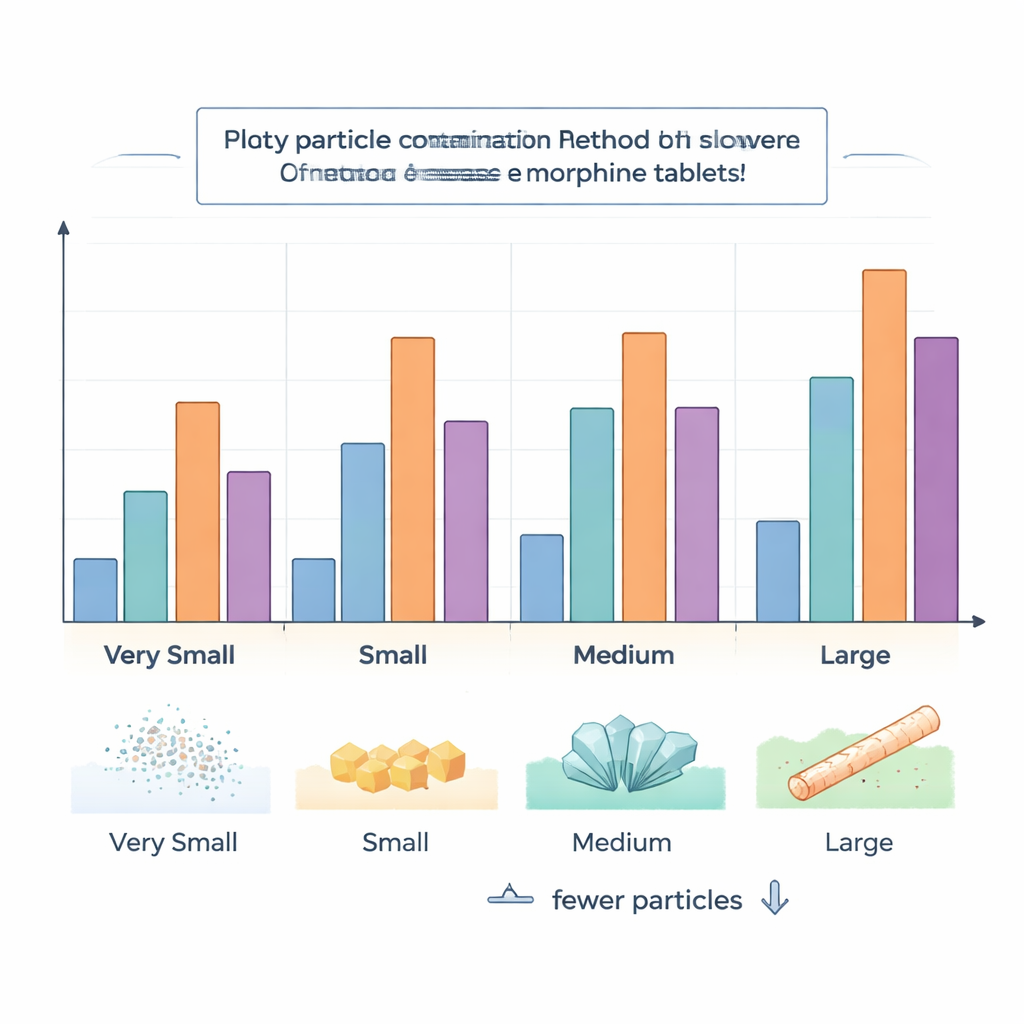
The deep learning–based particle counts showed that all methods produced substantial numbers of small fragments under 100 micrometers, but their patterns differed sharply. Leaving the coating on (Method A) created the highest density of the tiniest particles, many appearing as dark specks that likely came from the tablet’s colored shell. Crushing the coating‑free tablet (Method B) produced the largest number of very large particles over 500 micrometers—chunks that, if injected, are more likely to block blood vessels and trigger inflammation. Method C, which removed the coating but did not crush the tablet, produced the most medium‑sized fragments. Method D, the long‑boil approach with the coating removed and no crushing, stood out: it generated the fewest particles in every size category, including the dangerous largest ones, while still delivering over 80 percent of the morphine.
Implications for safer care, not safer use
From a lay perspective, the central message is straightforward: when people inject solutions made from slow‑release morphine tablets, the way they prepare those tablets makes a big difference to the amount and size of solid debris entering their bloodstream. Boiling longer after removing the tablet’s coating substantially cuts down on particle pollution, yet still leaves most of the morphine in the solution. In contrast, skipping coat removal or crushing the tablet tends to generate clouds of tiny fragments or larger hazardous chunks. The authors emphasize that this work does not endorse injecting tablets. Instead, it is meant to equip doctors, nurses, and harm‑reduction staff with solid data so they can better explain the hidden risks of common preparation methods and design services that reduce preventable infections, clots, and heart complications among people who already inject drugs.
Citation: Pettersen, H.S., Gundersen, P.O.M., Aamo, T.O. et al. Deep learning analysis of particle content in extracted slow-release morphine: longer boiling reduces large fragments while retaining morphine extraction. Sci Rep 16, 5684 (2026). https://doi.org/10.1038/s41598-026-35870-2
Keywords: morphine tablets, injecting drug use, harm reduction, particle contamination, deep learning analysis