Clear Sky Science · en
Evaluating the impact of anthropogenic activities and climate change on distribution dynamics and habitat suitability of Lophira alata in Nigeria
A Hidden Giant of the African Rainforest
Deep in the rainforests of southern Nigeria grows the red ironwood tree, a towering giant prized for its beautiful, durable wood. This seemingly remote species turns out to be a sensitive indicator of how our choices—such as logging, farming, and burning fossil fuels—are reshaping the natural world. By tracing where this tree can live today and where it is likely to survive in coming decades, the study offers a window into the future of Africa’s forests and the communities that depend on them.
Why This Tree Matters
The red ironwood, known locally as “Ekki” or “Okopia,” is a tall rainforest tree with fragrant white flowers and winged fruits. Its timber is so strong and long‑lasting that it is heavily sought after for construction and other uses. That popularity, combined with forest clearing for farms and settlements, has sharply reduced its numbers in Nigeria. The species is already listed as Vulnerable worldwide, but until now no one had carefully examined its status within Nigeria itself, or how warming temperatures and shifting rainfall patterns might further squeeze its remaining habitat.
Mapping Where the Tree Can Survive
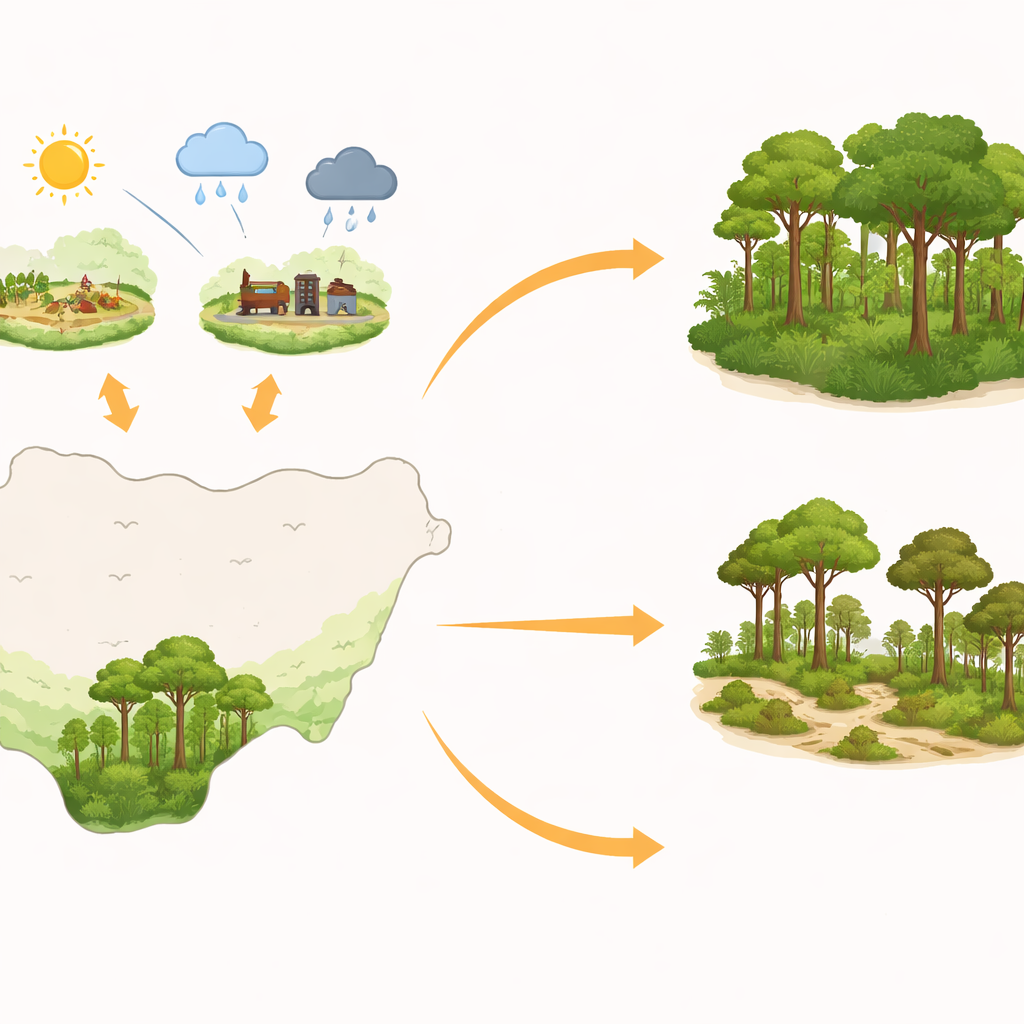
To tackle this problem, the researchers combined hundreds of location records—from museum collections, online databases, and fresh field surveys—with detailed maps of climate, soils, terrain, and human pressure. Using a widely applied computer approach called species distribution modeling, they asked: in what parts of Nigeria do local conditions look suitable for the red ironwood today, and how might that change under different climate futures? They also considered a “human footprint” index that captures roads, farms, and other signs of human activity. This integrative approach links what is known from on‑the‑ground observations with large‑scale environmental data to build a picture of the tree’s ecological niche across the country.
Rain, People, and a Narrow Safe Zone
The models performed very well and highlighted two main drivers of the tree’s fate: rainfall patterns and human disturbance. In particular, how much rain falls during the coolest months of the year turned out to be crucial, reflecting the tree’s need for steady moisture in the humid lowland forests of southern Nigeria. While temperature and soil nutrients also matter, they play a smaller role. The resulting maps show that the most suitable habitats are concentrated in the south—especially swamp forests, tropical lowland forests, and heavily used “anthropic” landscapes in states such as Bayelsa, Delta, Rivers, Akwa Ibom, and Cross River. These areas appear to act as climatic refuges where the tree can still thrive, even as much of the rest of the country is too dry or too disturbed.
A Future of Shrinking Forest Havens
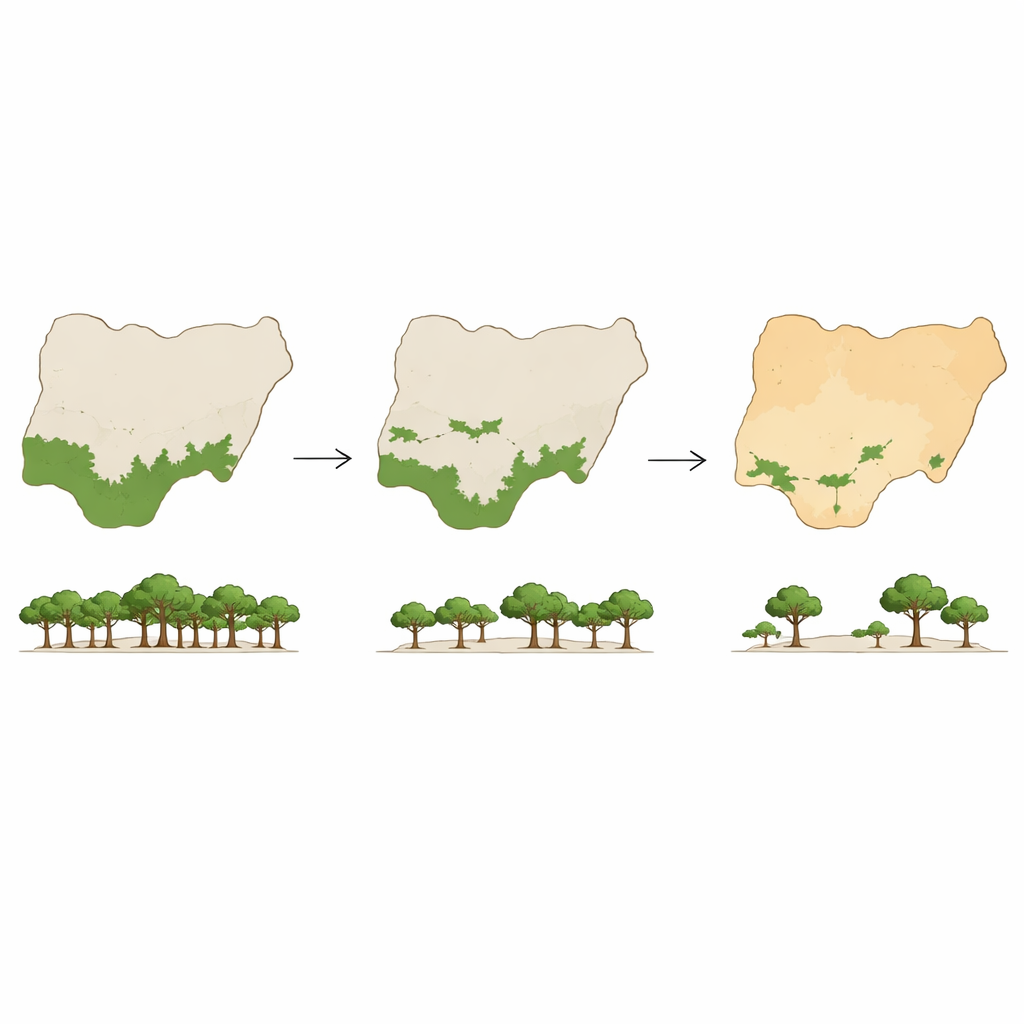
When the team projected conditions into the middle and end of this century, using both low and high greenhouse‑gas scenarios, a worrying pattern emerged. Under every scenario, the total area of suitable habitat for red ironwood shrinks; losses always outweigh gains. The most severe pathway, assuming continued heavy fossil‑fuel use, leads to an estimated 53% reduction in suitable habitat by the 2090s. A few new pockets of potential habitat appear in parts of central Nigeria, but they do not compensate for the widespread loss and fragmentation of the southern rainforest belt. In addition, when the researchers overlaid their habitat maps with Nigeria’s protected‑area network, they found that most of the best remaining areas for the tree fall outside existing reserves, leaving remnant stands exposed to logging, bark removal, and farmland expansion.
What This Means for Conservation
Drawing on both habitat modeling and a formal threat assessment, the study concludes that red ironwood should be considered Endangered within Nigeria, a more serious status than its current global listing suggests. Its actual occupied area is small, its range is tightly tied to moist southern forests, and many of its best sites lie unprotected in regions under intense development pressure, including major oil‑producing zones. The authors argue that conservation efforts must move quickly to secure stable rainforest refuges, expand or realign protected areas to cover key habitats, involve local communities in monitoring and protection, and support replanting programs using seedlings in the most promising sites. For readers, the message is clear: by safeguarding this single tree species and the rainforests it inhabits, Nigeria can help preserve a rich web of life that also underpins climate stability, clean water, and rural livelihoods.
Citation: Oyebanji, O., Chukwuma, E., Mambo, W.W. et al. Evaluating the impact of anthropogenic activities and climate change on distribution dynamics and habitat suitability of Lophira alata in Nigeria. Sci Rep 16, 10289 (2026). https://doi.org/10.1038/s41598-026-35865-z
Keywords: tropical trees, forest conservation, climate change impacts, habitat loss, Nigeria biodiversity