Clear Sky Science · en
Culturally responsive assessment in mathematical word problems and numerical cognition in multilingual education
Why Everyday Stories Matter in Math Class
Many students struggle with math not because the numbers are too hard, but because the stories wrapped around those numbers feel foreign. This study, carried out in multilingual schools in Ghana, asks a simple but powerful question: what happens when math word problems are written using the foods, festivals, chores, and games children actually know? The answer turns out to be important for anyone interested in fairer, more engaging education in diverse classrooms.
Math Problems That Feel Like Real Life
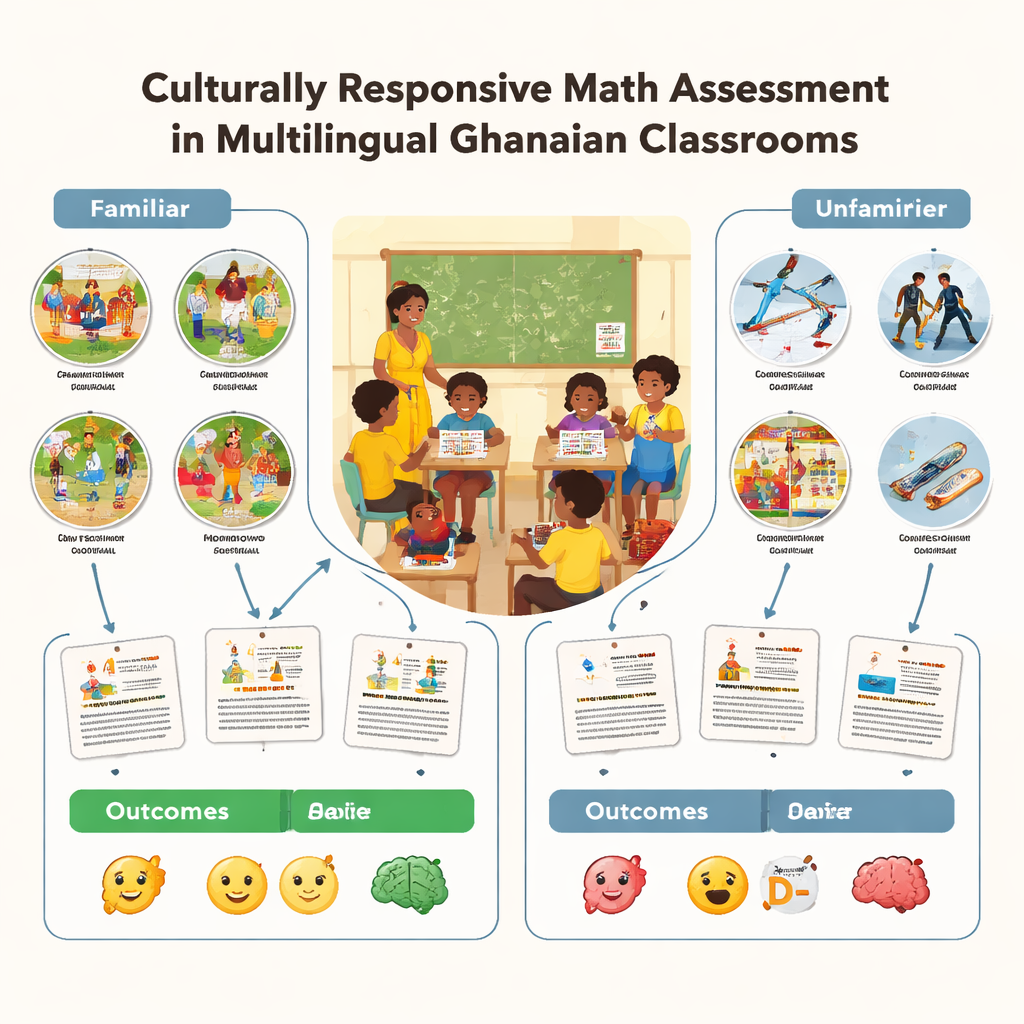
The researchers focused on numerical cognition—the mental skills we use to understand and work with numbers. In real classrooms, these skills are often tested through word problems: short stories about shopping, sports, or travel that end with a question. Those stories usually assume a certain culture and lifestyle. A child in Ghana, for instance, may never have seen a bagel or gone skiing, yet might be asked to solve problems about them. The team designed two versions of the same eight math questions for 160 pupils in upper primary and junior high schools. One version used familiar Ghanaian settings, such as buying yams at a local market, sharing buckets of water from a stream, or celebrating the Homowo festival. The other used foreign, Western-style scenes like ice hockey games, shopping malls, and hotdogs. The underlying arithmetic—fractions, percentages, ratios, and simple algebra—was identical in both sets.
Putting Culturally Aware Tests to the Test
The study used a school-friendly experimental design. Classes from four multilingual public schools in the Greater Accra and Central Regions were assigned either the familiar or unfamiliar version of the test. All students had been screened to ensure basic literacy and numeracy, and the tests followed Ghana’s national math curriculum. To keep conditions fair, instructions were given in English, the official language of schooling, but bilingual assistants were on hand so pupils could ask for clarification in local languages such as Ga, Fante, Twi, or Ewe. After completing the math problems, students filled out a short questionnaire rating how clear the questions felt, how interested and confident they were, and how mentally tiring the test seemed. The researchers also timed how long students took and counted how many questions they attempted, building a rounded picture of both performance and experience.
Better Scores, Quicker Work, Calmer Minds
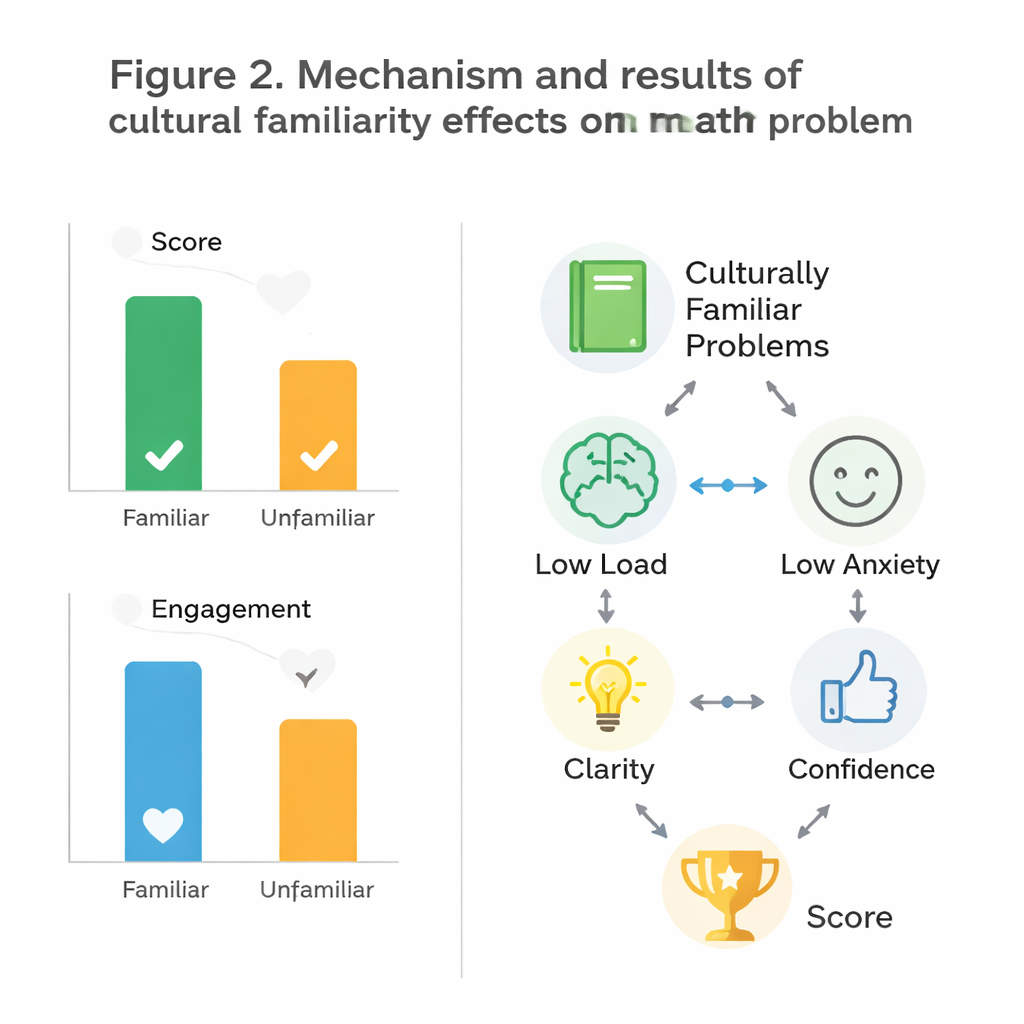
The differences between the two groups were striking. Pupils who worked with culturally familiar word problems scored much higher on the math test than those who faced unfamiliar stories, even though the calculations were the same. They finished faster, attempted more of the eight items, and rated the problems as easier. On the questionnaire, the familiar group reported greater engagement, clearer understanding, and stronger confidence. They also felt the tasks were fairer and more interesting, and described less mental strain and anxiety. Statistical analyses confirmed that these were not small, random differences; cultural familiarity had a large and reliable impact on both accuracy and emotional comfort. The study also showed that language skills mattered. Students with stronger English did better overall, but culturally familiar questions especially helped those who might otherwise be held back by the extra effort of working in a second language.
Why Cultural Fit Changes How Children Think
To explain these patterns, the authors drew on two well-known ideas in psychology. One, called sociocultural theory, argues that we think and learn through the tools and symbols our culture provides. A word problem about a local market taps into a child’s existing knowledge of buying and sharing, leaving more mental energy for the numbers. The other, self-determination theory, says that people learn best when they feel competent, connected, and respected. When math problems reflect students’ own foods, festivals, and daily routines, they feel that school values their lives. This boosts motivation, lowers anxiety, and makes it easier to stick with challenging tasks. In contrast, stories about distant lifestyles add an extra layer of decoding, making tests slower, more confusing, and less fair for students who do not share that background.
What This Means for Fair and Friendly Math
For a general reader, the takeaway is clear: the stories we use in math are not just decoration. They can open doors or quietly close them. In Ghana’s multilingual schools, embedding word problems in familiar cultural settings led to higher scores, quicker problem solving, and more positive feelings about math. The study suggests that education systems everywhere should treat cultural relevance as a core ingredient of good assessment, not an optional extra. By writing tests that speak to children’s real worlds—whether that means yams instead of bagels, football instead of hockey, or local festivals instead of foreign holidays—teachers can measure what students truly know, while also helping them feel that mathematics belongs to them.
Citation: Ntumi, S., Adzifome, S.N., Nyamekye, T. et al. Culturally responsive assessment in mathematical word problems and numerical cognition in multilingual education. Sci Rep 16, 5133 (2026). https://doi.org/10.1038/s41598-026-35864-0
Keywords: culturally responsive assessment, math word problems, multilingual education, numerical cognition, Ghanaian schools