Clear Sky Science · en
Combined fortification of yogurt with grape pomace pectic oligosaccharides and encapsulated probiotics
Yogurt That Works a Little Harder for Your Health
Yogurt already has a reputation as a good-for-you snack, thanks to its live cultures and high-quality protein. This study explores how we might turn an everyday cup of yogurt into an even more powerful ally for gut health by combining friendly bacteria with special fibers recovered from grape juice-making waste. For anyone interested in digestion, immunity, or cutting food waste, this research shows how smart tweaks to familiar foods could offer extra health benefits and help the planet at the same time.
Turning Winery Waste into Helpful Fiber
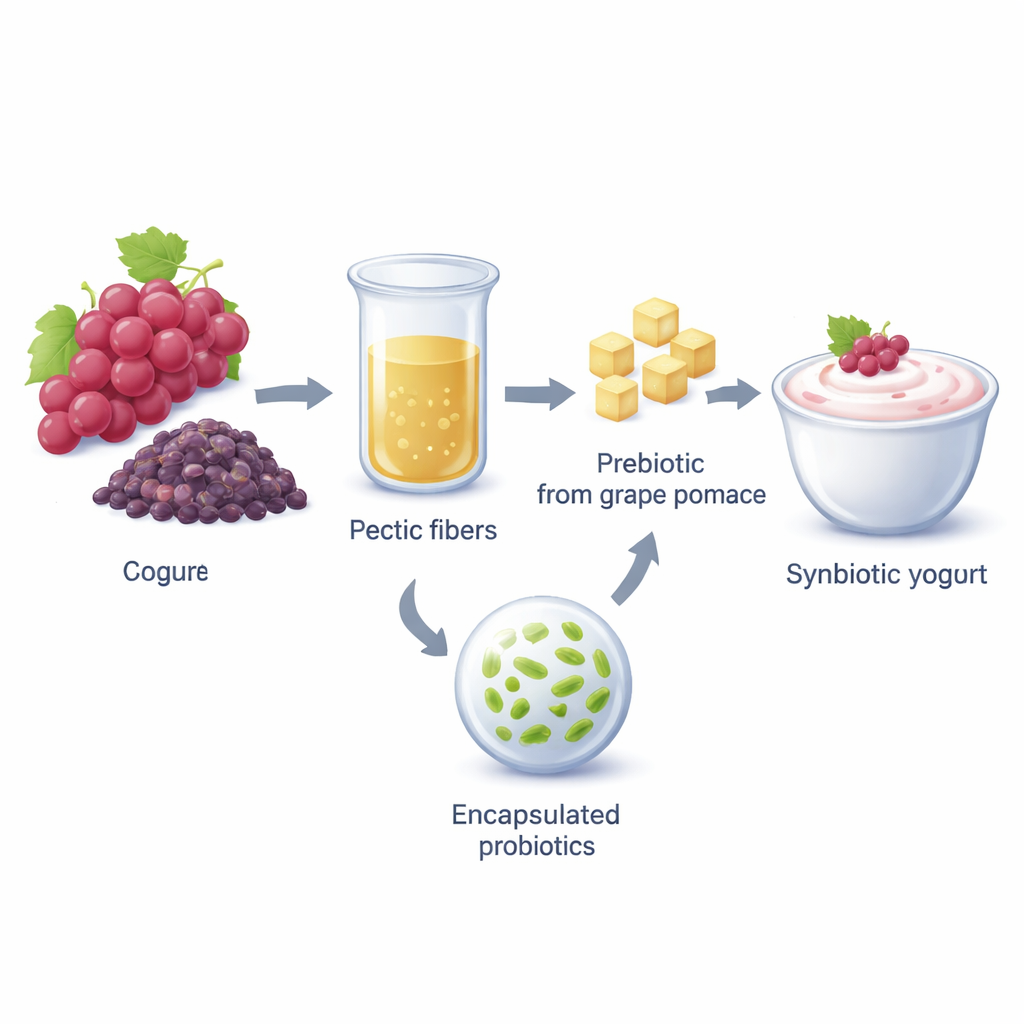
When grapes are pressed for juice, a thick mixture of skins, seeds, and stems—called grape pomace—is usually left behind. Instead of discarding it, the scientists in this study extracted pectin, a natural gelling fiber also found in jam, and then carefully broke it down into shorter chains called pectic oligosaccharides. These small fibers act as prebiotics: they are not digested by us, but they feed beneficial bacteria in the gut. Because grape pomace is rich in antioxidants and minerals, its fibers have the potential to add both nutrition and functionality to foods like yogurt while giving new life to an underused by-product.
Protecting Friendly Bacteria on Their Journey
To boost the health value of yogurt, manufacturers often add probiotics—live microbes that can support digestion and immune function. The challenge is keeping these delicate bacteria alive during storage in the fridge and later in the harsh, acidic environment of the stomach. The researchers focused on Lactobacillus acidophilus, a well-known probiotic, and wrapped it in tiny protective capsules made from whey protein and alginate, a gentle gelling substance. This “encapsulation” is like giving the bacteria a raincoat and helmet: the coating shields them from acid and other stresses so more of them survive long enough to reach the intestines, where they can do their job.
Building a Better Spoonful
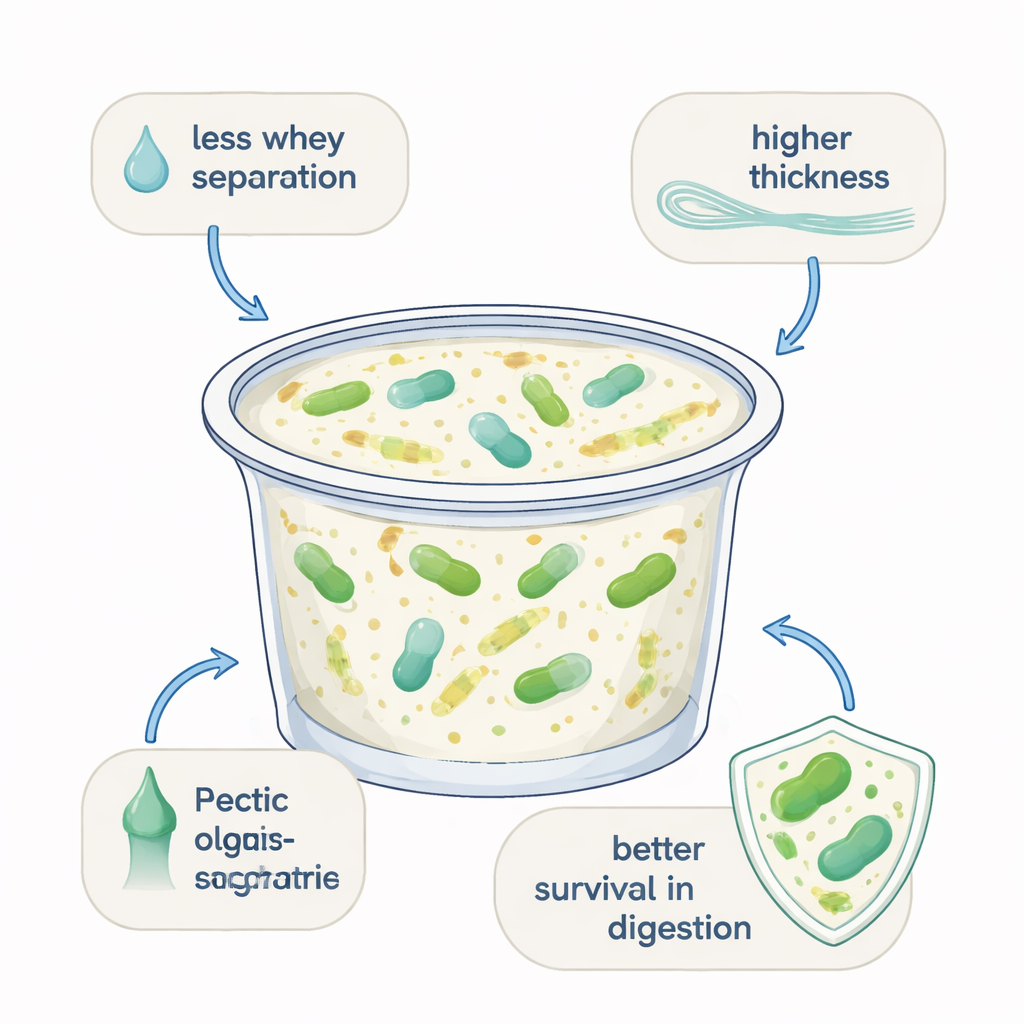
The team created 13 types of yogurt using sheep’s milk, adding grape pomace fibers at different levels alongside either free (unprotected) or encapsulated L. acidophilus. Over 21 days of cold storage they measured standard qualities—such as thickness, water separation, acidity, and color—as well as antioxidant power and the number of surviving probiotic cells. A standout recipe combined a modest amount of grape fiber (0.4 percent by weight) with encapsulated bacteria. This version became thicker and creamier, released less watery whey on top, and showed strong antioxidant activity, all while keeping its probiotic population high throughout storage and in lab tests that mimicked passage through the stomach and intestines.
What Tasters Thought of the Super-Yogurt
Of course, even the healthiest yogurt has to taste good. A small consumer panel rated flavor, texture, appearance, and mouthfeel. Low to moderate amounts of grape pomace fiber (especially between 0.1 and 0.7 percent) generally made the yogurts more appealing, with the 0.4 percent versions earning the highest overall scores. Very high fiber levels, however, started to hurt taste and texture, possibly by making the yogurt too thick or altering its flavor. Encapsulated probiotics slightly lowered texture scores, likely because some tasters noticed a faint graininess from the tiny capsules, but the products still fell in an acceptable range.
What This Means for Your Fridge
In everyday terms, the study suggests that yogurt can be upgraded into a more powerful “synbiotic” food—one that delivers both helpful bacteria and the fibers they like to eat—by pairing grape pomace fibers with encapsulated probiotics. A carefully chosen level of fiber (around 0.4 percent in this work) made the yogurt thicker, less watery, and richer in antioxidant activity, while the protective capsules helped more probiotic cells survive both storage and simulated digestion. For consumers, this points toward future yogurts that not only taste familiar and pleasant, but also offer improved gut support and make better use of agricultural by-products that might otherwise go to waste.
Citation: Savarolyia, M., Amiri Samani, S., Ghorbani, M. et al. Combined fortification of yogurt with grape pomace pectic oligosaccharides and encapsulated probiotics. Sci Rep 16, 7521 (2026). https://doi.org/10.1038/s41598-026-35862-2
Keywords: synbiotic yogurt, grape pomace, probiotics, prebiotic fiber, functional foods