Clear Sky Science · en
Human chorionic gonadotropin decreases cerebral cystic encephalomalacia and parvalbumin interneuron degeneration in a pro-inflammatory model of mouse neonatal hypoxia-ischemia
Why a Pregnancy Hormone Matters for Newborn Brains
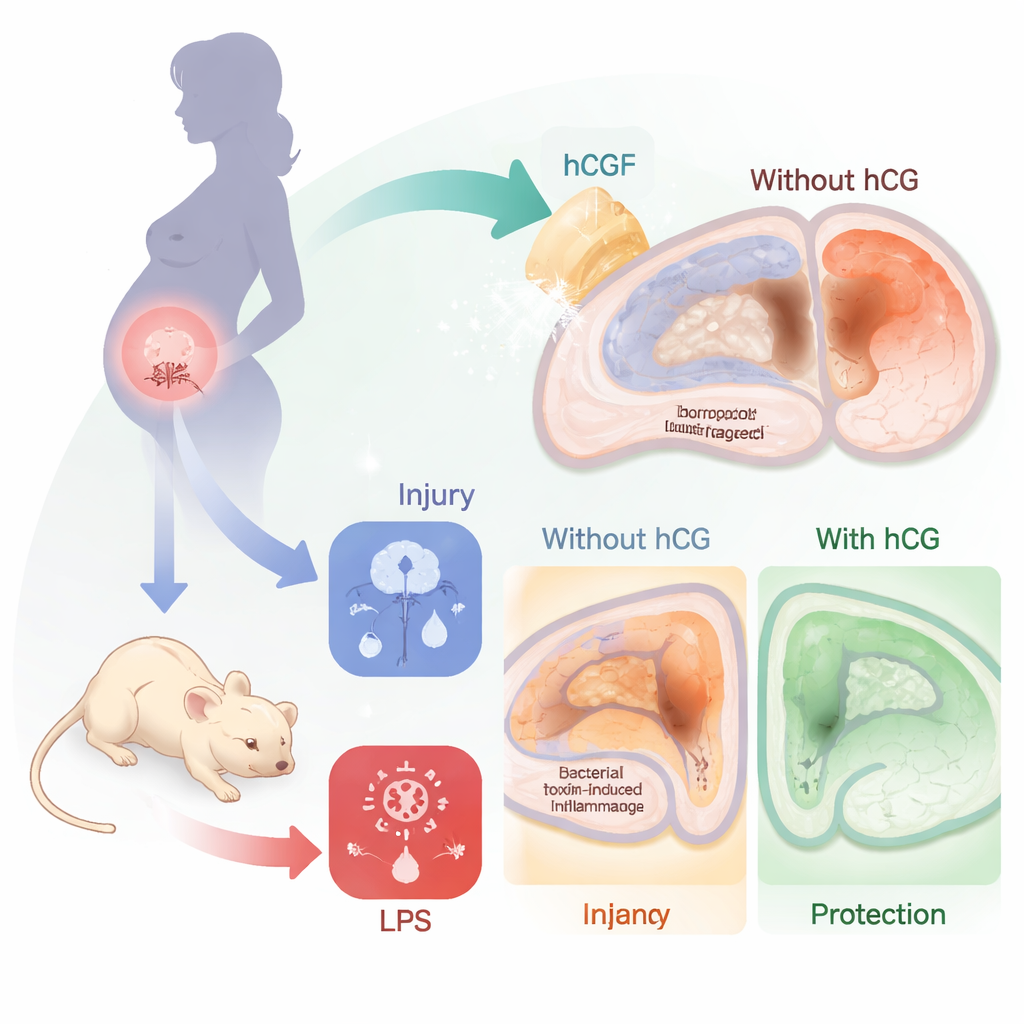
When a baby’s brain is starved of oxygen around the time of birth, the damage can lead to lifelong problems such as cerebral palsy, epilepsy, or learning difficulties. Doctors try to limit this injury with cooling treatments, but these do not work well when infection or inflammation is also present. This study asks a surprising question: can human chorionic gonadotropin (hCG) – the same hormone measured in pregnancy tests – help protect the newborn brain when oxygen loss and inflammation strike together?
Oxygen Shortage, Infection, and a Double Hit to the Brain
In real life, very sick newborns often face several problems at once. A lack of oxygen and blood flow to the brain, called hypoxia-ischemia, can already trigger swelling, cell death, and long-term scarring. Infection or strong inflammation makes matters worse by activating immune cells in and around the brain. Earlier work in animals and humans has shown that today’s main treatment, therapeutic cooling, offers limited benefit when powerful inflammatory signals are present. The authors therefore set out to model this “double hit” – oxygen loss plus inflammation – and to test whether hCG could lessen the resulting brain damage.
Building a Newborn-Like Brain Injury in Mice
The researchers used mouse pups at an age roughly comparable to term human newborns. They first injected the pups with lipopolysaccharide (LPS), a molecule from bacterial cell walls that strongly activates the immune system. Eighteen hours later, they briefly interrupted blood flow to one side of the brain and exposed the pups to low oxygen, reproducing a short but harmful hypoxia-ischemia event. This combination produced more severe brain injury than oxygen loss alone, including visible fluid-filled cavities in the hippocampus and cerebral cortex, areas essential for memory and higher thinking. The team also saw a marked loss of a particular group of inhibitory nerve cells marked by the protein parvalbumin, which help keep brain activity balanced and are often disrupted in developmental and movement disorders.
Testing Protection from a Natural Pregnancy Hormone
To see whether hCG could blunt this damage, another group of pups received a single dose of hCG two hours before the inflammatory trigger. When their brains were examined days later, the difference was striking. Pups that received hCG had fewer and smaller cyst-like holes in the hippocampus and cortex, and overall tissue loss in these regions was clearly reduced compared with pups given only salt solution. Importantly, hCG treatment did not stunt growth or cause obvious side effects, suggesting that the protective dose was well tolerated in this model.
Saving Vulnerable Cells and Calming Brain Immune Activity
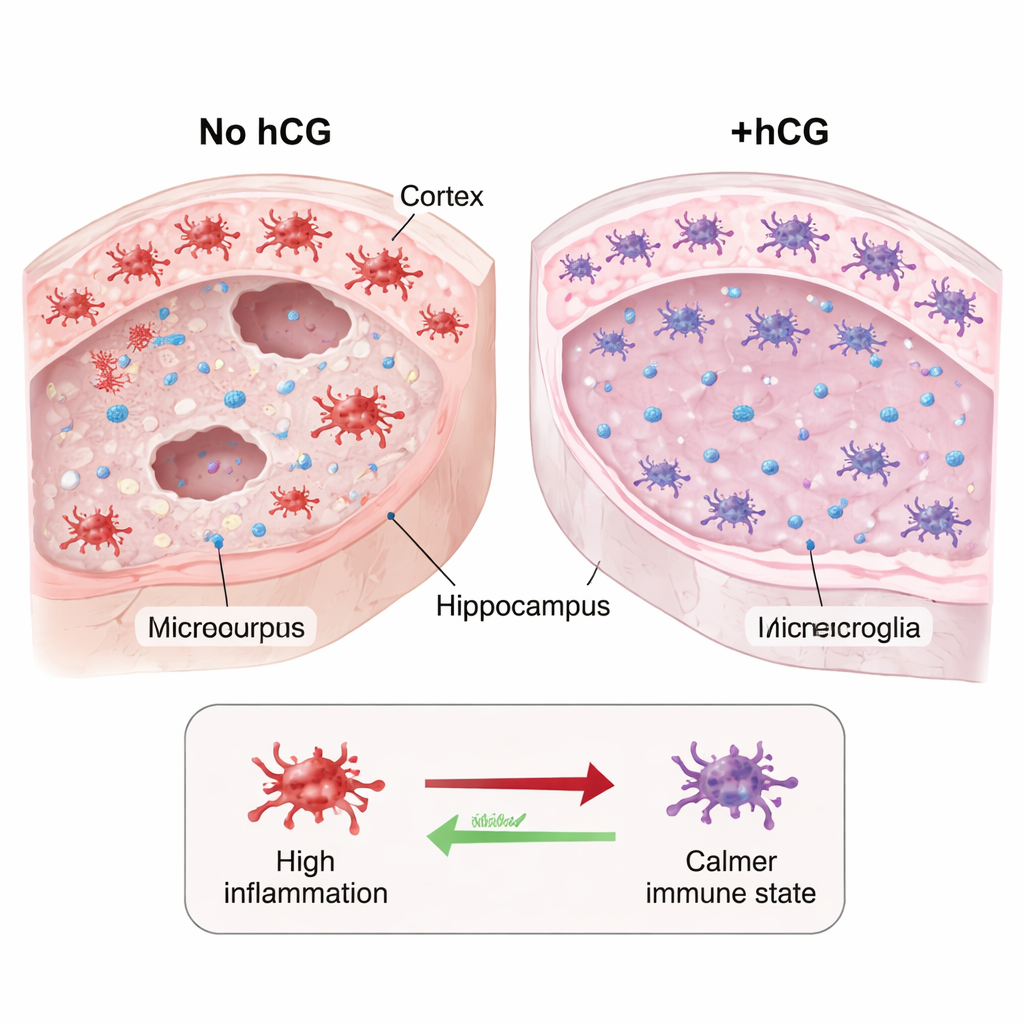
The study then looked more closely at which brain cells were being spared. In untreated mice, many parvalbumin-containing interneurons were lost in the cortex, striatum, and hippocampus after the combined injury. With hCG on board, far more of these cells remained, as judged by preserved parvalbumin staining. At the same time, the number of activated microglia – the brain’s resident immune cells, labeled by the marker Iba1 – was lower in key regions in hCG-treated animals. Because hCG is already known to shift immune responses toward a less inflammatory state and to support neuron survival in other contexts, these findings suggest that it may protect the newborn brain both by calming harmful inflammation and by directly nurturing vulnerable nerve cells.
What This Could Mean for Future Care
For a lay reader, the central message is that a hormone naturally produced in pregnancy can, at least in mice, reduce brain damage caused by the dangerous combination of oxygen loss and inflammation. While this work is still at an early, preclinical stage and used preventative dosing before injury, it points to hCG – or drugs that act like it – as promising candidates to boost current treatments for high-risk newborns. If future studies confirm that hCG is safe and effective when given after injury and alongside cooling, it could one day help more babies avoid the long-term disabilities that often follow severe complications around birth.
Citation: Miller, B., Crider, A., Aravamuthan, B. et al. Human chorionic gonadotropin decreases cerebral cystic encephalomalacia and parvalbumin interneuron degeneration in a pro-inflammatory model of mouse neonatal hypoxia-ischemia. Sci Rep 16, 6851 (2026). https://doi.org/10.1038/s41598-026-35852-4
Keywords: neonatal brain injury, hypoxic-ischemic encephalopathy, inflammation, human chorionic gonadotropin, parvalbumin interneurons