Clear Sky Science · en
Real-time dynamic prediction of HFMD transmission using SEIRQ-ARIMA hybrid model optimized by multi-stage ABC-GWO algorithm
Why this matters for everyday health
Hand, Foot, and Mouth Disease (HFMD) is a common childhood illness that can quietly strain families, schools, and hospitals. In China’s Guangxi region alone, more than 120,000 cases were reported between 2014 and 2020, mostly in children under five. This study asks a very practical question: if we combine real-time sensors, smart algorithms, and disease models, can we predict HFMD outbreaks more accurately and use quarantine measures more wisely—saving money and avoiding unnecessary disruption?
From simple curves to smart forecasting
Traditional epidemic models split the population into groups such as “susceptible,” “infected,” and “recovered,” then use fixed parameters to trace how an outbreak rises and falls. These models are useful for understanding general trends, but they assume the world stands still: that people move the same way all year, that weather does not shift, and that control measures like quarantine never change. In reality, HFMD transmission in Guangxi spikes during humid summers, drops in cooler months, and surges when families travel for holidays like the Spring Festival. Fixed-parameter models struggled to follow these swings, often missing cluster outbreaks in places like kindergartens by more than 30 percent.
What the sensors can see
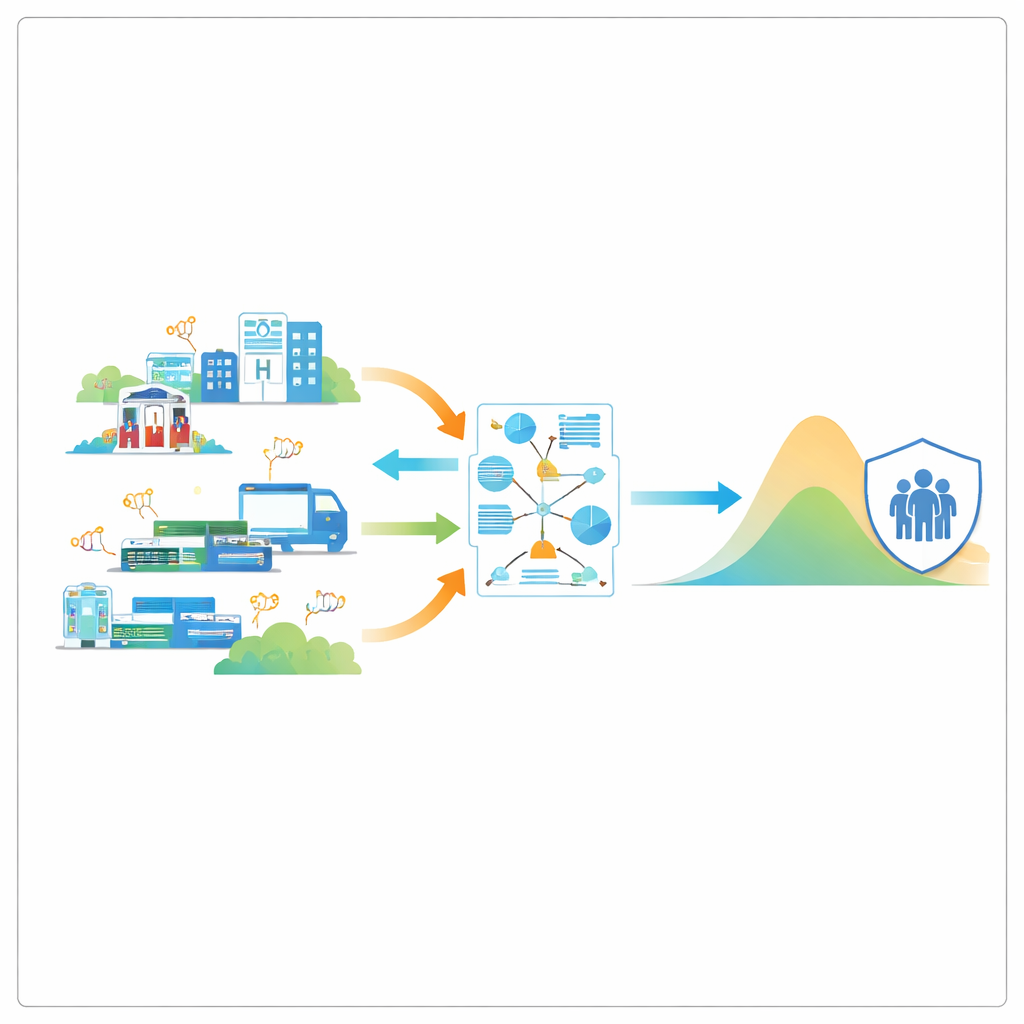
The researchers built on an expanding “Internet of Things” network already in use across Guangxi. Hundreds of hospitals, kindergartens, and transportation hubs are equipped with devices that monitor temperature, humidity, crowding, and people’s movements. Other sensors track how well quarantine measures are actually enforced—how many children stay home, how often quarantined individuals leave their rooms, and how full classrooms or waiting rooms become. These data streams arrive within minutes, are cross-checked against paper records, and are precise enough to spot effects like a shortened HFMD incubation time during an unusually humid summer. In short, the sensors capture the shifting conditions that make a virus spread faster or slower.
A new way to follow the disease
Using these data, the team upgraded the classic model into an SEIRQ framework, adding a separate group for quarantined infectious people. Crucially, key quantities—how easily the virus spreads, how quickly exposed children become sick, how fast patients recover, and how many infected children are successfully isolated—are no longer treated as fixed. Instead, they are allowed to change over time, guided directly by the sensor readings and official health records. To tune this dynamic model, the authors combined two “nature-inspired” optimization methods: one mimics how bees scout and share information about food sources, and the other imitates how wolves search cooperatively for prey. Working in stages, the bee-like algorithm explores many possible parameter combinations, and the wolf-like algorithm then refines the most promising ones. This helps avoid getting stuck in misleading local patterns hidden in noisy real-world data.
Blending physics and patterns
Even a carefully tuned disease model can leave behind unexplained wiggles in the data—short-term jumps and dips that arise from school calendars or sudden travel rushes. To capture these fine-grained temporal patterns, the authors paired their SEIRQ model with a well-known statistical forecasting tool called ARIMA, which is good at learning recurring patterns in time series. Rather than letting a black-box neural network obscure what is happening, they fused the two models transparently: the final forecast is a weighted blend of the mechanistic SEIRQ curve and the ARIMA prediction. In tests on Guangxi HFMD data from 2014 to 2020, this hybrid approach almost wiped out forecasting errors, cutting one key measure of error by about 95 percent compared with using either model alone.
What this means for quarantine policy
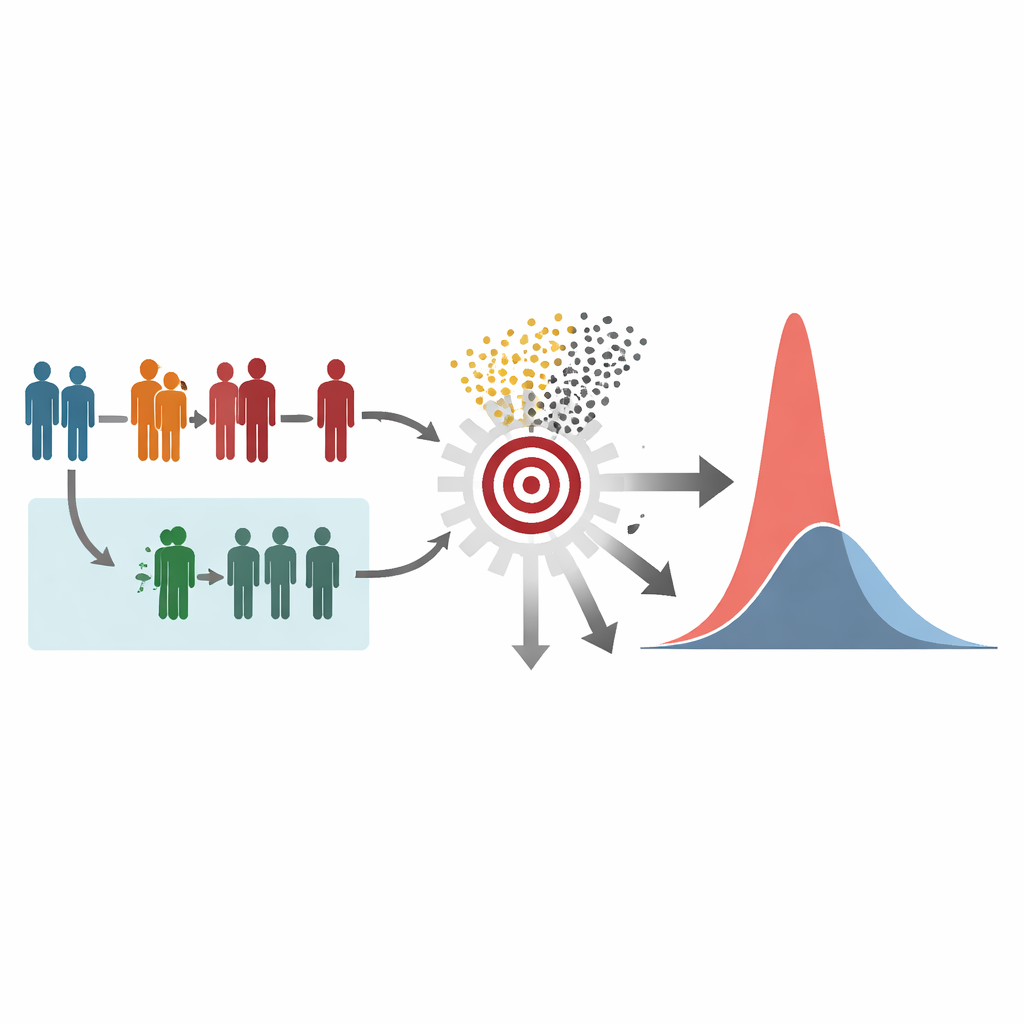
Because the model keeps explicit track of quarantine, it can translate “how strict should we be?” into concrete numbers. The analysis suggests that in Guangxi, raising the effective isolation rate of infectious children to roughly 40 percent can cut the peak of an HFMD wave by more than half, while delivering a favorable cost–benefit ratio of about one unit of spending for nearly nine units of avoided loss. Going far beyond this level yields diminishing returns and rapidly rising costs, while staying below it leaves many preventable infections. For decision-makers, the lesson is both simple and powerful: by wiring sensor data into a transparent, carefully calibrated hybrid model, it is possible to time and target quarantine measures so that they meaningfully reduce child illness and healthcare strain without resorting to blanket shutdowns.
Citation: Zeng, Z., Sathasivam, S., Xin, J. et al. Real-time dynamic prediction of HFMD transmission using SEIRQ-ARIMA hybrid model optimized by multi-stage ABC-GWO algorithm. Sci Rep 16, 9043 (2026). https://doi.org/10.1038/s41598-026-35833-7
Keywords: Hand Foot and Mouth Disease, IoT epidemic monitoring, SEIR modeling, time series forecasting, quarantine optimization