Clear Sky Science · en
Integrative single-cell and machine learning framework reveals prognostic fibroblast subtypes and constructs a fibroblast-related risk signature in lung adenocarcinoma
Why the "helper" cells around lung tumors matter
Lung adenocarcinoma is one of the most common and deadly forms of lung cancer, yet patients with seemingly similar tumors can have very different outcomes and responses to treatment. This study looks beyond the cancer cells themselves to focus on the surrounding "helper" cells called fibroblasts, which help build and remodel tissue. By zooming in on these cells one by one and then using advanced computer models, the researchers show that fibroblasts come in distinct flavors that can forecast how patients fare and how their tumors may respond to modern immunotherapies.
Looking closely at the tumor neighborhood
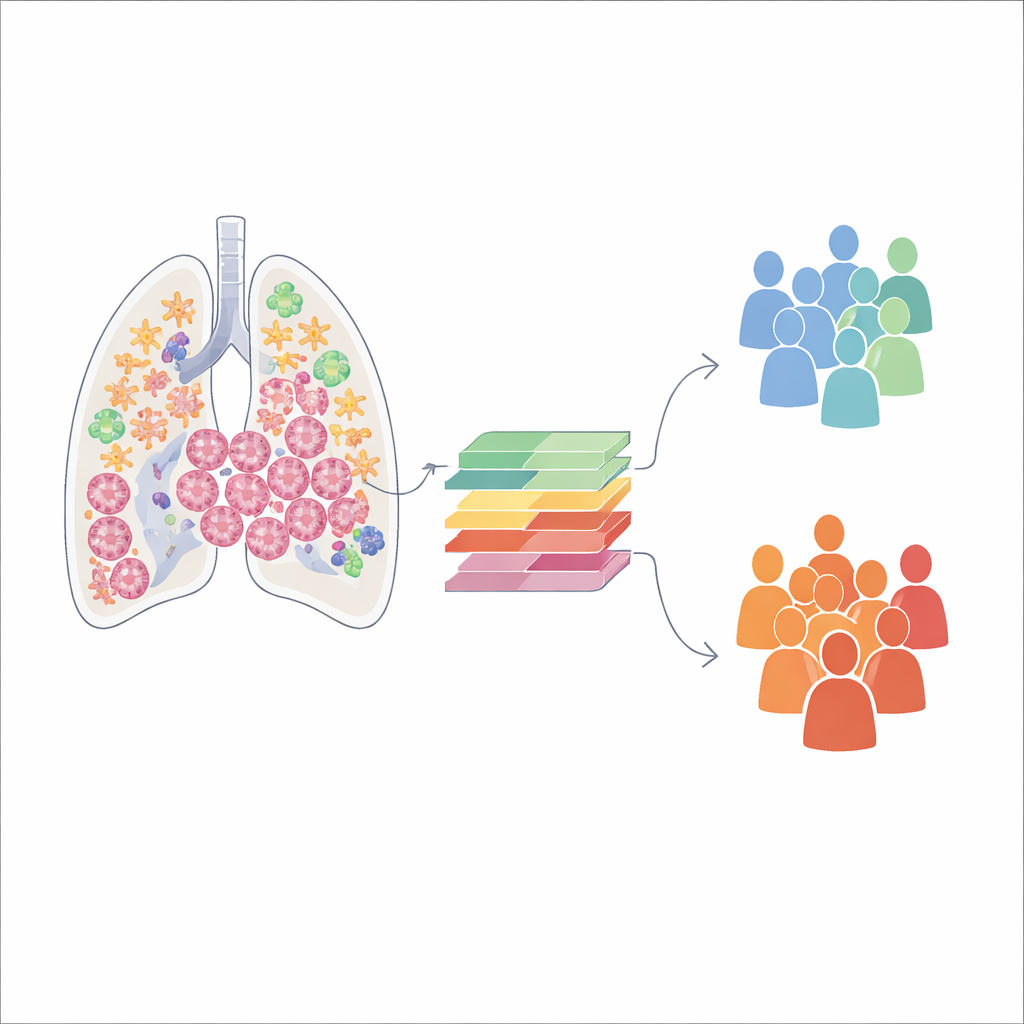
Using cutting-edge single-cell RNA sequencing, the team analyzed more than 140,000 individual cells from untreated lung adenocarcinoma samples. This technique reads out which genes are active in each cell, allowing the authors to sort the tumor into major residents: immune cells, cancer cells, blood vessel cells, and fibroblasts. They found that tumors vary widely in how much of each cell type they contain. Some tumors are packed with immune cells, while others are dominated by fibroblasts and structural tissue. Follow-up analyses showed that each of these cell types carries out specialized roles, from orchestrating immune attacks to building the tumor’s structural scaffolding.
Not all fibroblasts are alike
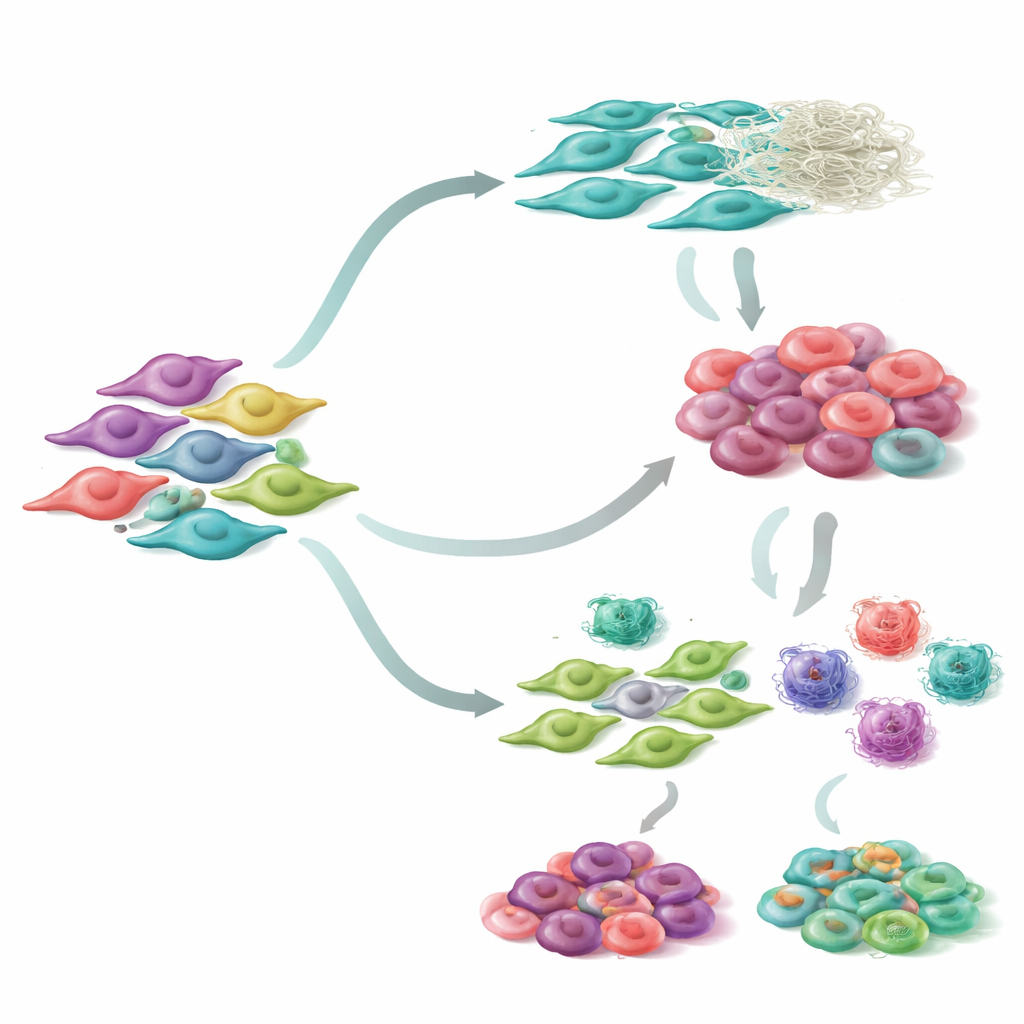
When the researchers focused specifically on fibroblasts, they uncovered seven distinct fibroblast subgroups within lung tumors. By reconstructing how these cells change over time, they observed two main developmental paths. Along one path, fibroblasts gradually take on features of contractile, tissue-stiffening cells that reshape the tumor’s surroundings. Along the other, fibroblasts become more involved in interacting with the immune system, either attracting or damping immune cells. Each subgroup showed unique patterns of gene activity and was linked to different biological tasks such as muscle-like contraction, movement, or immune regulation. Importantly, patients whose tumors were enriched for certain fibroblast subtypes tended to live longer, meaning that the mix of fibroblast states is not just a curiosity—it is tied to real clinical outcomes.
Building a risk score from fibroblast signals
To turn these biological insights into something useful in the clinic, the team combined fibroblast marker genes from single-cell data with bulk tumor data from hundreds of patients in large public databases. They then applied a battery of 10 different machine learning methods, testing 101 model combinations, to discover which mix of fibroblast-related genes best predicts patient survival. The winning model, called the fibroblast-related signature, or FRS, uses 29 genes to assign each patient a risk score. Across the main dataset and six independent patient cohorts, people with high FRS scores consistently had worse survival than those with low scores. The FRS also remained a strong predictor even when age, sex, and tumor stage were taken into account, and it improved prediction when combined with the standard TNM staging system.
Clues to immune escape and treatment response
Because many patients now receive immunotherapy, the authors asked whether the fibroblast-based score captures features of the tumor’s immune environment. They found that tumors with low FRS scores had richer infiltration by cancer-fighting immune cells such as CD8 T cells and natural killer cells, as well as higher expression of genes involved in presenting tumor fragments to the immune system. High-FRS tumors, in contrast, showed fewer helpful immune cells, higher tumor cell fraction, more genetic instability, and signs of immune exclusion, meaning immune cells are kept at bay. Measures that simulate likely response to immune checkpoint drugs suggested that patients with low FRS scores may benefit more from these therapies, whereas high-FRS patients may be more resistant.
Spotlighting a promising target gene
Among the genes that made up the FRS, the team highlighted one called TIMP1 as a particularly strong marker of poor prognosis. TIMP1 was found at high levels in many cancer types and was especially elevated in lung adenocarcinoma tissue compared with nearby normal lung. In laboratory experiments, reducing TIMP1 levels in lung cancer cell lines made the cells less able to invade through a matrix and form new colonies, suggesting that TIMP1 helps drive tumor growth and spread. These results point to TIMP1 as a candidate target for future drugs that aim to weaken the tumor’s structural and immune-shaping machinery.
What this means for patients
This work shows that the supporting cast of cells around a lung tumor, particularly fibroblasts, holds valuable information about how the disease will behave and how it may respond to treatment. By combining single-cell measurements with machine learning, the authors created a fibroblast-based risk score that can sort patients into higher- and lower-risk groups and offer hints about which tumors are more likely to resist immunotherapy. While more testing is needed before such a score can guide everyday care, the study underscores that treating lung cancer effectively will require not only attacking the cancer cells themselves but also reining in the surrounding fibroblasts that help the tumor grow and hide.
Citation: Cheng, S., Zhang, H., Mu, Q. et al. Integrative single-cell and machine learning framework reveals prognostic fibroblast subtypes and constructs a fibroblast-related risk signature in lung adenocarcinoma. Sci Rep 16, 7965 (2026). https://doi.org/10.1038/s41598-026-35830-w
Keywords: lung adenocarcinoma, cancer-associated fibroblasts, single-cell sequencing, tumor microenvironment, immunotherapy response