Clear Sky Science · en
Isolation and characterization of lactic acid bacteria from Heteropneustes fossilis for probiotic applications in aquaculture
Friendly Bacteria for Healthier Farmed Fish
As the world eats more farmed fish, fish farmers are under pressure to keep animals healthy without relying on large amounts of antibiotics. This study explores a natural alternative: "good" bacteria living inside a popular Asian catfish, Heteropneustes fossilis (locally called shing). By finding and testing beneficial microbes already adapted to this fish, the researchers hope to create probiotic feeds that protect fish from disease, improve growth, and make aquaculture more sustainable for people and the environment.
Why Fish Farms Need New Health Helpers
Aquaculture now supplies a major share of the world’s animal protein, but crowded ponds and tanks make it easy for bacterial diseases to spread. For decades, farmers have turned to antibiotics to control outbreaks. Overuse of these drugs, however, is driving antibiotic resistance, contaminating water, and raising concerns for human health. Probiotics—live, helpful microbes added to feed—offer a different strategy. They can support digestion, boost the immune system, and push back against harmful germs, all without adding chemical residues to the environment.
Hunting for Helpful Microbes in a Tough Little Catfish
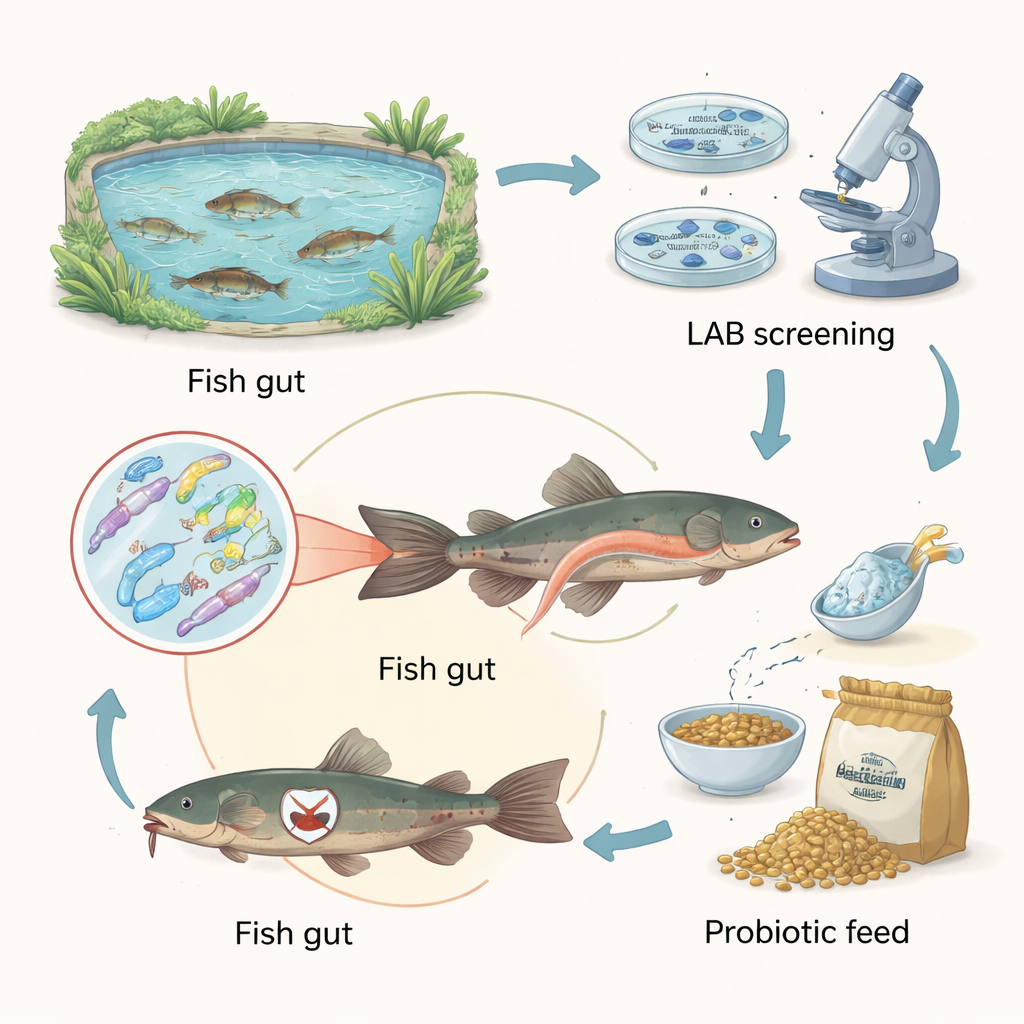
The researchers focused on H. fossilis, a hardy freshwater catfish valued across Bangladesh and Southeast Asia for its high iron and calcium content and ability to thrive in low-oxygen waters. They collected healthy fish from farms and markets, carefully removed intestinal contents, and grew the resident microbes on a culture medium that favors lactic acid bacteria—microbes widely used as probiotics in foods like yogurt. The team then examined colony shape, cell structure, oxygen needs, and basic chemistry to narrow down candidates before confirming their identity with DNA sequencing of a standard marker gene.
Discovering a Standout Probiotic Candidate
From the fish intestines, the team isolated 18 bacterial strains and, after stepwise screening, identified four lactic acid bacteria in the genus Lactococcus: L. lactis HFL8, L. garvieae HFL1 and HFL7, and L. formosensis HFL6. Earlier work has linked L. garvieae and L. formosensis to serious fish diseases, so these were ruled out as probiotic candidates. L. lactis, however, is widely known as a safe and beneficial species in both food and aquaculture. The strain L. lactis HFL8 became the star of the study and was put through a series of tests designed to mimic the harsh conditions it would face in a fish’s digestive system and in real farm environments.
Putting the Good Bacteria to the Test
L. lactis HFL8 showed impressive resilience. It survived very acidic conditions (down to pH 2, similar to stomach acid), endured high levels of bile from fish gallbladders, and grew well across a broad temperature range from cool (20 °C) to warm (35–45 °C). It also tolerated moderate salt, important for different pond and feed conditions. On the fish-gut side, the strain’s cell surface was strongly “sticky,” helping it clump together and attach—properties linked to forming stable communities on the intestinal wall. In lab tests, these clumps could bind to other bacteria, including known fish pathogens, suggesting the probiotic could crowd out or physically trap troublemakers. Crucially, the strain did not damage red blood cells (a basic safety check) and remained sensitive to most common antibiotics, reducing the risk of spreading drug-resistance genes.
Fighting Fish Germs Without Drugs
Beyond surviving in the gut, a useful probiotic must also defend its host. When the team exposed two important fish pathogens—Aeromonas hydrophila and Lactococcus garvieae—to liquid from L. lactis HFL8 cultures, both harmful species were strongly inhibited. This suggests that the friendly strain releases acids or natural antimicrobial compounds that make life difficult for invaders. Because the bacteria were originally isolated from H. fossilis, they are also likely to be well adapted to the local pond conditions and native microbial community, an advantage over commercial probiotics imported from other environments.
What This Means for Fish Farmers and Consumers
The study concludes that L. lactis HFL8 is a promising probiotic candidate for aquaculture. While these tests were done in the lab, the strain’s ability to survive gut-like conditions, stick to intestinal surfaces, block pathogens, and pass basic safety checks makes it a strong contender for future probiotic feeds. If upcoming farm trials confirm that HFL8 improves growth, disease resistance, and overall fish health, producers could reduce dependence on antibiotics, strengthen biosecurity, and offer consumers fish raised with more natural, microbiome-based care. In short, harnessing the fish’s own friendly bacteria may help keep dinner plates full while easing the environmental burden of intensive aquaculture.
Citation: Hossain, M.S., Mondal, C., Rifa, R.J. et al. Isolation and characterization of lactic acid bacteria from Heteropneustes fossilis for probiotic applications in aquaculture. Sci Rep 16, 5835 (2026). https://doi.org/10.1038/s41598-026-35791-0
Keywords: fish probiotics, aquaculture health, lactic acid bacteria, antibiotic alternatives, Heteropneustes fossilis