Clear Sky Science · en
Serological and molecular evidence of canine enteric coronavirus in southern Italy
Why dog owners should care
Many dog lovers assume that serious coronaviruses are mostly a human problem, but our pets are affected too. This study looks at a common stomach virus in dogs, called canine enteric coronavirus, in one of Italy’s most dog‑dense regions. Understanding how widespread it is, which dogs are most exposed, and how it might jump between species matters not only for keeping pets healthy, but also for guarding against future animal‑to‑human infections.
A quiet but common dog virus
Canine enteric coronavirus mainly attacks a dog’s intestines and usually causes mild or even invisible illness, though puppies can develop severe diarrhea and bleeding. Like other coronaviruses, it mutates and mixes its genes easily, sometimes trading pieces with related viruses from cats and pigs. This churning genetic “soup” can occasionally produce more aggressive strains that spread beyond the gut to other organs, and it raises concern that dog viruses might someday adapt to infect people, as hinted by recent reports of dog‑related coronaviruses in human patients.
Taking the pulse of dogs in southern Italy
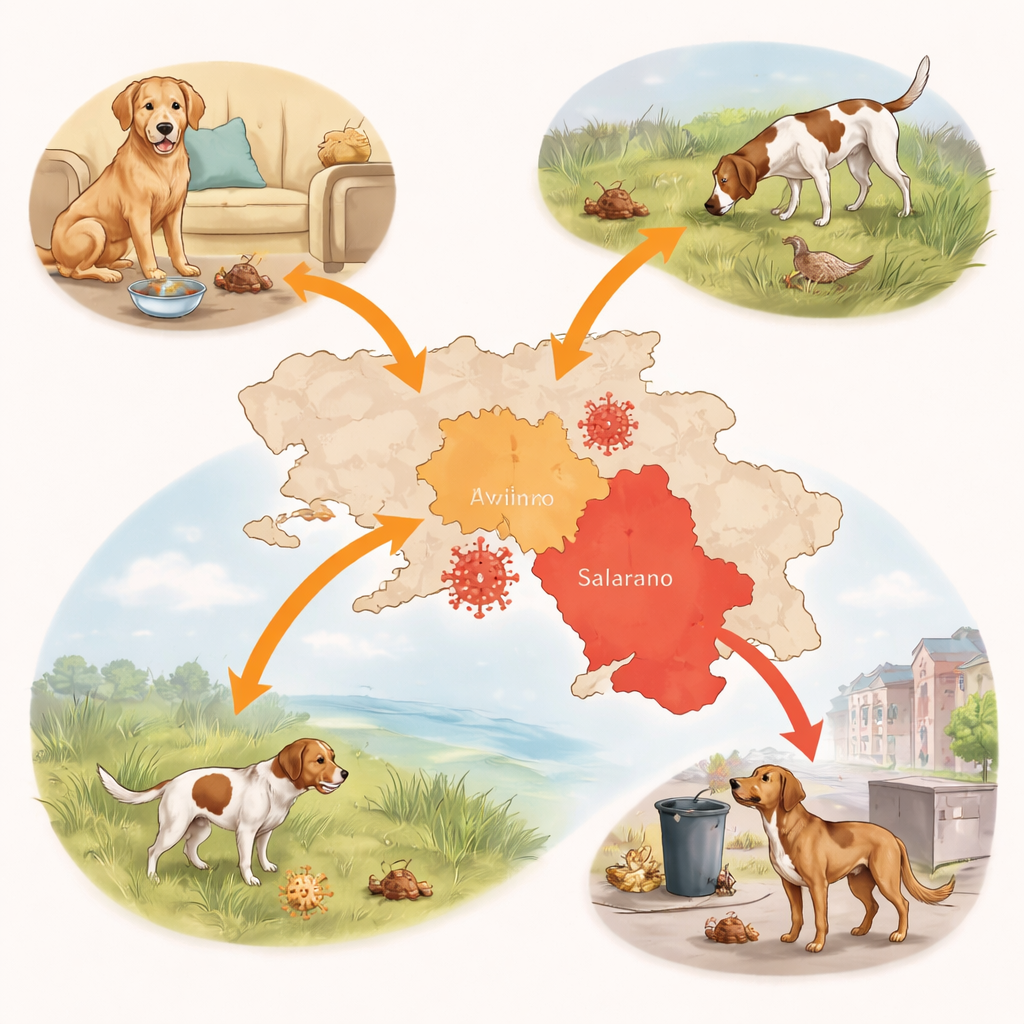
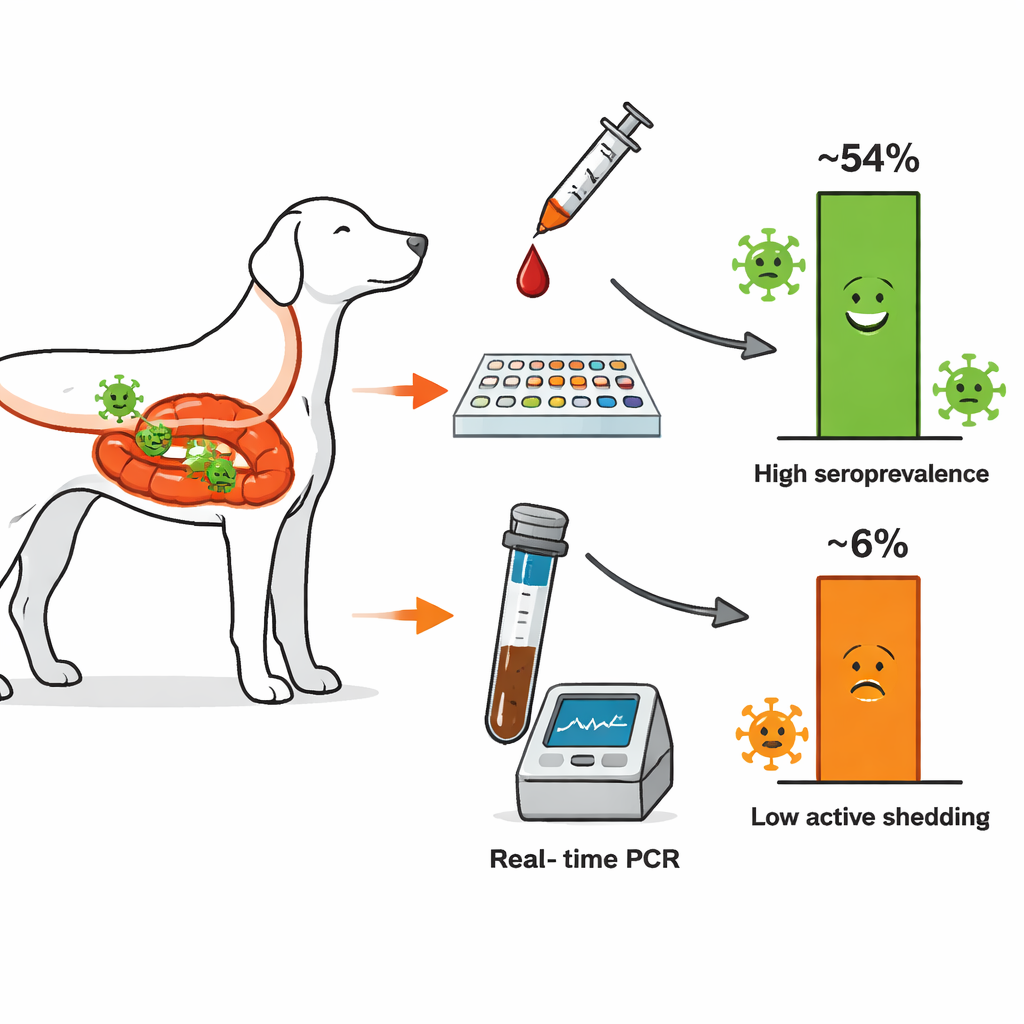
To find out how widespread this virus is, researchers sampled 258 healthy dogs across 71 districts in Campania, southern Italy, and collected stool from 154 of them. The dogs came from three everyday groups: pets, hunting dogs, and strays. Blood samples were tested for antibodies, which reveal whether a dog has ever met the virus, while stool samples were checked for viral genetic material, a sign of current shedding and a direct risk of passing infection to other animals.
Many exposed, few actively infectious
The results showed that more than half of the dogs (about 54 percent) carried antibodies, meaning they had been infected at some point. But only 5.8 percent of the stool samples were positive for viral RNA, indicating that most dogs were not actively shedding the virus when tested. Dogs from certain inland provinces, especially Avellino and Salerno, had strikingly high antibody rates—up to 86 percent in some areas. This contrast between widespread past exposure and relatively low active infection suggests waves of infection that move through the population and then fade, leaving many dogs with immune “footprints.”
Who is most at risk?
By comparing test results with each dog’s background, the team identified clear risk patterns. Hunting dogs and animals living mostly outdoors were two to three times more likely to have antibodies than pets with an indoor lifestyle. Stray dogs and those in crowded settings such as shelters likely face frequent contact with contaminated feces, surfaces, or soil, especially in cooler seasons when the virus survives longer in the environment. In contrast, factors such as sex, age, size, and whether a dog was a mixed or pure breed did not make a meaningful difference in exposure.
What this means for dogs and people
For dog owners, the main message is that this intestinal coronavirus is common but usually not dramatic, and routine vaccination against it is not currently recommended. Good hygiene, prompt cleanup of feces, and careful management of crowded dog environments do far more to limit spread. For public health, the study highlights that coronaviruses are circulating quietly in household animals, constantly evolving and sometimes recombining with other strains. Keeping track of where these infections are common and how they change over time can help veterinarians detect more dangerous variants early and reduce the chances that a dog virus someday becomes a human problem.
Citation: Ferrara, G., Lerro, R., Shin, HJ. et al. Serological and molecular evidence of canine enteric coronavirus in southern Italy. Sci Rep 16, 4977 (2026). https://doi.org/10.1038/s41598-026-35787-w
Keywords: canine coronavirus, dog gastroenteritis, zoonotic viruses, hunting and stray dogs, Campania Italy