Clear Sky Science · en
The impact of social media addiction on college students’ mental health through social support and resilience
Why our screens can quietly weigh us down
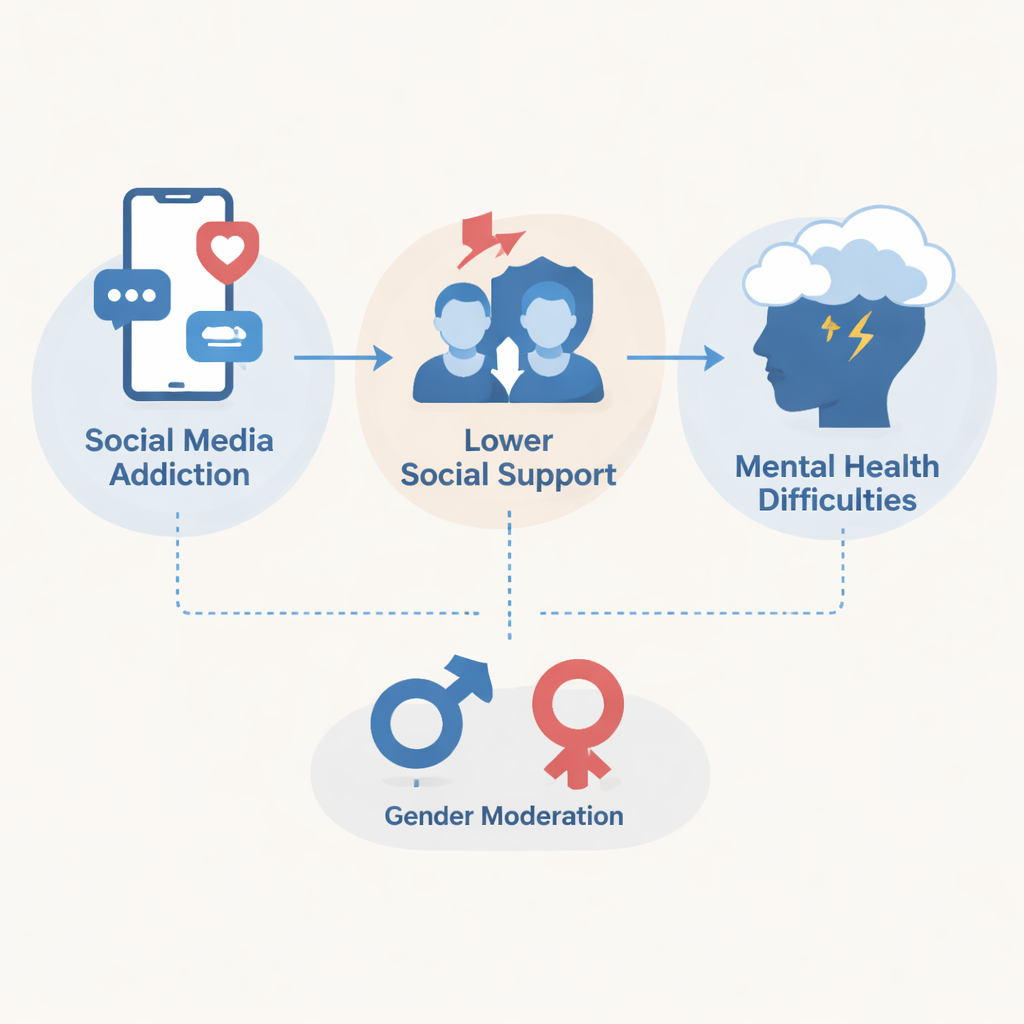
For many college students, scrolling through social media is as routine as breathing. Yet when checking turns into compulsive use, it can quietly chip away at mental health. This study of more than a thousand Chinese undergraduates asks a pressing question: how exactly does heavy, addictive social media use translate into anxiety, depression, and stress, and why might women be hit harder? By looking closely at the roles of real-world support and inner psychological strength, the research offers clues for parents, educators, and students who want to stay connected without sacrificing well-being.
From everyday habit to harmful dependence
The researchers focus on what they call social media addiction: not just frequent use, but a pattern of needing to be online, struggling to cut back, and feeling distressed when disconnected. Among young adults, this pattern is increasingly common and has been linked to sleep problems, constant distraction, and feeling left out. In this study, college students who scored higher on social media addiction also reported more serious mental health issues, including symptoms of depression, anxiety, and stress. Even after taking into account age and year in school, the link remained strong, suggesting that problematic social media use is more than a harmless pastime.
Why real-world support matters so much
One key pathway from addictive scrolling to poor mental health runs through social support—the emotional and practical help people receive from family, friends, and significant others. Students who were more addicted to social media reported feeling less supported in their offline lives. This loss of support was strongly tied to worse mental health. In other words, when social media starts crowding out real conversations, shared activities, and a sense of being cared for, students may become more vulnerable to sadness and worry. The study shows that part of the damage from social media addiction happens because it erodes this protective web of relationships.
The hidden role of inner strength
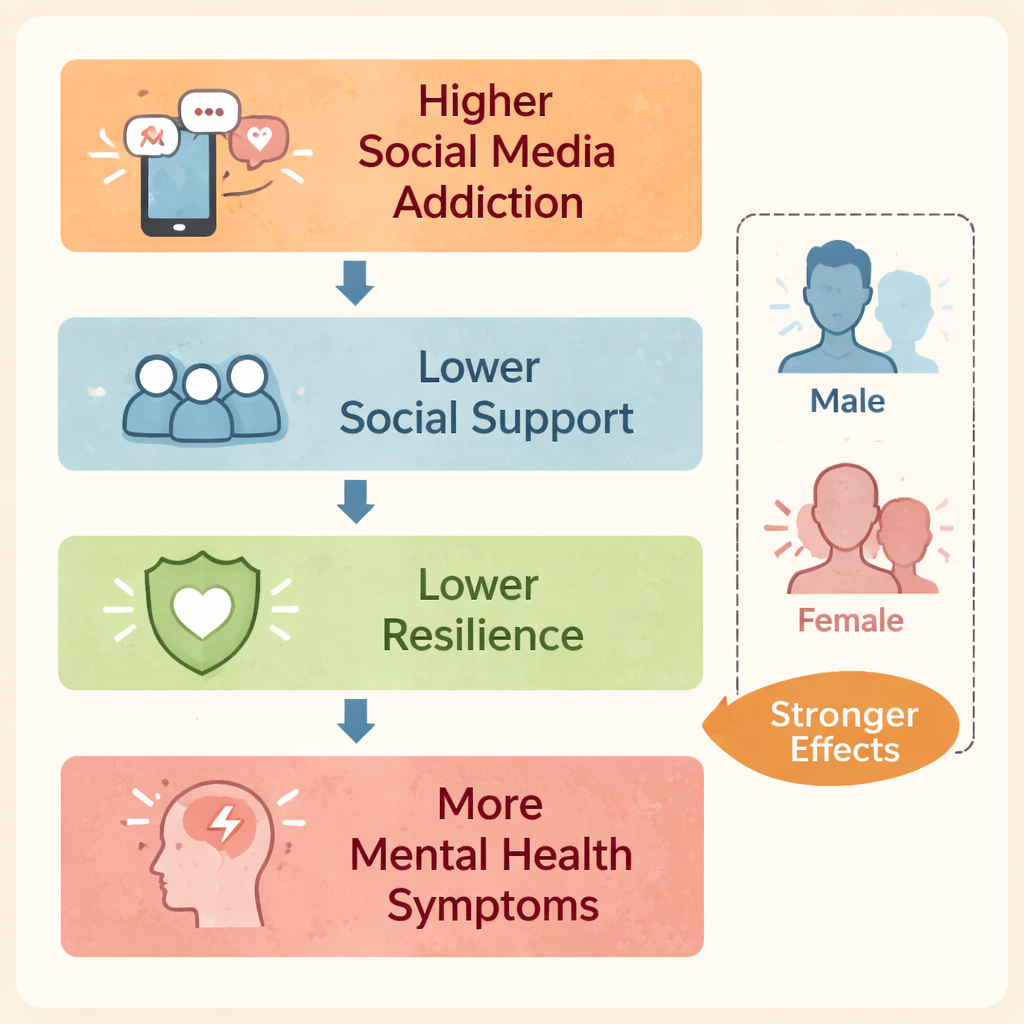
The second pathway involves resilience—our inner ability to bounce back from setbacks and handle stress. Students with higher levels of social media addiction tended to show lower resilience. Those with weaker resilience, in turn, were more likely to report mental health problems. Resilience helps people reframe stressful situations, manage negative emotions, and keep going even when life feels overwhelming. When heavy social media use undermines this inner strength—perhaps by encouraging avoidance rather than problem-solving—it can make everyday challenges feel harder to bear. The study finds that social media addiction harms mental health both directly and by quietly wearing down this inner coping capacity.
A chain reaction shaped by gender
Crucially, the research reveals that social support and resilience do not work in isolation. Instead, they form a chain: social media addiction first weakens students’ sense of being supported, which then undermines their resilience, and together these changes worsen mental health. The study also shows that gender shapes this chain reaction. For female students, the harmful effect of social media addiction on mental health was stronger, and the protective power of social support was greater. Women appeared more sensitive both to the damage caused by addictive use and to the relief provided by strong relationships. In contrast, the link between resilience and mental health looked similar for men and women, suggesting that inner strength helps both groups in much the same way.
What this means for students and those who support them
To a lay reader, the takeaway is straightforward: when social media use slips into addiction, it can chip away at both the people we rely on and the strength we rely on inside ourselves, leaving us more exposed to anxiety, depression, and stress. This study shows that building and protecting real-world support networks and nurturing resilience are powerful ways to buffer those harms, especially for young women. Limiting compulsive scrolling, making time for face-to-face connections, and learning healthy coping skills are not just good habits—they are central to staying mentally healthy in a world where our phones are always within reach.
Citation: Cai, F., Wang, Y. & Jin, S. The impact of social media addiction on college students’ mental health through social support and resilience. Sci Rep 16, 5087 (2026). https://doi.org/10.1038/s41598-026-35779-w
Keywords: social media addiction, college students, mental health, social support, resilience