Clear Sky Science · en
The effects of atherosclerotic cardiovascular disease and ten-year atherosclerotic cardiovascular disease risk score on mental health status
Why Your Heart and Mind Are More Connected Than You Think
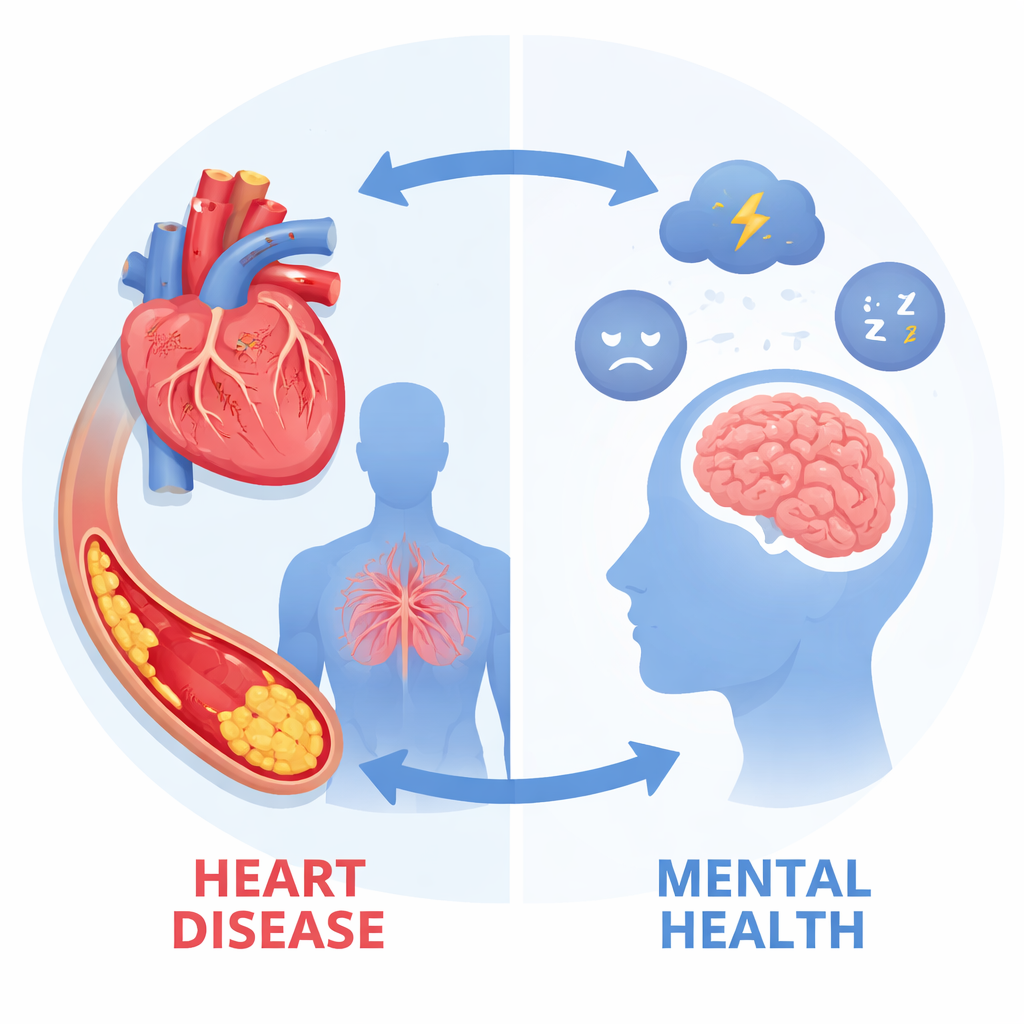
A heart attack or stroke is frightening enough on its own, but many people are surprised to find their mood, sleep, and day‑to‑day functioning also change after heart trouble. This study looks at how atherosclerotic cardiovascular disease (ASCVD)—a common cause of heart attacks and strokes—and the risk of developing it over the next ten years are tied to people’s mental well‑being. Understanding this link can help patients, families, and doctors protect both heart health and mental health at the same time.
A Closer Look at Heart Disease Risk
ASCVD occurs when fatty deposits and inflammation narrow the arteries that supply blood to the heart, brain, and other organs. Doctors use a standard calculator, based on age, blood pressure, cholesterol, smoking, diabetes, and other factors, to estimate a person’s chance of having a heart attack or stroke within ten years. In this study, more than 1,100 adults aged 25 to 70 from Shiraz, Iran, were evaluated as part of the Shiraz Heart Study. None had a diagnosed psychiatric disorder or were taking psychiatric medications, which allowed the researchers to focus on mental health concerns that might be emerging alongside heart disease rather than long‑standing conditions.
Taking the Pulse of Mental Well‑Being
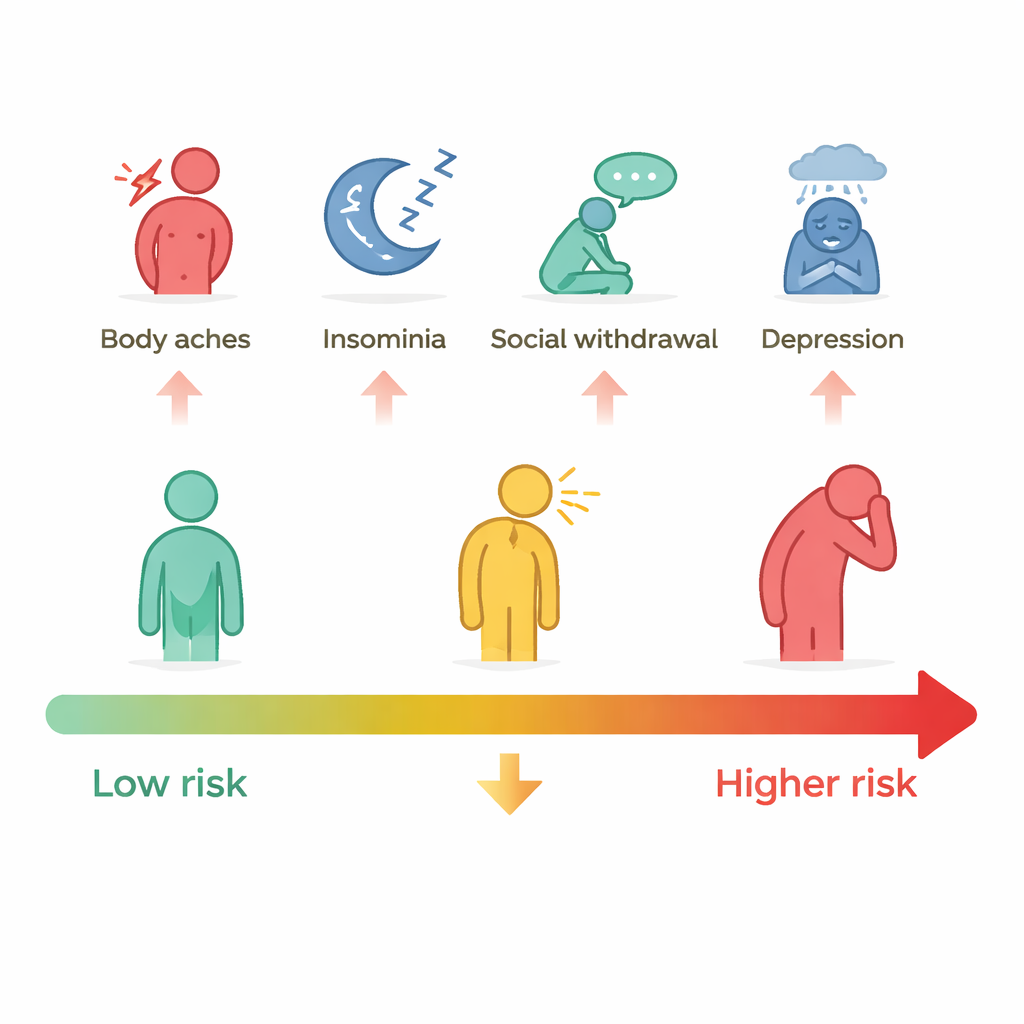
On the same day their heart risk was measured, participants completed a 28‑item mental health questionnaire widely used around the world. It asks about four areas: physical complaints such as fatigue or headaches (called somatic symptoms), anxiety and sleep problems, difficulties in everyday social roles, and signs of severe depression, such as loss of interest or persistent sadness. Each area receives a score; higher scores signal worse well‑being. For this study, having a mental disorder meant scoring above a certain cutoff on the total score or on any of these four areas, capturing people who might be struggling in just one or two domains rather than only those with very severe problems.
When Existing Heart Disease Weighs on the Mind
About one in ten participants already had ASCVD, such as coronary heart disease or stroke. Compared with those without ASCVD, these individuals reported more physical complaints, more anxiety and insomnia, more severe depression, and worse overall mental health scores. After accounting for age, sex, education, and income, the odds of having troubling physical symptoms, anxiety and sleep problems, or severe depression were all higher in the ASCVD group. In other words, living with established heart or blood vessel disease was strongly linked to poorer mental well‑being, even in people who had never been formally diagnosed with a psychiatric condition.
Future Heart Risk Also Matters
The researchers then focused on the large group without current ASCVD and divided them by their ten‑year risk score. People whose calculated risk was 5 percent or higher—a level many guidelines consider worthy of closer attention—had worse scores on physical symptoms, anxiety and insomnia, social functioning, severe depression, and total mental health than those with lower risk. Statistical modeling showed that as ten‑year risk rose above this threshold, the chances of problems such as anxiety, poor sleep, strained social life, and depression all increased. This suggests that simply knowing you are at higher risk for a future heart event—or living with the same lifestyle and biological factors that raise that risk—may already be taking a toll on mental health.
What This Means for Patients and Caregivers
The findings reinforce a two‑way relationship between the heart and the mind. ASCVD appears to be linked not only to physical danger but also to greater levels of distress, worry, and low mood. Even before disease strikes, people at higher calculated risk show more signs of emotional and social strain. For patients, this means that mentioning sleep trouble, persistent sadness, or changes in daily functioning to their doctor is not a distraction from treating their heart—it is an essential part of it. For clinicians and health systems, the study argues that mental health screening and support should be built into heart clinics and primary care visits, particularly for those with known ASCVD or elevated risk scores. Addressing stress, depression, and anxiety early may improve quality of life and could, in the long run, help protect the heart as well as the mind.
Citation: Zibaeenezhad, M.J., Molazadeh, J., Sayadi, M. et al. The effects of atherosclerotic cardiovascular disease and ten-year atherosclerotic cardiovascular disease risk score on mental health status. Sci Rep 16, 6081 (2026). https://doi.org/10.1038/s41598-026-35737-6
Keywords: heart disease, mental health, depression, cardiovascular risk, anxiety