Clear Sky Science · en
Exogenous regulators enhance strawberry yield under heat stress conditions
Why hot weather threatens your strawberries
Strawberries are a favorite fruit around the world, but the plants themselves are surprisingly delicate. They thrive in cool conditions and begin to struggle when temperatures climb much above the low 20s Celsius. As heat waves become more common with climate change, growers in warm regions risk losing plants, runners, and fruit. This study, carried out in Bangladesh, asked a practical question that matters to farmers and home gardeners alike: can simple sprays help strawberry plants survive scorching summers and still produce tasty, nutritious berries?
Testing simple helpers for stressed plants
Researchers focused on three locally grown strawberry types and six spray treatments, all applied to potted plants exposed to real outdoor summer heat, often over 30–40 °C. One group of plants received only water, while others were treated with common farm inputs or natural regulators: the plant hormone abscisic acid, calcium chloride, kaolin clay, melatonin, and molasses. Over more than a year, the team tracked plant height, leaf number, water status, leaf pigments, antioxidant defenses, and finally fruit size, sweetness, vitamin content, and yield. By following the same plants across the hot season and through two fruiting cycles, they could see which treatments truly helped plants cope rather than just giving a short-term boost.
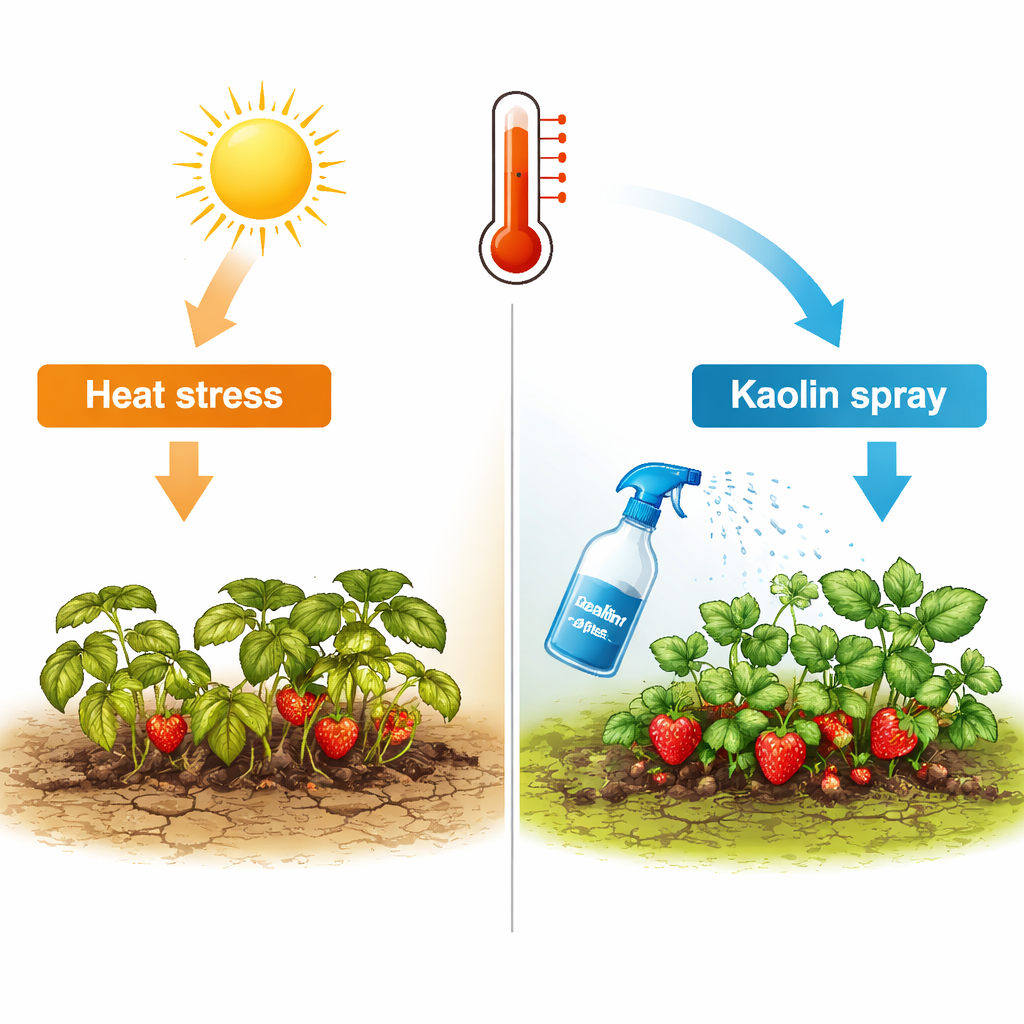
How a thin white film keeps plants cooler
The standout treatment was kaolin, a fine white clay that forms a light, reflective film on leaves when sprayed. Under the intense summer sun, untreated plants wilted, produced fewer leaves, and showed signs of heat damage inside their cells. In contrast, kaolin-sprayed plants grew 15–25% taller and carried more leaves than control plants. Their leaves held more water and retained higher levels of chlorophyll and carotenoids, the green and orange pigments that drive photosynthesis and protect against light damage. Inside the leaves, markers of cell damage dropped, while antioxidant activity rose, suggesting the plants were better able to neutralize harmful by-products generated by heat stress.
Better berries in both size and nutrition
The benefits of cooler, healthier leaves showed up clearly in the fruit. Plants treated with kaolin produced larger, heavier strawberries with more dry matter, meaning a denser, less watery fruit. In the best-performing variety, fruit weight more than quadrupled compared with untreated controls, and berry size increased by roughly two-thirds. The fruits were also sweeter, with higher total soluble solids, and carried more health-promoting compounds, including vitamin C and antioxidant molecules. Other treatments had more targeted effects: melatonin, for example, gave the highest levels of some B vitamins and vitamin C, while molasses provided a moderate lift in fruit quality. But across all three strawberry types, kaolin was the only treatment that consistently improved both plant health and the final harvest.
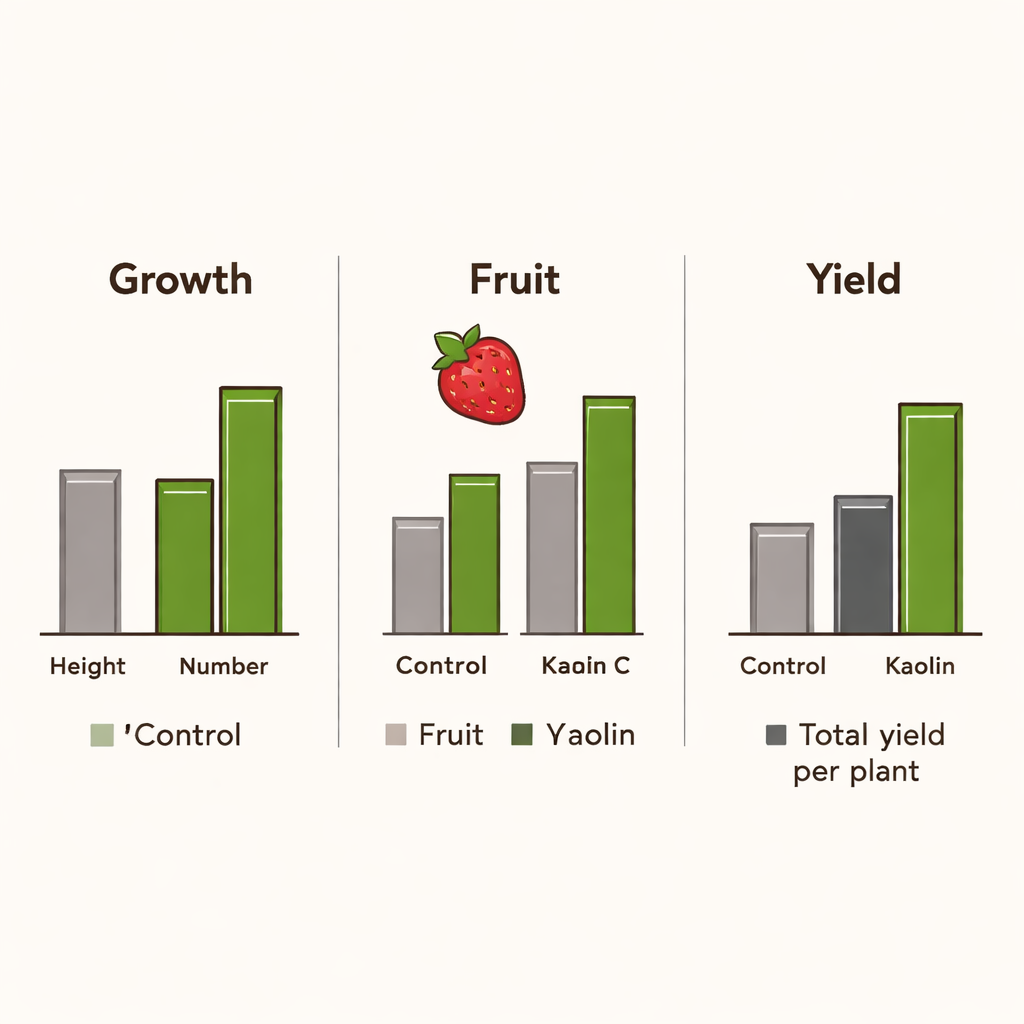
Finding the toughest strawberry for a warming world
Not all strawberries responded equally. One local variety, BARI Strawberry-3, repeatedly rose to the top. Under kaolin spray, it maintained the best leaf water status and pigment levels, suffered the least cell damage, and produced the most fruit per plant. Its total yield reached around 20–30% higher than other varieties under the same treatment, and far above the unsprayed controls. This suggests that choosing the right variety is just as important as picking the right spray: combining a heat-tolerant plant with a protective coating gives the strongest defense against hot summers.
What this means for growers and gardeners
For farmers in hot, humid regions, the study offers a straightforward, affordable strategy. A 5% kaolin spray, applied regularly during the hottest months, can cool the leaf surface, help plants hold onto water, and keep their photosynthetic machinery working. That, in turn, leads to more and better berries without resorting to expensive cooling infrastructure. The authors also emphasize that kaolin is relatively cheap, widely available, and considered safe for soils, insects, and groundwater. While more multi-year field trials are needed, especially combining kaolin with other gentle treatments like melatonin or low-dose hormones, the message is clear in everyday terms: a thin white film of clay can act like sunscreen for strawberries, helping them stay alive, productive, and nutritious as the climate warms.
Citation: Salwa, NTN., Swarna, S.S. & Moonmoon, S. Exogenous regulators enhance strawberry yield under heat stress conditions. Sci Rep 16, 5573 (2026). https://doi.org/10.1038/s41598-026-35730-z
Keywords: strawberry heat stress, kaolin spray, climate-resilient crops, fruit quality, tropical horticulture