Clear Sky Science · en
Mechanistic evaluation of the in vitro antiviral and anti-inflammatory potential of thyme and licorice herbal preparation
Herbal help for coughs and colds
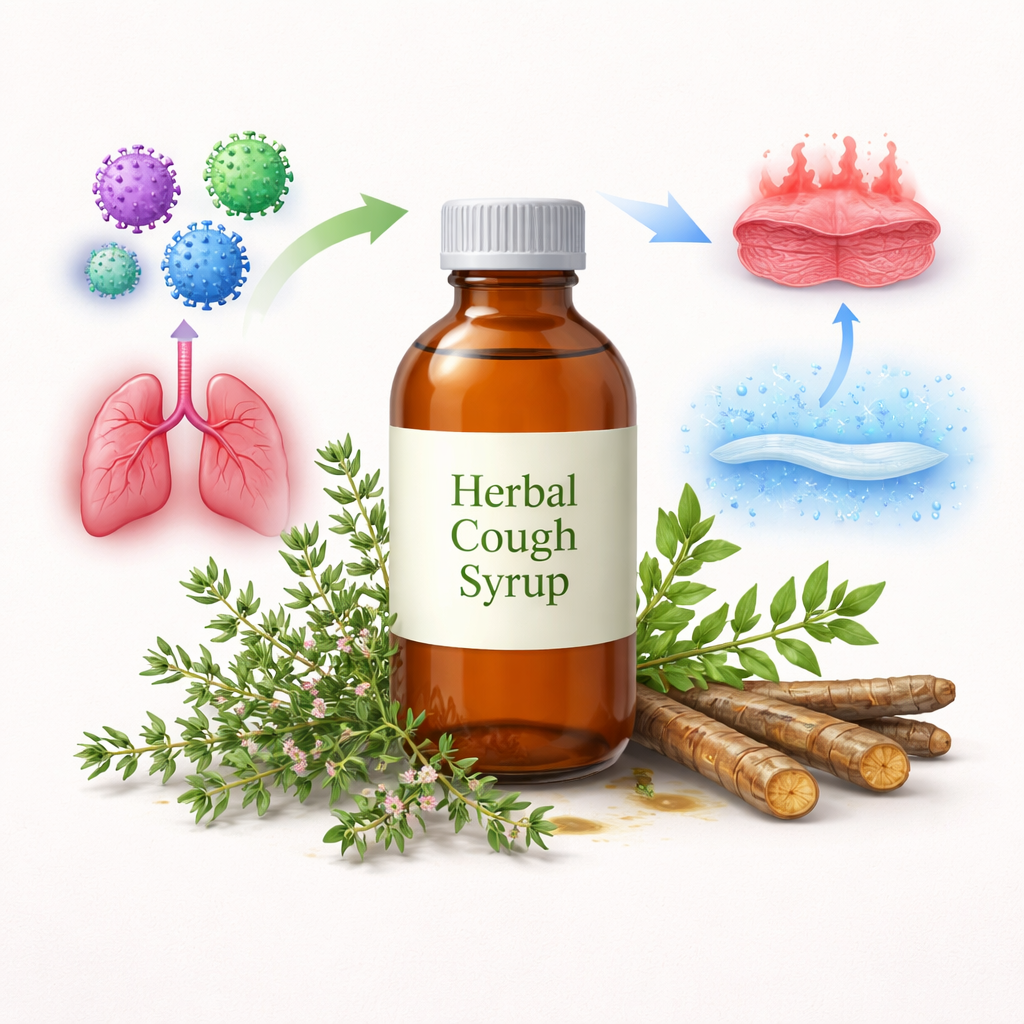
Every winter, many people reach for herbal syrups made from familiar kitchen plants like thyme and licorice to soothe coughs and sore throats. But do these sweet remedies do more than simply coat an irritated throat? This study takes a close laboratory look at a Turkish over‑the‑counter syrup called CarvenS™, made from thyme and licorice extracts, to see whether it can block key steps used by respiratory viruses and calm the body’s inflammatory response that drives many cold and flu symptoms.
Why thyme and licorice matter
Thyme and licorice have long histories in traditional medicine. Thyme, a common culinary herb, has been used as a tea or syrup for cough, colds, and chest infections, and modern research has linked its essential oils and natural acids to antibacterial, antiviral, and anti‑inflammatory effects. Licorice root, best known for its sweet taste, has also been used for breathing problems, stomach ulcers, and as a general tonic. Scientists have found that compounds in licorice can loosen mucus, fight viruses and bacteria, and modulate the immune system. The syrup studied here combines standardized extracts of both plants in a stevia‑based liquid intended for children and adults with cough, cold, or flu‑like illnesses.
Checking what is inside the bottle
Before testing how the syrup behaves in the lab, the researchers first asked a simple question: what are its main active plant components? Using high‑performance liquid chromatography, a technique that separates and measures chemicals in a mixture, they confirmed that the syrup contains two well‑known marker compounds. One is rosmarinic acid, a natural antioxidant found in thyme and related herbs; the other is glycyrrhizic acid (also called glycyrrhizin), a sweet, biologically active component of licorice root. The team measured roughly 1.07% rosmarinic acid and 0.4% glycyrrhizic acid by weight in the syrup, supporting that it contains meaningful amounts of these characteristic plant molecules.
Putting the syrup to the virus and inflammation test
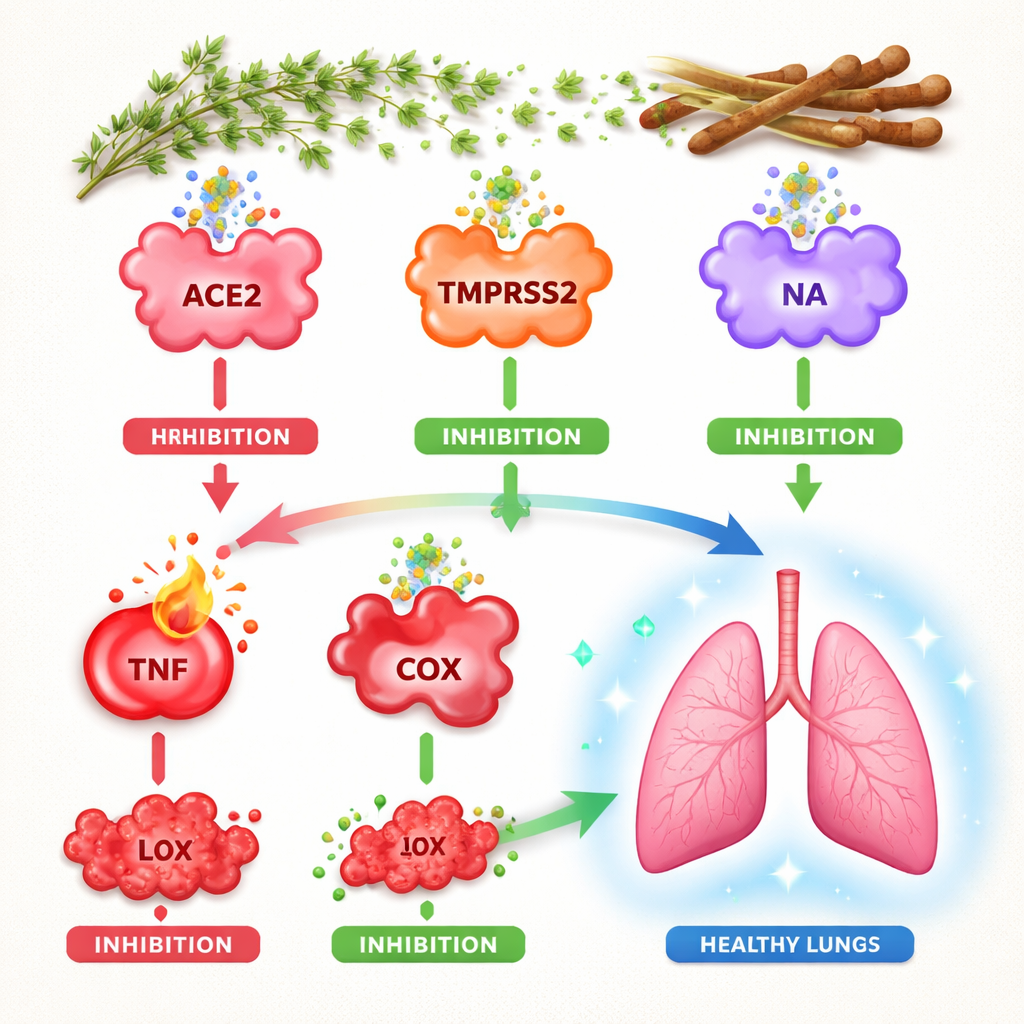
The core of the study looked at whether CarvenS™ could interfere with enzymes—specialized proteins—that viruses use to enter and spread in the body, and that the body uses to generate inflammation. In test‑tube assays at a single concentration, the syrup strongly reduced the activity of three viral enzymes: ACE2, TMPRSS2, and neuraminidase. These proteins help respiratory viruses attach to and invade cells or release new virus particles. The syrup also significantly suppressed several drivers of inflammation: tumor necrosis factor‑alpha (TNF‑α), two cyclooxygenase enzymes (COX‑1 and COX‑2) that produce pain‑ and fever‑related molecules, and 5‑lipoxygenase (5‑LOX), another pathway involved in swelling and airway irritation. In all of these tests, the syrup blocked more than 74% of the enzyme activity, suggesting that its plant components can, at least in vitro, hit multiple biological targets linked to viral illness and inflammation.
What the findings do and do not prove
These results help explain why thyme‑ and licorice‑based syrups have been popular for coughs and colds: their combined extracts do not only soothe but also appear to block key viral and inflammatory pathways in a controlled laboratory setting. Importantly, the authors stress that these experiments were performed at a fixed test‑tube concentration and did not measure how the effects change with dose or how the syrup behaves in the human body. They also note that the strong activity is probably due to many plant compounds working together, not just the two markers they measured. While earlier research hints that thyme and licorice might act against coronaviruses as well as influenza, this study alone cannot show that taking the syrup will prevent or treat such infections in real patients.
What this could mean for everyday use
For lay readers, the takeaway is that a well‑made herbal cough syrup containing thyme and licorice may have more going on under the surface than pleasant taste and throat coating. In the lab, CarvenS™ strongly blocked enzymes that help respiratory viruses infect cells and that fuel the inflammation behind fever, cough, and sore throat. That makes it a promising candidate to support the treatment of viral respiratory infections. However, only future animal studies and clinical trials can confirm whether these in‑vitro effects translate into real‑world benefits and safe, effective dosing against illnesses such as seasonal flu and COVID‑19.
Citation: Karadağ, A.E., Baydar, R. & Demirci, F. Mechanistic evaluation of the in vitro antiviral and anti-inflammatory potential of thyme and licorice herbal preparation. Sci Rep 16, 6487 (2026). https://doi.org/10.1038/s41598-026-35721-0
Keywords: herbal cough syrup, thyme and licorice, antiviral activity, respiratory infections, anti-inflammatory effects