Clear Sky Science · en
Factors influencing the well-being of elderly population in home care mode and optimization research
Why Home Care for Seniors Matters to All of Us
Across the world, families are wrestling with a big question: how can older parents and grandparents stay healthy, active, and emotionally fulfilled without leaving the homes and neighborhoods they love? This study looks for answers in the fast-growing Guangdong–Hong Kong–Macao Greater Bay Area of southern China, where researchers followed 800 seniors for a year to see how organized home care affected their everyday lives. Their findings offer a detailed, human picture of what works—and what still needs fixing—when we try to support aging at home instead of in institutions.
Life at Home: More Than Just Medical Visits
The team did not treat well-being as a single number. Instead, they looked at four down-to-earth questions: How well are long-term health problems handled? How easily can seniors manage daily tasks like dressing or cooking? How do they feel emotionally? And how often do they connect with other people? Using a specially designed questionnaire, they surveyed older adults in four cities—Guangzhou, Macao, Zhuhai, and Foshan—right when home care services began and again 12 months later. Home care here meant a mix of family help, regular visits from health professionals, and community activities ranging from blood pressure checks to group games and counseling. 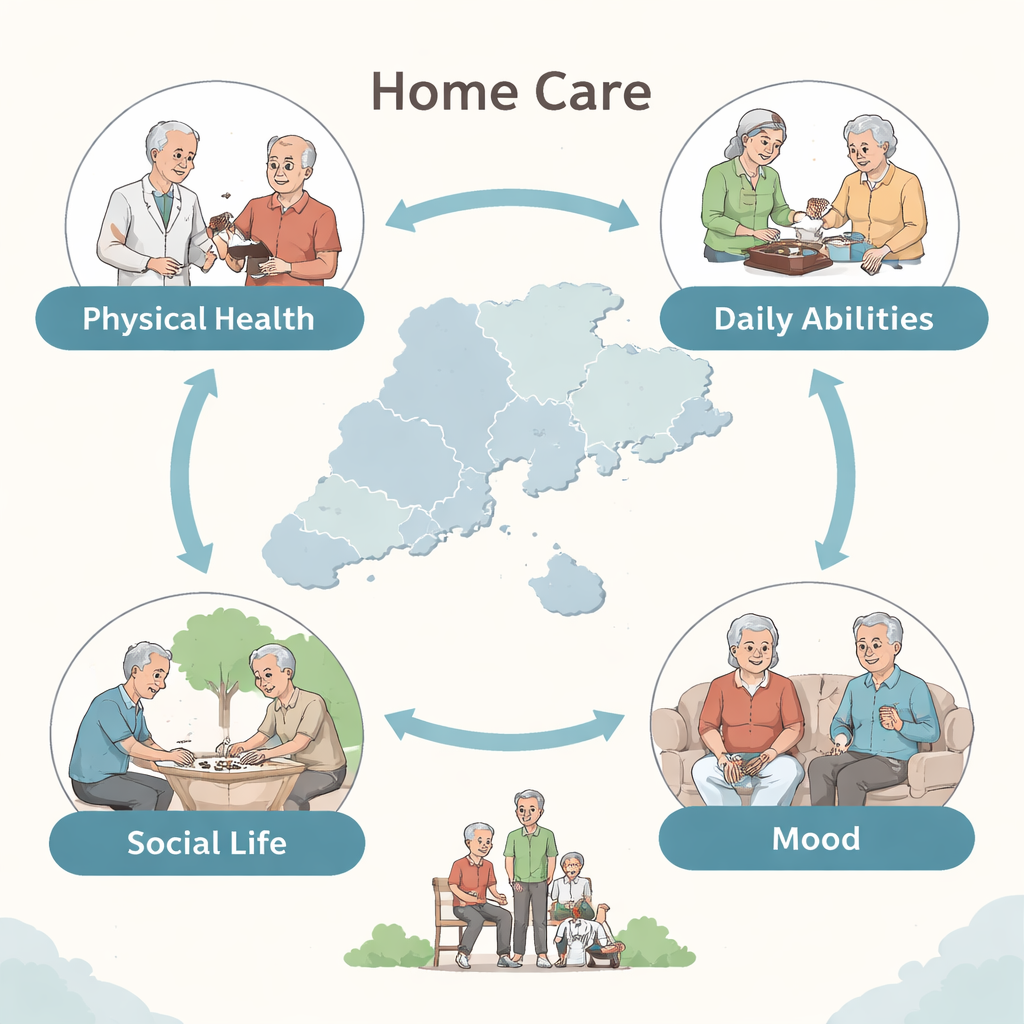
Feeling Better and Less Alone
The most striking changes appeared in mood and social life. On average, seniors reported clear improvements in how they felt emotionally and how connected they were to others after a year of home care. Loneliness, anxiety, and low spirits eased as caregivers, neighbors, and community workers created more chances to talk, meet, and participate in group events. These gains were strong enough to stand out in the statistical analyses the researchers used. In other words, home care did more than just keep people alive; it helped them feel that life was still worth living and that they still belonged. The overall combined well-being score for participants rose noticeably, confirming that the benefits extended across multiple aspects of daily life.
Uneven Gains: Where You Live, What You Earn, and Your Gender
Not every senior benefited equally. The study found that older adults living in wealthier cities such as Guangzhou and Macao tended to see larger boosts in mood and social interaction than those in less advantaged areas. Better funding, richer community life, and more varied services likely played a role. Income also mattered at the individual level: high‑income seniors showed greater improvements across all four dimensions, especially in social life and psychological well-being. Gender differences emerged as well. While both men and women improved in physical health and daily abilities, women experienced far larger gains in mood and social connection, suggesting that emotionally rich, socially oriented services may especially match women’s needs and habits.
Strengths, Gaps, and the Road to Better Care
The picture was not uniformly positive. Management of chronic diseases, such as diabetes or heart problems, did not improve as much as emotional and social outcomes, and in some measures even dipped slightly. The authors argue this may reflect a shift in what seniors themselves focus on once basic medical care is in place: they start to value companionship and participation more than tightly regimented treatment routines. Still, the modest changes in disease control point to an important gap: home care programs must find ways to protect time and resources for medical follow-up, even as they expand social and psychological support. The study also notes limits in its design—such as the lack of a comparison group—and the fact that all participants lived in relatively developed urban areas.
What This Means for Families and Policymakers
For non-specialists, the core message is simple: when thoughtfully organized, home care can help older people feel less lonely, more engaged, and more capable in their everyday lives, even if it does not magically solve every health problem. 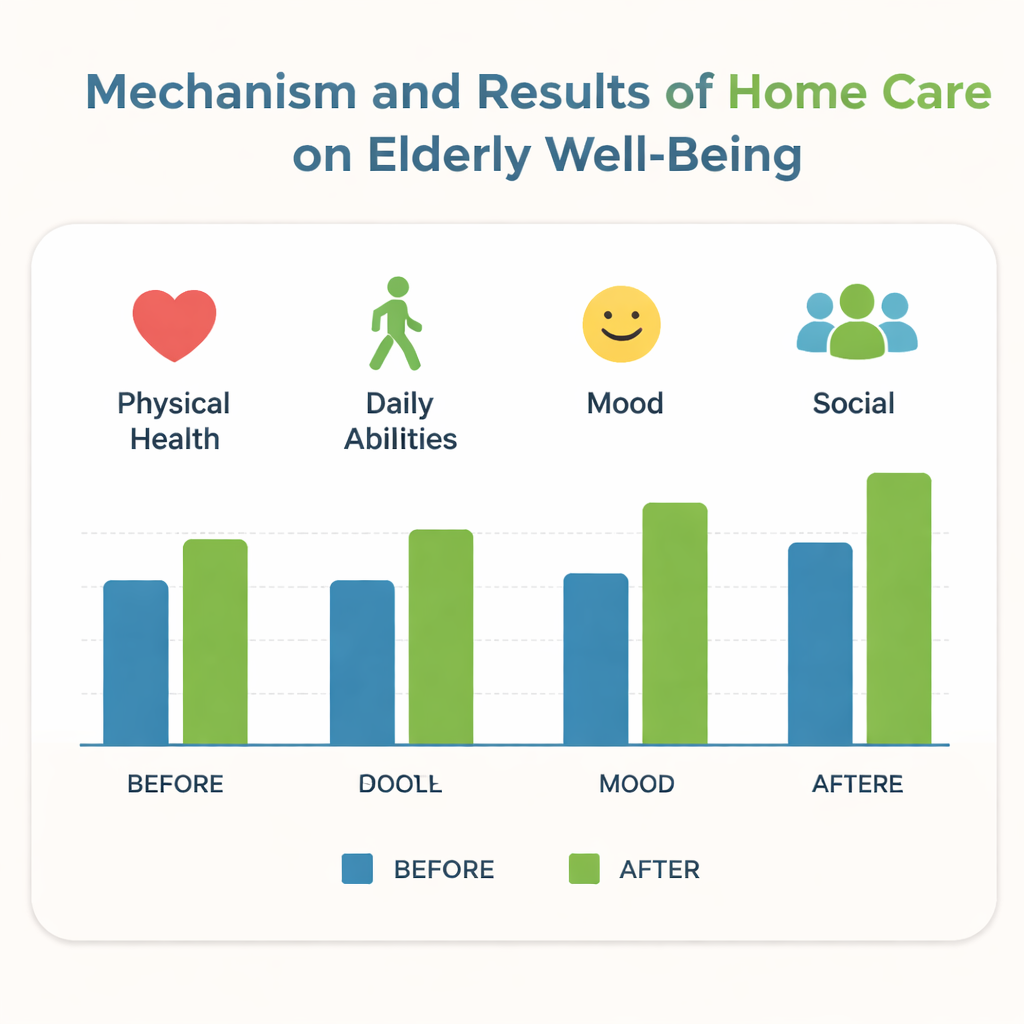
Citation: Zhong, Y., Huang, J., Luo, A. et al. Factors influencing the well-being of elderly population in home care mode and optimization research. Sci Rep 16, 5642 (2026). https://doi.org/10.1038/s41598-026-35719-8
Keywords: home care, elderly well-being, aging in place, social support, Greater Bay Area