Clear Sky Science · en
Smart home energy management for sustainable socioeconomic development in Egyptian households
Why Smarter Homes Matter for Everyday Families
For many Egyptian households, electricity bills have become a constant worry, especially during scorching summers when air conditioners run nonstop. At the same time, the country is pushing to expand solar power and cut pollution. This study explores a practical way to bring these goals together: a simple, low-cost smart home system that helps families use less energy, pay lower bills, and pollute less—without asking them to give up comfort or buy expensive gadgets.
Egypt’s Power Problem at Home
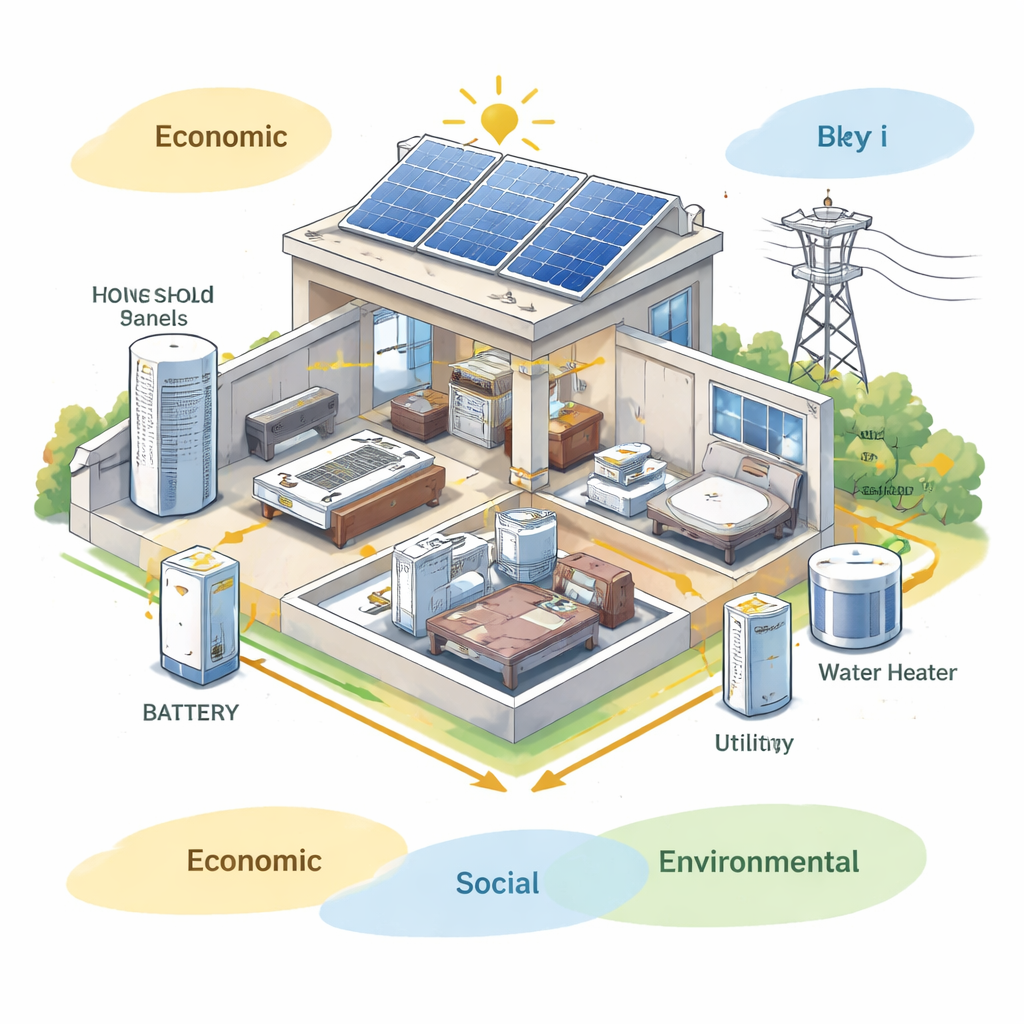
Egypt’s fast-growing population and rising living standards are putting enormous pressure on the power grid. Most electricity still comes from fossil fuels, and summer blackouts remain a risk when air conditioners push demand to the limit. Unlike many richer countries, Egypt does not use flexible “time-of-day” pricing. Instead, it follows an Inclining Block Rate, where the more a home uses in a month, the higher the price per kilowatt-hour becomes—across the whole bill. That means familiar smart-home tricks, like shifting appliance use to cheaper hours at night, do not really work. Off-the-shelf smart systems from global brands are also too complex and costly for most Egyptian families, and are designed for very different pricing rules and lifestyles.
A Simple Smart System Built for Local Reality
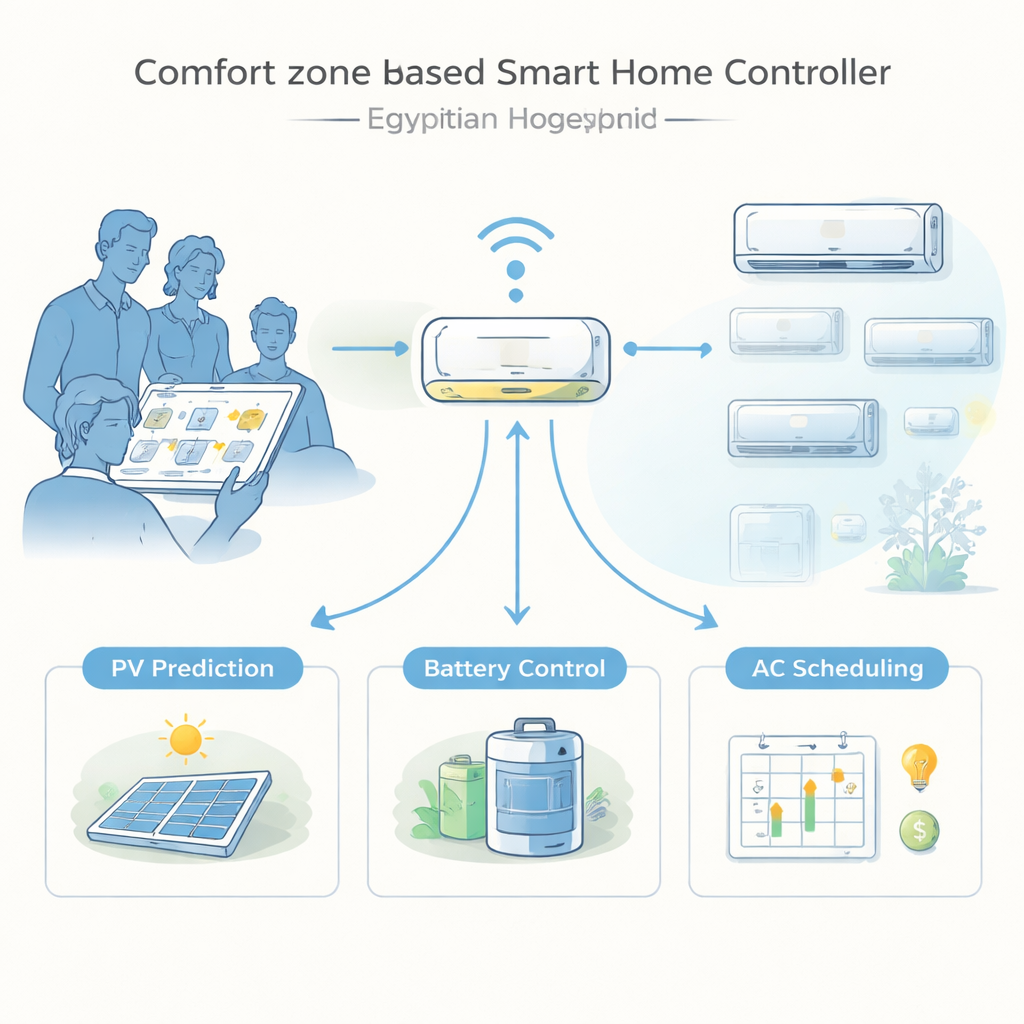
The researchers designed a Smart Home Energy Management System (SHEMS) specifically for Egyptian apartments under this block tariff. Instead of chasing complicated real-time price changes, the system focuses on three things: rooftop solar panels, a home battery, and smarter use of air conditioning. At its heart is a “comfort zone” concept. Through a basic screen, residents tell the system how many people are at home and which rooms are being used, on hourly, daily, and weekly bases. The software then suggests which air conditioners can be turned off or down in empty or low‑priority rooms, while keeping occupied areas cool. Importantly, the homeowner keeps final control—nothing is forced—so the system nudges behavior rather than dictating it.
How the System Thinks About Sun and Storage
To get the most from rooftop solar panels, the prototype uses a straightforward way to predict short-term solar production. Instead of cloud-connected artificial intelligence that needs years of data and fast internet, the controller only uses two inputs: real-time power from the solar panels and free Geographic Information System (GIS) data on typical solar radiation for clear and cloudy days. By comparing what the panels are currently producing to these reference curves, the system estimates how cloudy it is and predicts the next step in sunlight and power. This allows it to decide, minute by minute, whether to feed solar power to the home, charge the battery, or sell extra energy back to the grid—while keeping the battery within safe limits, so it lasts longer.
Testing the Idea in a Realistic Home Setup
The team built a full experimental setup at Helwan University that mimicked a typical higher‑consumption Egyptian home. It included an 8 kW rooftop solar system, a 30 kWh battery bank, common appliances such as multiple air conditioners, a refrigerator, water heater, and oven, and a lab-grade controller connected to a user interface screen. Four operating modes were tested: a standard grid-only home, a grid home with solar panels, a home with both solar and batteries, and finally the fully smart system using the comfort-zone scheduling. Over controlled trials, the smart system used less grid electricity and exported more solar power compared to the other modes, confirming that its decisions about when to cool, store, or sell energy were working as intended.
What Families, Cities, and the Climate Gain
Using detailed simulations anchored in these experiments, the study compared three strategies: adding only solar panels, adding solar plus batteries, and using comfort-zone management. Solar alone cut annual electricity costs by about 39 percent, with a payback time of roughly a year and a half. Adding a battery raised savings to 65 percent and shortened payback to under a year, as more solar power was used at home instead of being sold cheaply to the grid. Surprisingly, the biggest winner was comfort-zone scheduling, which needed almost no new hardware but reduced bills by about 81 percent, with costs recovered in well under a year. When scaled up to high-income households in Greater Cairo, these approaches could save nearly a terawatt-hour per year in consumption, offset over 6 terawatt-hours with rooftop solar, and avoid more than 1.4 million tons of carbon dioxide emissions annually.
Big Picture: Comfort, Savings, and Cleaner Air
In plain terms, this work shows that Egyptian homes do not need futuristic or expensive technology to make a big difference. A modest solar array, a carefully managed battery, and a simple screen that helps families decide which rooms really need cooling can together slash electricity bills and pollution. Because the system respects user comfort and fits Egypt’s unique pricing rules, it stands a real chance of being adopted in everyday life. If widely rolled out, especially in cities like Cairo, such smart home setups could help keep living spaces comfortable, household budgets under control, and the air a little cleaner for everyone.
Citation: Saif, O., Elazab, R. & Daowd, M. Smart home energy management for sustainable socioeconomic development in Egyptian households. Sci Rep 16, 5654 (2026). https://doi.org/10.1038/s41598-026-35705-0
Keywords: smart home energy, Egyptian households, rooftop solar, air conditioning savings, battery storage