Clear Sky Science · en
Culturally aware mentoring interventions create enduring changes among graduate biomedical faculty
Why Mentoring in Science Needs a Rethink
Graduate school is about more than experiments and exams; it is also about relationships. For many future scientists, the bond with a faculty mentor can determine whether they thrive or quietly leave the field. This study asks a pressing question born of recent debates about racism in science: can we actually teach faculty mentors to talk openly about race and culture, listen more deeply to their students, and change how they run their labs—and will those changes last?
A New Approach to Helping Mentors See Culture
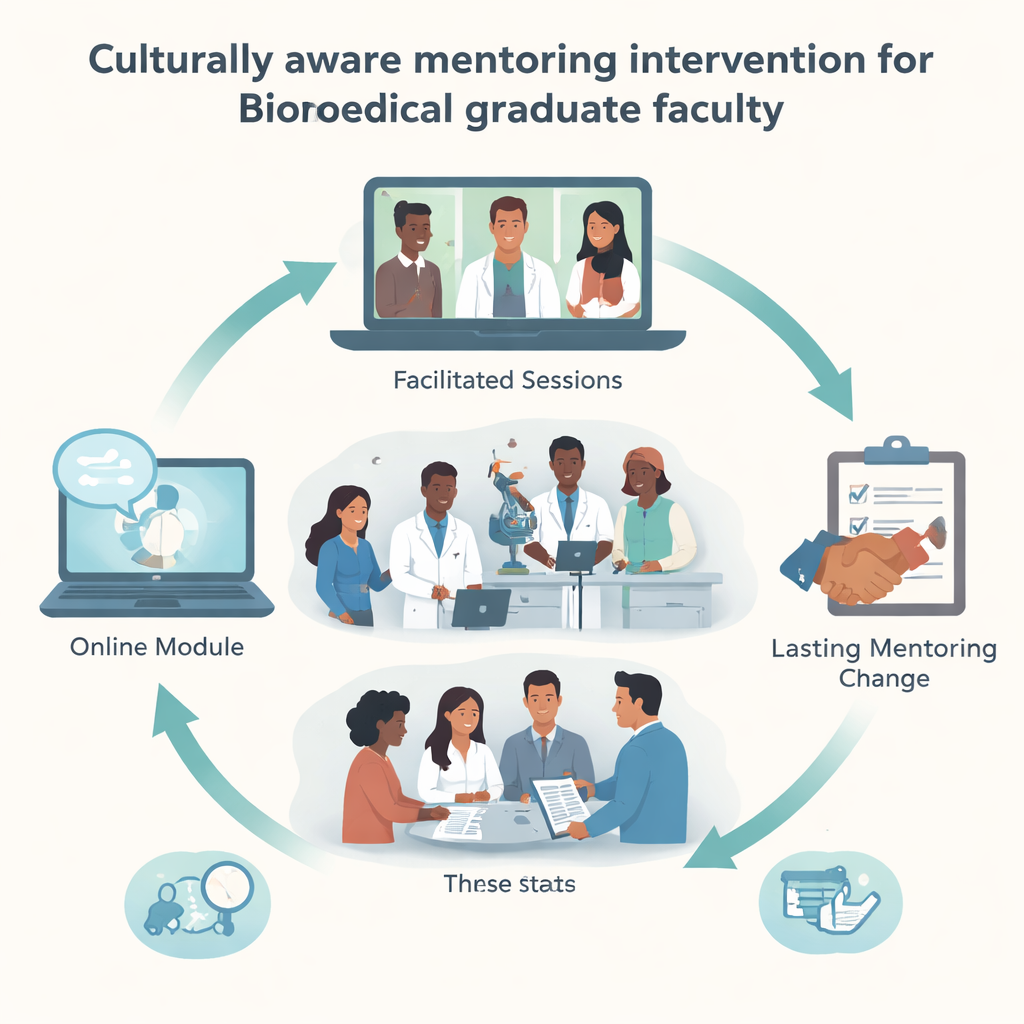
The researchers tested a program called Culturally Aware Mentoring (CAM), designed for science and medical faculty who supervise PhD students. CAM does not lecture participants about what they are doing wrong. Instead, it invites them to explore their own cultural background, think about how race and ethnicity shape their students’ lives, and practice difficult conversations in a supportive setting. Every participant first completed a short, self-paced online module that introduced key ideas. Some faculty stopped there, while others also took part in either a two-session or three-session live workshop led by trained facilitators over Zoom.
Putting the Program to the Test Nationwide
To find out whether CAM really works, the team carried out a large, carefully controlled study across 33 major research universities in the United States. Nearly 800 biomedical faculty members who mentor graduate students volunteered. Universities were randomly assigned to one of three versions of the program: online module only, online plus a two-session workshop, or online plus a three-session workshop. Faculty filled out detailed surveys before training, right after, six months later, and a full year later. The surveys measured their attitudes toward discussing race, their confidence in doing so, and how often they actually used culturally aware behaviors with their students. A subset of 179 mentors also sat for in-depth interviews about how, if at all, their mentoring had changed.
What Changed for Mentors and Students
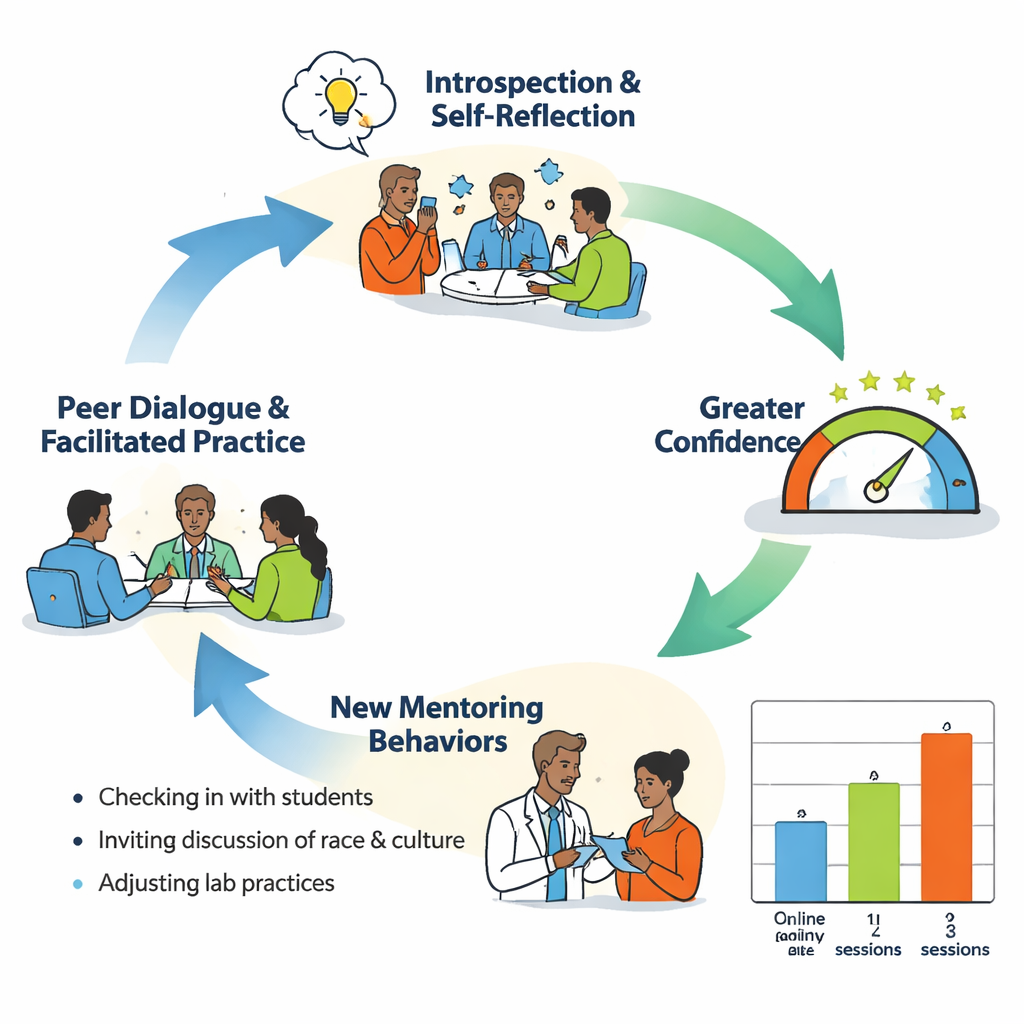
Across the board, mentors in every group reported meaningful gains that persisted a year after training. They felt more skilled as mentors in general and more able to address issues tied to race and ethnicity when they arose. Many said they checked in with students about their well-being more often, listened more carefully, and shared more of their own life experiences to build trust. They also described being more deliberate about noticing their own biases and avoiding assumptions about students’ backgrounds. The live workshops clearly added value: faculty who attended either two or three sessions showed larger improvements than those who only completed the online module, and the three-session group often showed the strongest and most durable gains, especially in feeling confident and in actually changing their day-to-day behaviors.
Why Reflection with Peers Matters
The interviews revealed how and why these changes took hold. A central ingredient was introspection—participants were asked to think, often for the first time, about their own cultural identities and privileges. Activities such as sharing personal “culture boxes” and role-playing tough conversations pushed faculty to look inward without being shamed. Doing this work alongside colleagues turned out to be crucial. Hearing peers struggle with similar questions made faculty feel less alone and more willing to experiment with new mentoring approaches. Some described feeling newly empowered to challenge biased remarks in their departments; others reorganized lab meetings to include regular discussions about equity, culture, or work–life balance. Even doctoral students noticed a difference: in a small follow-up sample, those whose mentors had taken CAM were more likely to say their mentors created space to talk about race and ethnicity.
What This Means for the Future of Science
For a layperson, the message is straightforward: thoughtful training can help professors become better, more culturally aware mentors, and these changes can last. By guiding faculty through structured self-reflection and practice in a community of peers, CAM made them more willing and able to talk about race, recognize students as whole people, and adjust how they run their research groups. In a field that has long struggled to welcome and retain scientists from historically underrepresented backgrounds, this kind of mentoring education offers a practical way to make everyday interactions fairer, kinder, and more supportive—one lab meeting at a time.
Citation: Byars-Winston, A., House, S.C., Jones, R. et al. Culturally aware mentoring interventions create enduring changes among graduate biomedical faculty. Sci Rep 16, 6616 (2026). https://doi.org/10.1038/s41598-026-35699-9
Keywords: culturally aware mentoring, graduate STEMM education, racial equity in science, faculty development, biomedical research training