Clear Sky Science · en
Evaluation of the visual field test algorithm: the Ambient Interactive ZEST-EX (AIZE-EX)
Why faster eye tests matter
Glaucoma is a common eye disease that slowly damages the nerve at the back of the eye and can lead to permanent vision loss. To catch this damage early and track whether treatment is working, people with glaucoma must regularly take a visual field test, which measures how much they can see to the sides while looking straight ahead. These tests are essential but also lengthy and tiring. The paper introduces a new testing method, called Ambient Interactive ZEST‑EX (AIZE‑EX), designed to make follow‑up visual field exams faster while keeping results just as trustworthy as standard tests.
How vision loss from glaucoma is usually checked
In standard visual field tests, patients stare at a central point and press a button whenever they see small lights appear in different spots. A computer gradually figures out how bright each light must be for the person to notice it. This process is repeated at many locations, which is why the test can take several minutes per eye and must be done multiple times a year. Long sessions can strain both patients and clinics, and fatigue or loss of attention can make the results less reliable, especially in people with more advanced vision loss who see fewer lights and may feel discouraged.
Reusing past test results to save time
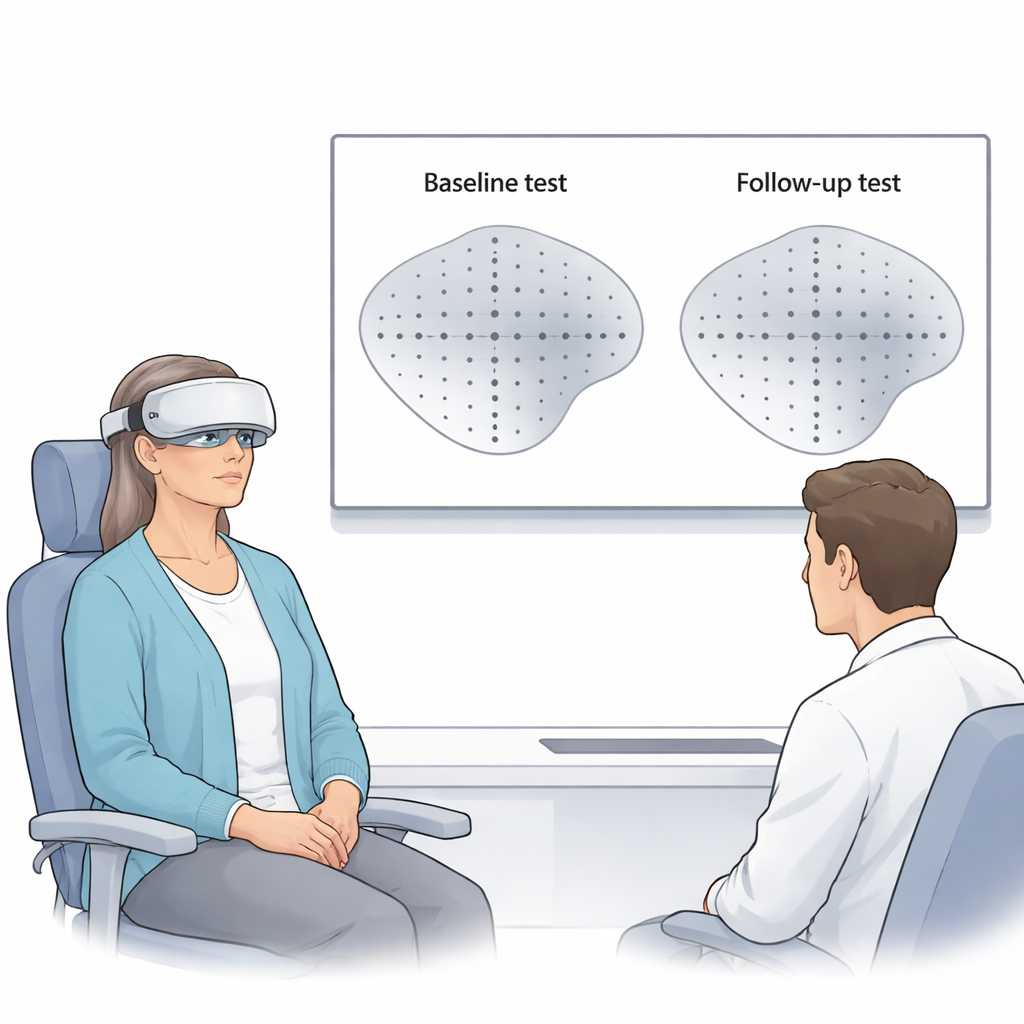
The researchers had a simple idea: at follow‑up visits, why not start from what is already known about a patient’s visual field instead of treating every test as if it were the first? They had previously developed an algorithm called AIZE that already speeds testing by using patterns in how nearby points in the visual field relate to each other. AIZE‑EX takes this a step further by feeding the results from a previous AIZE test into the next exam. This allows the machine to begin each location at a brightness level close to what the earlier test suggested, and to check fewer stimulus levels before reaching a decision. The new method still checks for large changes and repeats measurements when a point looks very different from its neighbors, so that important new damage is not overlooked.
What the study actually tested
The team studied 92 eyes from 46 people with glaucoma who were already familiar with head‑mounted visual field testing. Each eye had a standard AIZE test at the first visit. Within a few months, the same eyes returned for a follow‑up session in which they took both another AIZE test and the new AIZE‑EX test. Two common testing layouts were used: one that samples 52 points in the central field of view, and another that adds extra points in the very center where fine detail vision is located. The researchers compared overall measures of vision damage, how uneven the damage was, average sensitivity across the field, and how long each test took. They also checked how closely results from AIZE and AIZE‑EX matched, point by point and eye by eye.
Just as accurate, but meaningfully quicker
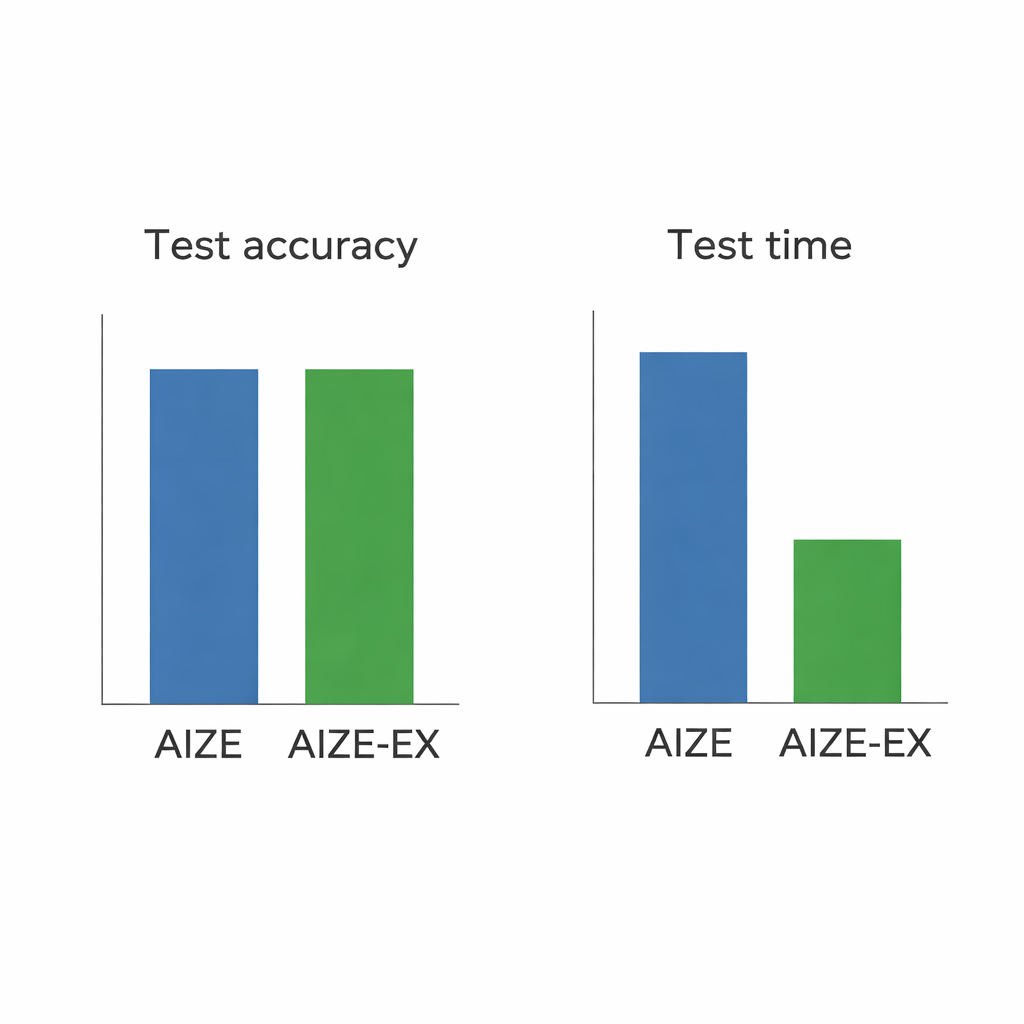
The new AIZE‑EX method produced visual field results that were essentially the same as those from the regular AIZE test. Measures of overall vision loss and pattern of damage agreed very closely between the two methods, and detailed statistical checks showed no meaningful bias. Yet AIZE‑EX consistently finished faster. On average, it shortened test time by about 10 to 20 percent in eyes with early glaucoma and by as much as 20 to 50 percent in eyes with more advanced loss, for both test layouts studied. Importantly, the rate of false alarms and missed responses did not increase, and in patients with more severe disease, AIZE‑EX actually led to a slightly higher proportion of meaningful button presses, which may make the test feel more engaging and less frustrating.
What this means for patients and clinics
For people living with glaucoma, the study’s message is straightforward: it may be possible to monitor their vision just as safely in less time. AIZE‑EX uses information from prior exams to avoid repeating unnecessary steps while still checking for important changes. Shorter, better‑targeted tests could reduce fatigue and stress for patients and make it easier for eye clinics to schedule the frequent follow‑up exams needed to keep glaucoma under control. While more research is needed to compare this approach directly with other widely used machines, the findings suggest that future visual field testing could become quicker and more comfortable without sacrificing accuracy.
Citation: Nomoto, H., Matsumoto, C., Yoshikawa, K. et al. Evaluation of the visual field test algorithm: the Ambient Interactive ZEST-EX (AIZE-EX). Sci Rep 16, 5215 (2026). https://doi.org/10.1038/s41598-026-35696-y
Keywords: glaucoma, visual field testing, eye exam, AIZE-EX, perimetry