Clear Sky Science · en
Dairy wastewater valorization enhances white rot fungi performance in recycled paper effluent treatment
Turning Two Waste Problems into One Clean Solution
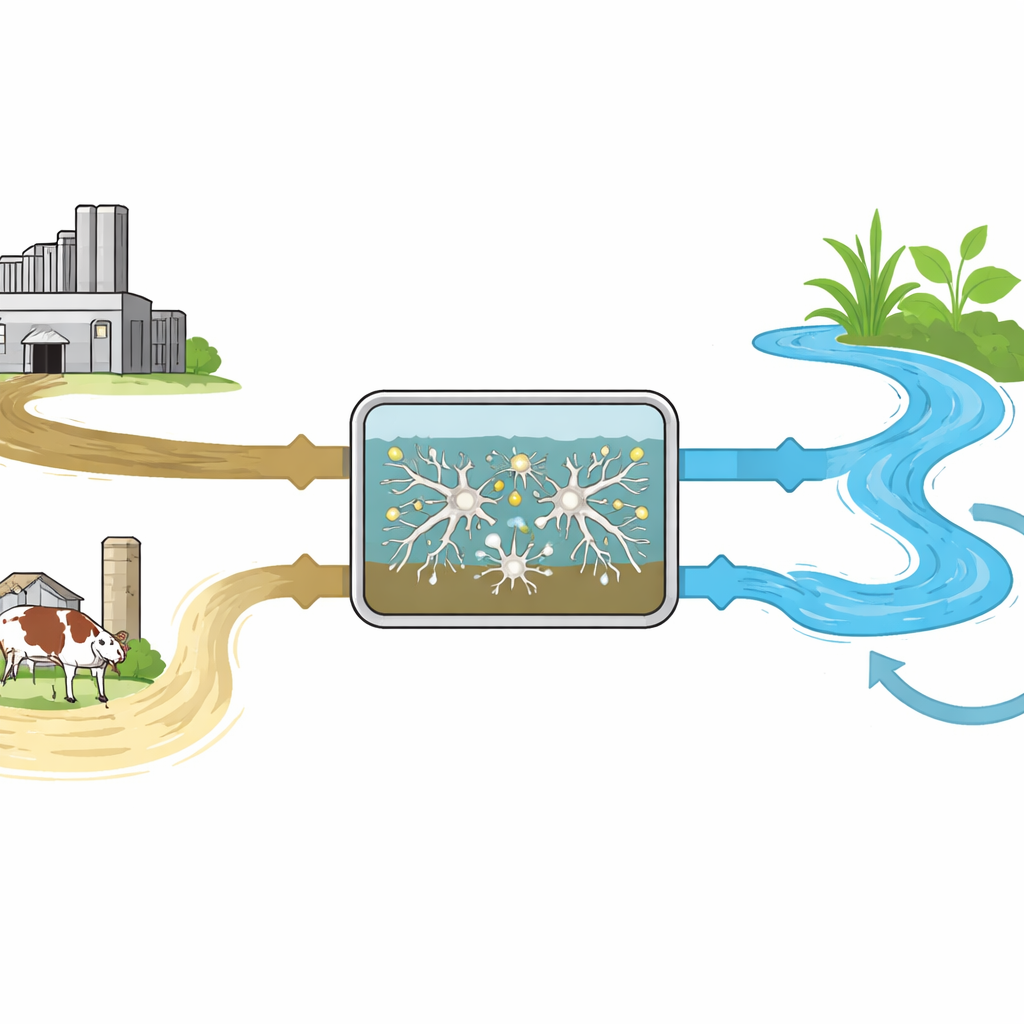
Paper and cardboard recycling saves trees but creates dirty water loaded with stubborn chemicals and dark color. Dairy factories also generate large volumes of nutrient-rich wastewater that can harm rivers and lakes. This study shows how combining these two waste streams and letting special fungi do the work can transform polluted water into something much safer for the environment, while cutting treatment costs and supporting water reuse in industry.
Dirty Water from Everyday Paper and Milk
Modern life depends on paper and dairy products, and both industries use huge amounts of water. Recycled paper mills discharge water rich in hard-to-break-down compounds such as lignin, leftover inks, and various additives. This water has very high chemical oxygen demand (COD), strong color, and often contains metals, all of which can damage aquatic life. At the same time, dairy plants produce wastewater packed with organic matter and nutrients like nitrogen and phosphorus. These nutrients can fuel unwanted growth of microbes and algae if the wastewater is released untreated.
Helpful Wood-Loving Fungi
The researchers focused on two types of white rot fungi, Bjerkandera adusta and Phanerochaete chrysosporium. In nature, these fungi live on wood and are famous for breaking down lignin, the tough glue that holds plant cell walls together. They release powerful enzyme systems that can dismantle a wide variety of complex and even toxic chemicals, including dyes and persistent industrial pollutants. However, to work efficiently, these fungi need enough nutrients, especially nitrogen and phosphorus—exactly what dairy wastewater can provide in abundance.
Blending Waste Streams for Better Cleanup
In this work, wastewater from a recycled paper and cardboard plant was mixed with raw dairy wastewater, without any sterilization or pH adjustment, to mimic real factory conditions. The team tested different proportions of paper effluent, amounts of fungi, and contact times to find a setup that would be both effective and practical for large-scale use. While a low-strength paper effluent (25%) allowed the fungi to remove COD and color most easily, a 50% recycled paper concentration offered the best balance between cleaning performance and the volume of water that could be treated. Adding just 10% dairy wastewater as a nutrient source greatly improved fungal activity, leading to strong pollutant removal over six days, even in this non-sterile, real-world setting.
How Much Cleaner Does the Water Get?
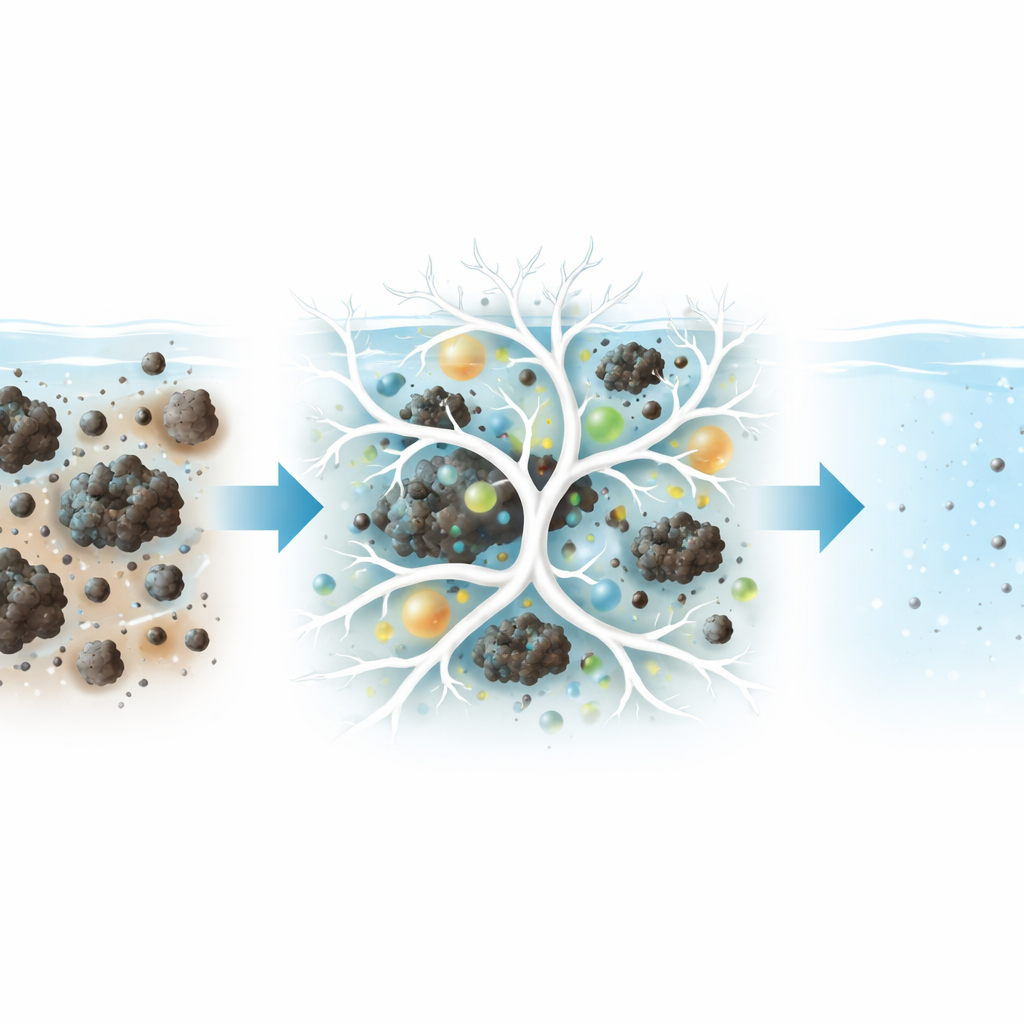
Under the chosen operating conditions—half-strength paper effluent, nutrient-rich dairy wastewater, and a higher fungal dose—the system removed about 94% of COD and roughly 36% of color. It also cut five-day biological oxygen demand by more than 95% and removed nearly half of the lignin. Heavy metals such as aluminum, titanium, tin, and zinc dropped sharply, in some cases by over 90%. Chemical analysis showed that many of the complex aromatic compounds present at the start disappeared after treatment, replaced by simpler molecules and organic acids, reflecting the fungi’s breakdown of lignin-like structures into smaller, less harmful fragments.
From Toxic to Plant-Friendly Water
To test whether the treated water was actually safer, the researchers carried out seed germination experiments with mung beans. Untreated mixtures of paper and dairy wastewater, especially at high strength, severely stunted root growth and indicated strong toxicity. After fungal treatment under the optimal conditions, seeds grew much better even in undiluted effluent, and the calculated phytotoxicity index dropped by more than half. This shows that the process does not just shift pollutants around—it truly reduces their harmful impact on living organisms.
Closing the Loop in Industrial Water Use
Overall, the study demonstrates that pairing recycled paper effluent with dairy wastewater and a carefully chosen fungal team can turn two environmental liabilities into a cleaner, more circular system. Without expensive sterilization or chemical dosing, the process significantly lowers pollution, removes some metals, and makes the water far less toxic, all while enabling greater reuse within the factory. For a lay audience, the key message is simple: by letting the right microbes feast on one industry’s waste to clean up another’s, we can save water, cut costs, and reduce the burden on rivers and soils.
Citation: Kamali, H., Gholami, M., Ehrampoush, M.H. et al. Dairy wastewater valorization enhances white rot fungi performance in recycled paper effluent treatment. Sci Rep 16, 8345 (2026). https://doi.org/10.1038/s41598-026-35695-z
Keywords: recycled paper wastewater, dairy wastewater, white rot fungi, bioremediation, circular economy