Clear Sky Science · en
Factors associated with chronic kidney disease among patients with hepatitis c infection attending Kigeme district hospital, Rwanda
Why this study matters to everyday health
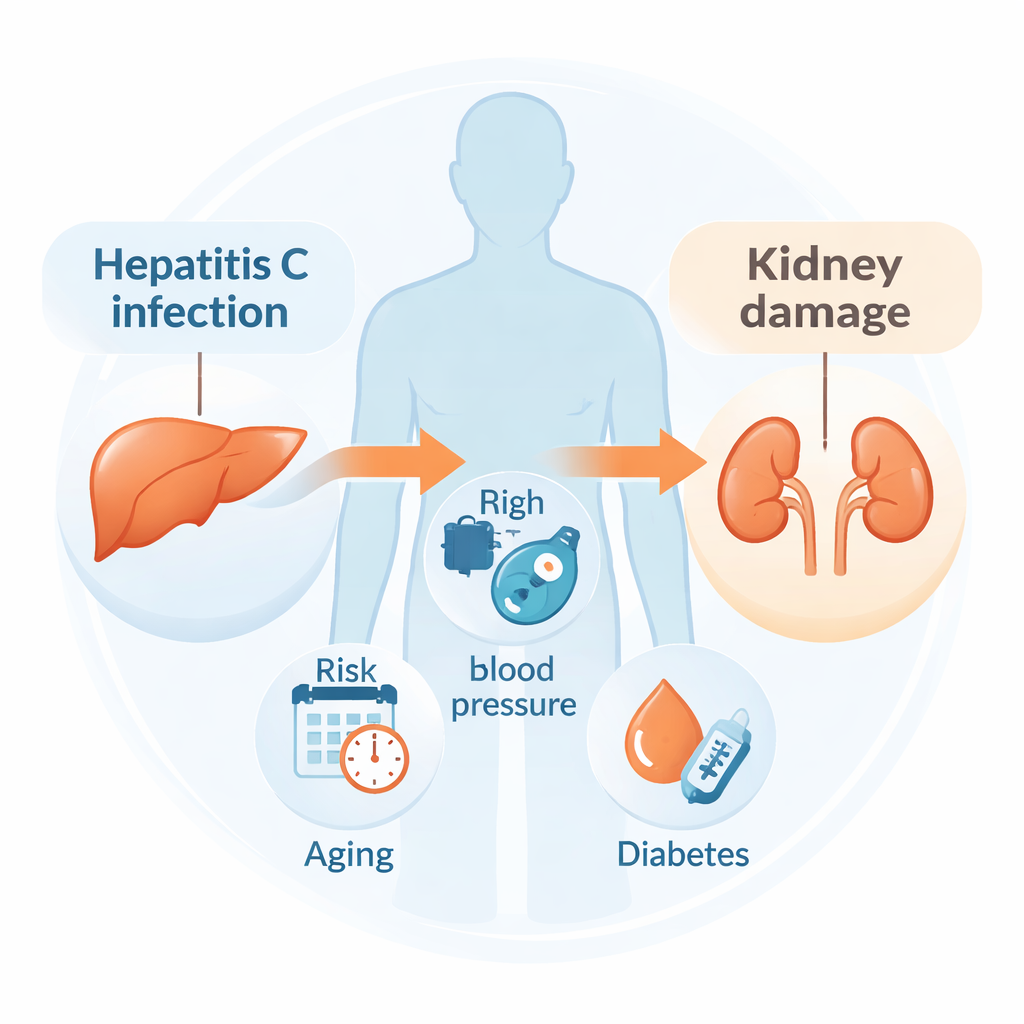
Hepatitis C is often thought of as a liver disease, but this virus can quietly damage other organs too, including the kidneys. In Rwanda and across Africa, both hepatitis C and chronic kidney disease are growing health problems, yet their connection is poorly understood outside big city hospitals. This study from a rural district hospital asks a simple but crucial question: among people living with hepatitis C, how many already have chronic kidney problems, and what makes some of them especially vulnerable?
Looking at patients in a real-world rural hospital
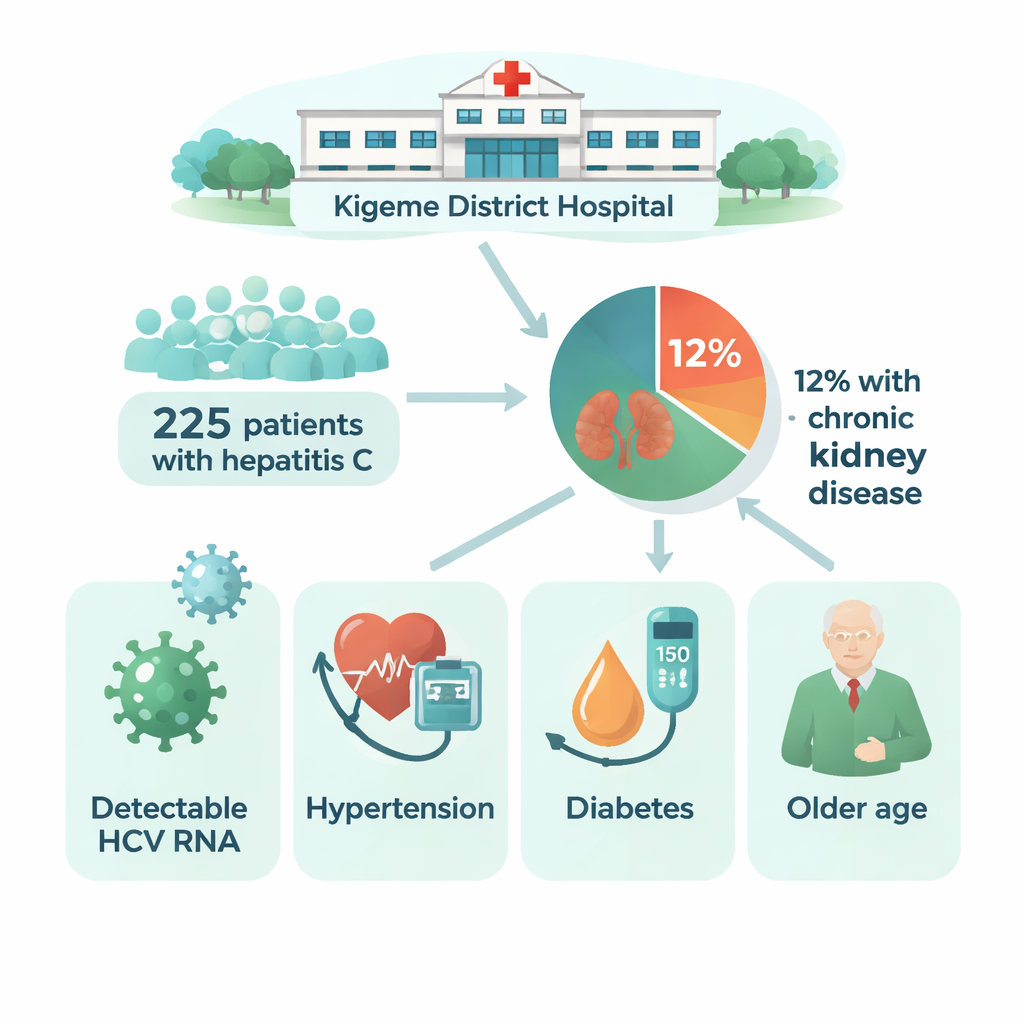
Researchers at Kigeme District Hospital in southern Rwanda reviewed the records of 225 adults who had tested positive for hepatitis C antibodies and had follow-up viral load tests. These patients came from surrounding rural communities and were being seen in the hospital’s clinic between 2023 and 2024. Using a standard formula based on blood creatinine, age, sex, and weight, the team classified who had long-lasting loss of kidney function, the hallmark of chronic kidney disease. To make sure they were capturing true chronic problems rather than short-term kidney injury, they required low kidney function to be recorded on at least two occasions three months apart and confirmed by a doctor.
How common kidney disease was in people with hepatitis C
The study found that 27 out of the 225 hepatitis C patients had chronic kidney disease, meaning roughly one in eight (12%) already had serious, long-term kidney damage. Among the subgroup with active viral replication—those whose blood still showed detectable hepatitis C genetic material—the picture was even more worrisome: nearly one in five (18.6%) had chronic kidney disease. These figures show that kidney problems are not rare complications but a frequent part of the illness burden for people living with hepatitis C in this setting.
Who was at highest risk
To understand why some patients developed kidney disease while others did not, the team analyzed a range of factors pulled from the electronic charts: age, sex, blood pressure, diabetes status, heart failure, liver enzyme tests, and whether the virus was still actively replicating. After accounting for the influence of overlapping factors, several stood out. Patients with detectable hepatitis C virus in their blood were about twice as likely to have chronic kidney disease as those without detectable virus, suggesting that ongoing viral activity directly contributes to kidney injury. Older adults were also at substantially higher risk than younger ones, although the authors note that age is part of the formula used to estimate kidney function and so may amplify this effect.
The role of high blood pressure, diabetes, and liver damage
Beyond age and active infection, common chronic conditions strongly shaped kidney risk. People with high blood pressure had more than double the prevalence of kidney disease compared with those with normal readings, and those with diabetes were nearly three times as likely to have chronic kidney problems. These findings echo global research showing that high blood pressure and diabetes are leading drivers of kidney damage, and they appear to combine with hepatitis C to accelerate harm. Patients whose past blood tests showed raised liver enzymes—signals of liver inflammation or injury—also had much higher rates of chronic kidney disease. This link supports the idea that broader metabolic and inflammatory stress, not just the virus alone, contributes to the decline in kidney function.
What this means for patients and health systems
For a layperson, the study’s message is clear: in people with hepatitis C, the kidneys are often in danger long before symptoms appear. Older age, ongoing viral replication, high blood pressure, diabetes, and signs of liver damage all make that danger more likely. In resource-limited settings like rural Rwanda, where dialysis and kidney transplantation are scarce, catching kidney problems early is especially important. The authors argue that clinics caring for hepatitis C patients should routinely check kidney function and blood pressure, screen for diabetes, and treat these conditions aggressively alongside antiviral therapy. Doing so could slow or prevent progression to advanced kidney failure, reduce deaths, and make better use of limited specialist services.
Citation: Ndatumuremyi, J., Nshimiyimana, I., Sendegeya, J.P. et al. Factors associated with chronic kidney disease among patients with hepatitis c infection attending Kigeme district hospital, Rwanda. Sci Rep 16, 5160 (2026). https://doi.org/10.1038/s41598-026-35676-2
Keywords: hepatitis C, chronic kidney disease, Rwanda, hypertension, diabetes