Clear Sky Science · en
Perception of online learning, knowledge assessment, and clinical skills among third-year ophthalmology residents studying during the COVID-19 pandemic in Thailand
Why this story matters
The COVID‑19 pandemic suddenly pushed universities and hospitals around the world to swap crowded classrooms for computer screens. For young eye doctors in training, this raised an urgent question: can you really learn to care for patients and perform delicate eye surgery online? This study followed all third‑year ophthalmology residents who graduated in Thailand in 2020 to find out how they experienced online classes and exams, and whether they still felt confident in their hands‑on skills.
Training moves from wards to screens
When COVID‑19 hit, Thailand—like many countries—introduced lockdowns and social distancing. Medical schools had to move lectures, case discussions, and even some parts of clinical training onto the internet almost overnight. Before the pandemic, most of these eye‑specialist trainees spent less than an hour a day learning online. During 2020, that jumped to one to three hours a day for the vast majority, showing how quickly online learning became a central part of their education. 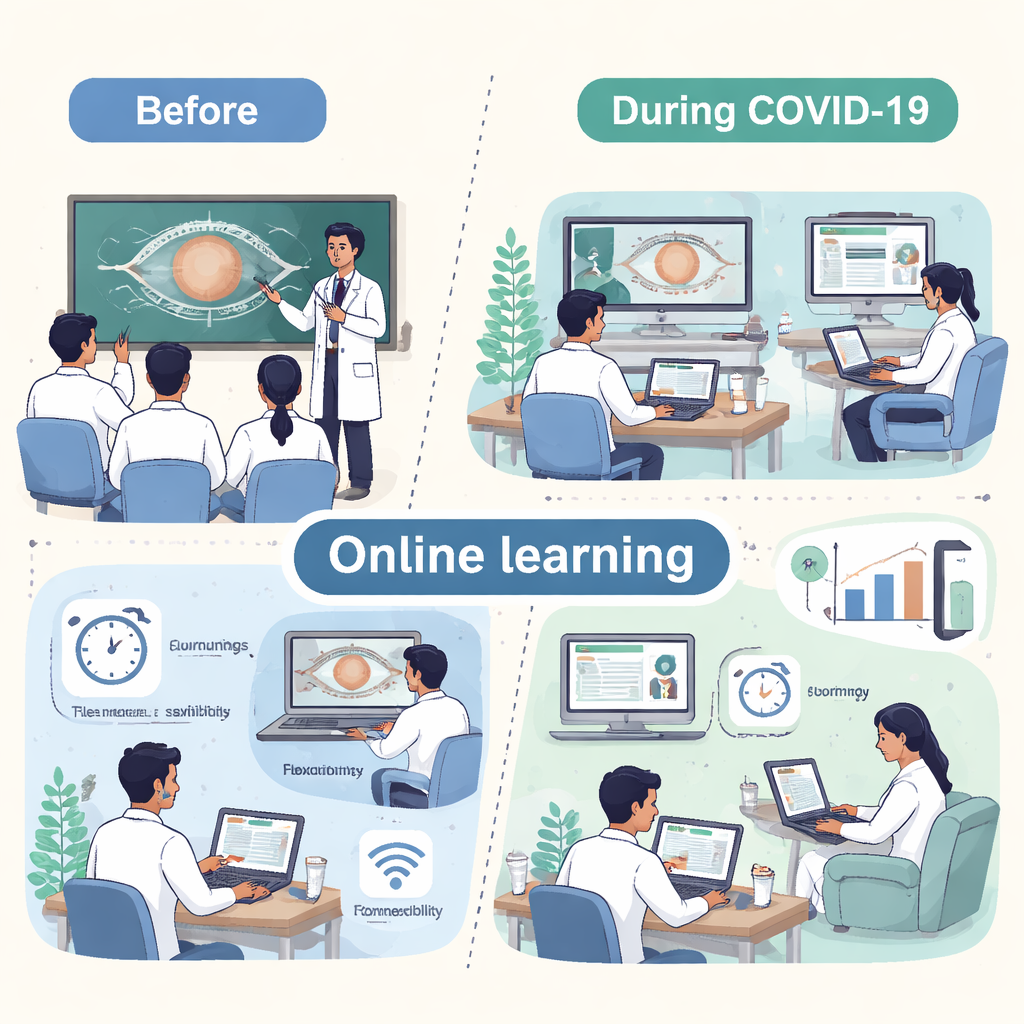
What residents liked about online classes
The researchers sent a detailed questionnaire to all 74 residents who finished ophthalmology training in Thailand in 2020, and every single one responded. Many described online learning as enjoyable or at least acceptable, and said it helped them stay motivated. The biggest plus points were practical: saving travel time, being able to study in a private space, having more flexibility in their schedules, and joining sessions from different locations. These benefits suggest that well‑planned online teaching could make medical training more efficient and adaptable, even beyond a crisis.
Where online learning falls short
Despite these advantages, most residents did not think online teaching could fully replace traditional classroom learning. Only about a quarter felt that learning online was just as effective as learning face to face, and similarly few preferred it outright. Many missed direct interaction with classmates and teachers, reported difficulty staying focused, and said their motivation dropped during online sessions. Technical problems, especially unstable internet connections, were another frequent complaint. These drawbacks point to the need for more interactive formats, better digital tools, and stronger internet infrastructure if online education is to play a larger role in specialist medical training. 
Views on online exams and real‑world skills
Interestingly, the residents were much more positive about online exams than about online classes. More than four out of five believed online written tests measured knowledge as well as in‑person exams, and they generally trusted their peers not to cheat. At the same time, they strongly supported adding safeguards—such as better monitoring—to protect against dishonesty. The study also tracked how confident these new ophthalmologists felt performing common eye procedures and surgeries right after graduation and again one year later. Even with pandemic disruptions, they reported high and mostly stable confidence in many routine operations, such as cataract surgery and laser treatments, although confidence was lower—and in some cases declined—for more complex surgeries around the tear ducts and eye muscles.
What this means for future training
Put in everyday terms, these findings suggest that online tools worked reasonably well for teaching theory and running written exams, but could not fully replace the rich, hands‑on learning that comes from being in clinics and operating rooms. Most young eye doctors in this study felt that, despite a very unusual training year, they were still well prepared for many of the procedures they needed to perform. The authors conclude that the best path forward is not to choose between online and in‑person learning, but to blend them: using the internet for flexible lectures and practice tests, while reserving face‑to‑face time for examining patients and learning surgery under close supervision. Preparing such blended systems now could help medical schools respond more smoothly to any future pandemic or major disruption.
Citation: Chuenkongkaew, W., Chalermpong, J., Kiddee, W. et al. Perception of online learning, knowledge assessment, and clinical skills among third-year ophthalmology residents studying during the COVID-19 pandemic in Thailand. Sci Rep 16, 5252 (2026). https://doi.org/10.1038/s41598-026-35674-4
Keywords: online medical education, ophthalmology residency, COVID-19 pandemic, clinical skills confidence, online exams