Clear Sky Science · en
Phytochemical profiling and antioxidant potential of Phlomoides rotata essential oils
Why a Mountain Herb Matters for Everyday Health
High in the mountains of Tibet grows a traditional pain-relieving herb called Phlomoides rotata, used for treating injuries and inflammation. Modern science is now asking a new question about this plant: can its fragrant essential oils help protect our cells from the damage caused by everyday “rusting” inside the body—better known as oxidative stress? This study takes a deep dive into the plant’s aroma chemicals and tests which of them truly act as natural antioxidants, and which might actually do the opposite.
The Plant Behind a Traditional Remedy
Phlomoides rotata, known in Chinese medicine as “Duyiwei,” has long been used to treat pain, swelling, fractures, and stubborn wounds. Earlier research mainly focused on its non‑volatile compounds, which do not easily evaporate and are known to ease pain and protect the liver. Much less was known about the plant’s essential oils—the light, smell‑giving components that are widely used in foods, cosmetics, and herbal medicines. Because products that contain oils are prone to going rancid, understanding whether this particular oil mixture is stabilizing or destabilizing is important both for health benefits and shelf life.
Separating Fragrance into Its Building Blocks
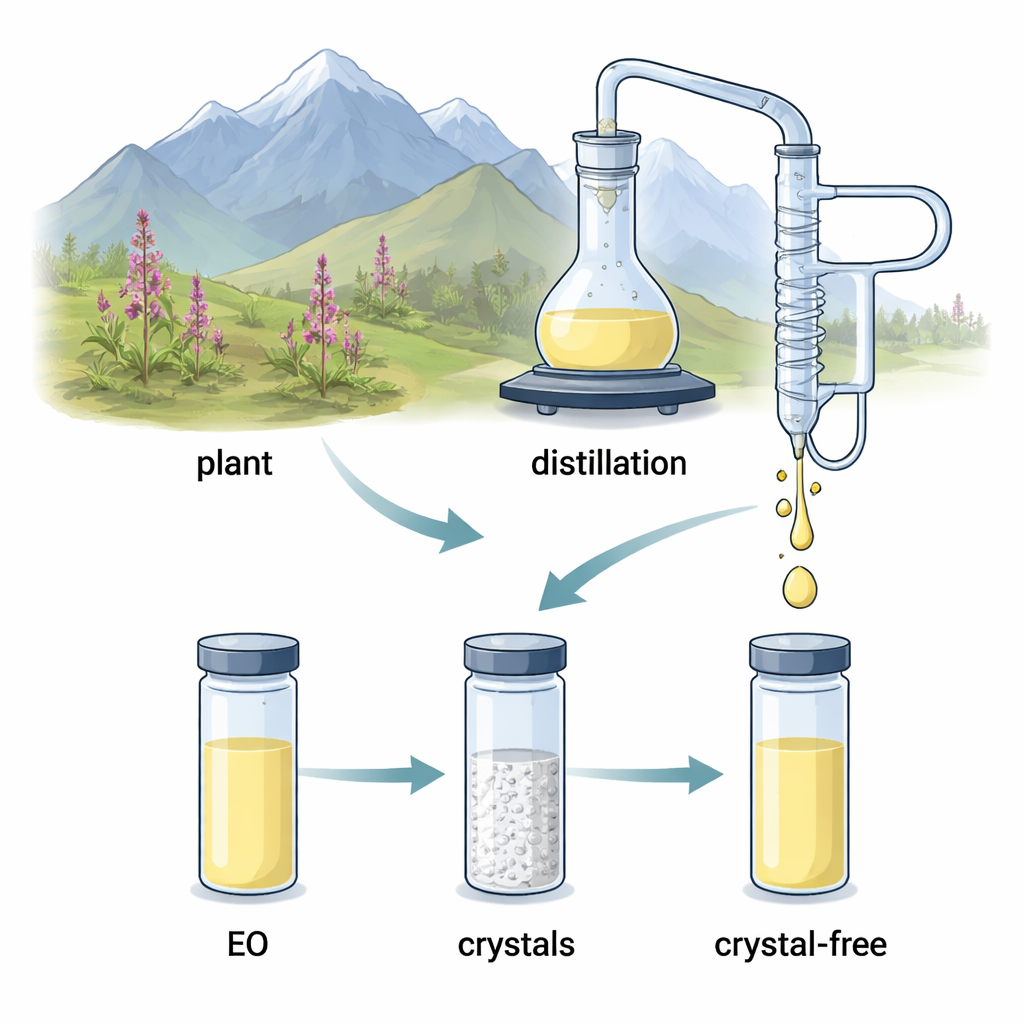
The researchers collected the above‑ground parts of the herb from three locations in Tibet and obtained small amounts of light‑yellow essential oil by water distillation. When these oils were cooled, tiny crystals formed. This allowed the team to split the oil into three parts: the original essential oil, the crystal fraction rich in waxy components, and a remaining crystal‑free oil. Using advanced gas chromatography–mass spectrometry, they cataloged 125 different molecules in these samples, 94 of which had never before been reported from this plant. Most of the content turned out to be long‑chain fatty acids, especially palmitic acid, along with related fat‑like esters. Smaller but important amounts of fragrance compounds such as linalool, geraniol, and a potent aroma molecule called trans‑β‑damascenone were also detected, as well as the plant‑derived alcohol phytol.
Good Actors and Bad Actors Among the Fats
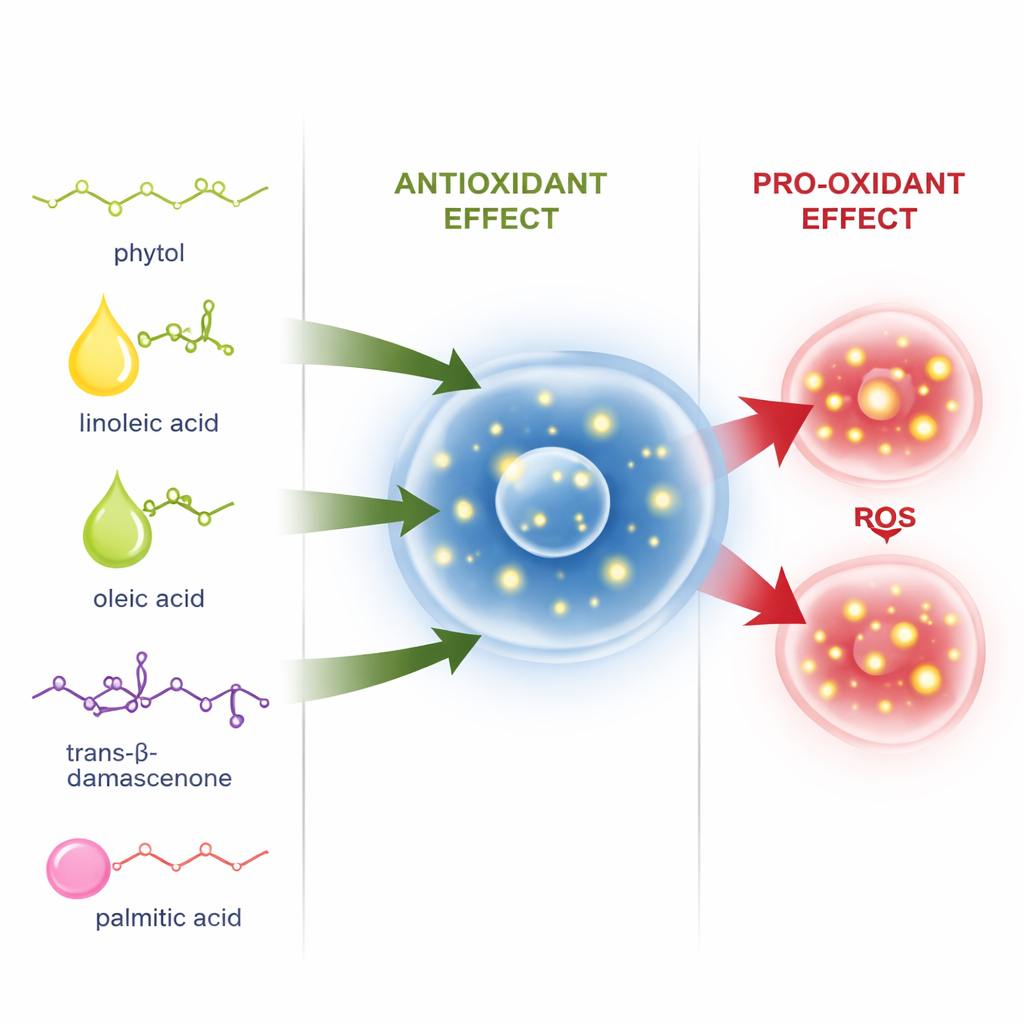
The team then asked which of these chemicals can actually neutralize harmful reactive oxygen species—the unstable molecules linked to aging, diabetes complications, arthritis, and cancer development. Using several standard laboratory tests, they compared the antioxidant strength of the three oil fractions and of eight key ingredients. Surprisingly, not all plant fats were beneficial. Palmitic acid, myristic acid, methyl palmitate, and the compound hexahydrofarnesyl acetone showed little protective effect and could even promote oxidation under some conditions. In contrast, the unsaturated fatty acids linoleic acid and oleic acid, the aroma compound trans‑β‑damascenone, and especially phytol showed clear, dose‑dependent antioxidant activity. The crystal‑free oil, which had the lowest palmitic acid content, consistently performed best, suggesting that removing excess palmitic acid tips the balance toward protection rather than damage.
Looking Inside Cells for Real‑World Impact
To move beyond simple test‑tube chemistry, the researchers exposed human liver‑derived cells to oxidative stress and measured how well selected plant compounds could shield them. In this more realistic setting, phytol again stood out: at moderate concentrations, it protected cells even better than quercetin, a well‑known plant antioxidant found in fruits and tea. Linoleic acid helped only at higher doses, and trans‑β‑damascenone showed a “two‑faced” behavior—acting as an antioxidant at low levels but turning pro‑oxidant when the dose increased. These findings highlight that the same molecule can be helpful or harmful depending on how much is present and in what environment.
From Mountain Fields to Future Natural Preservatives
Overall, this work reveals that essential oils from Phlomoides rotata are chemically rich and contain both protective and potentially harmful fatty components. By showing that the crystal‑free fraction—with less palmitic acid and more phytol and unsaturated fats—has the strongest antioxidant performance, the study points to practical ways of refining the oil for safer, more effective use. For the lay reader, the key takeaway is that not all “natural oils” are automatically good or bad; rather, the detailed mix of molecules determines whether an extract will help guard our cells from oxidative wear and tear. Phytol in particular emerges as a promising natural antioxidant that might one day help stabilize foods, cosmetics, or herbal medicines derived from this traditional Tibetan plant.
Citation: Pan, Z., Xie, C., Luo, J. et al. Phytochemical profiling and antioxidant potential of Phlomoides rotata essential oils. Sci Rep 16, 5018 (2026). https://doi.org/10.1038/s41598-026-35657-5
Keywords: essential oils, antioxidants, medicinal plants, fatty acids, phytol