Clear Sky Science · en
Chemical composition, metabolomics, and functional potential of Pholiota nameko pre-cooking liquid
A Hidden Treasure in Mushroom Cooking Water
When we boil mushrooms, most of us pour the cooking water down the drain without a second thought. This study suggests that might be a mistake—at least for Pholiota nameko, a popular golden-brown mushroom in Asia. Researchers found that the liquid left over from briefly cooking these mushrooms is packed with nutrients and flavor‑boosting compounds. Instead of being treated as waste that can pollute the environment, this “pre‑cooking liquid” could become a useful ingredient in foods, health products, cosmetics, and even fertilizers.
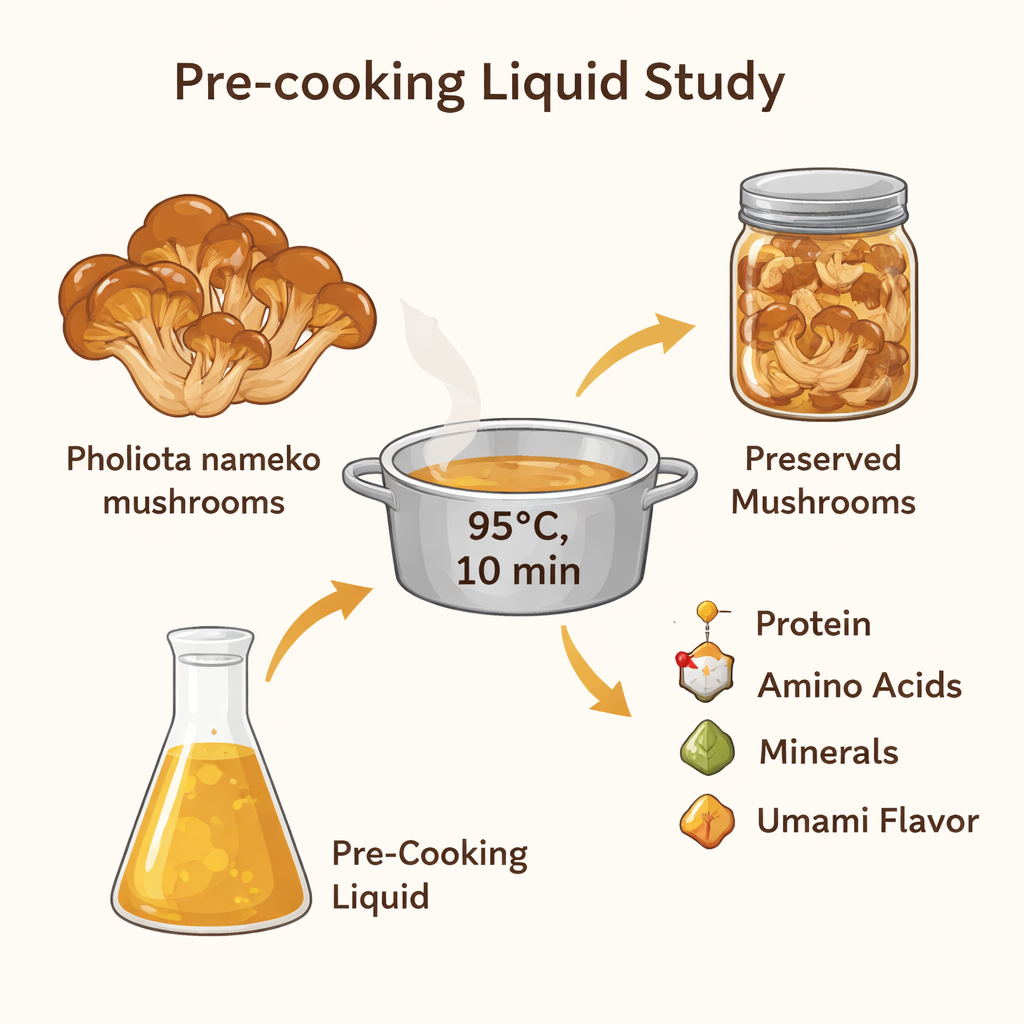
From Wastewater to Useful Resource
In mushroom factories, huge batches of fresh Pholiota nameko are briefly boiled in hot water (95 °C for 10 minutes) before they are pickled and sold. This step generates thousands of liters of brownish liquid each day, which is usually discarded. The authors set out to compare this liquid with the mushrooms themselves. They measured basic components such as sugars, proteins, amino acids, polyphenols, fats, and minerals, and then used advanced “metabolomics” tools to scan hundreds of small molecules. Their goal was to see whether the liquid really is waste—or whether it contains valuable substances worth recovering.
Rich in Protein, Taste, and Health‑Related Compounds
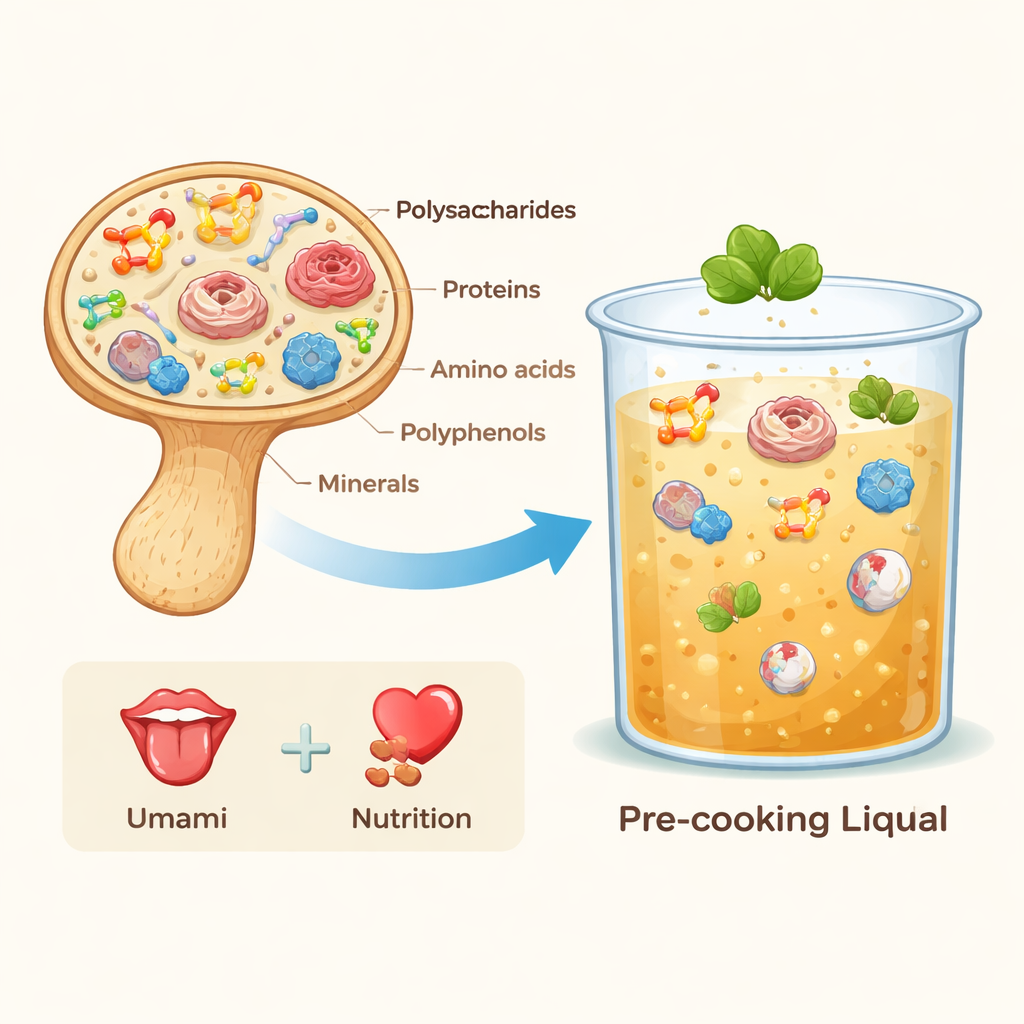
The team discovered that hot water pulls a surprising amount of material out of the mushrooms. Roughly 8% of their polysaccharides (complex sugars), 41% of their proteins, 84% of their free amino acids, and about 63% of their polyphenols moved into the liquid during the short boil. Many of these amino acids and nucleotides are known to create umami, the savory taste we associate with broths and mushrooms. When the researchers converted these taste components into an “equivalent” amount of monosodium glutamate (MSG), the pre‑cooking liquid scored about 25 times higher than the mushroom flesh itself. In simple terms, the liquid behaves like a concentrated natural seasoning, with a complete range of essential amino acids that support functions such as immunity, brain activity, and tissue repair.
Minerals, Texture, and Safety
Beyond taste, the liquid also carries a rich load of minerals like potassium, calcium, magnesium, and trace elements such as zinc and iron, while levels of heavy metals remained very low. It contains ergothioneine, an antioxidant compound that has drawn attention for potential roles in protecting the brain, slowing aspects of aging, and supporting liver health. The physical properties of the liquid—its moderate thickness and lower surface tension compared to tap water—mean it can act naturally as a thickener and emulsifier, improving the mouthfeel and stability of soups, sauces, and drinks without added chemicals. Tests for pesticide residues showed inhibition values below regulatory limits, indicating that both the mushrooms and the liquid are safe to use under current standards.
Tracking the Molecular Makeover
Using untargeted metabolomics, the scientists looked more deeply at how boiling changes the molecular makeup of the mushrooms and the liquid. They observed clear differences between the two: some compounds associated with vitamins and cofactors dropped in the mushrooms, while molecules related to peptides and nucleic acids became more abundant in the liquid. Several substances increased sharply in the liquid, including certain sulfur‑containing molecules and building blocks of nucleic acids, which may contribute to flavor, aroma, and biological activity. Overall, nearly two thousand metabolites changed in level, underscoring that a brief pre‑cooking step not only transfers existing compounds into water but also reshapes the chemical profile through heat‑driven reactions.
Turning an Environmental Burden into Added Value
The study concludes that Pholiota nameko pre‑cooking liquid is far from useless. It is a concentrated source of savory taste, proteins, amino acids, minerals, antioxidants, and other bioactive molecules, all generated in a process that already occurs at industrial scale. Rather than discharging this liquid as problematic wastewater, producers could capture and refine it as a natural flavor enhancer, nutritional booster, cosmetic ingredient, or nutrient‑rich fertilizer. Doing so would reduce environmental impacts, support more efficient use of resources, and create new value streams from what is currently thrown away—an example of how careful chemical analysis can turn kitchen (and factory) leftovers into promising tools for health and sustainability.
Citation: Meng, Y., Xue, J., Zhang, L. et al. Chemical composition, metabolomics, and functional potential of Pholiota nameko pre-cooking liquid. Sci Rep 16, 5598 (2026). https://doi.org/10.1038/s41598-026-35650-y
Keywords: mushroom pre-cooking liquid, umami flavor, food waste valorization, metabolomics, functional ingredients