Clear Sky Science · en
Egg disinfection improves larval survival and shapes the microbial community in snubnose pompano (Trachinotus blochii)
Cleaning Fish Eggs for Healthier Seas
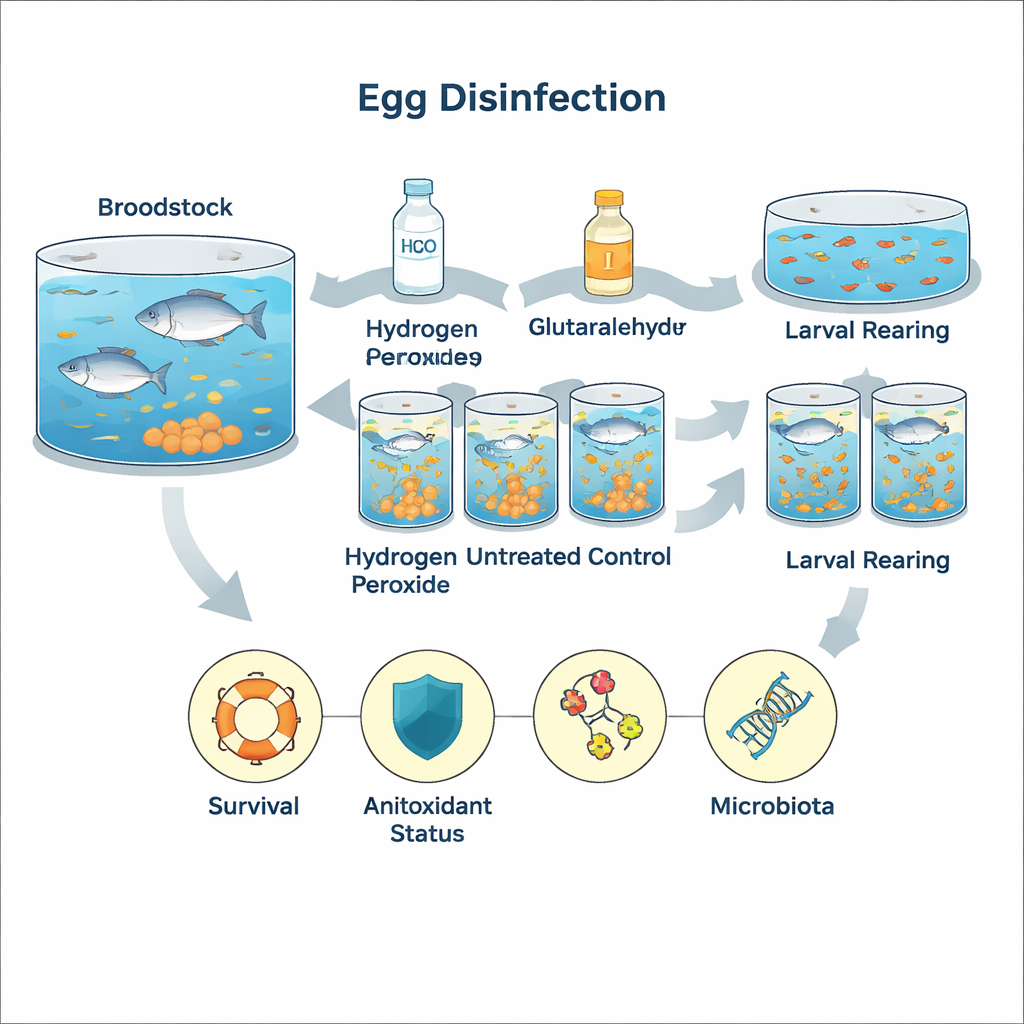
Fish farms are becoming an important source of seafood, but raising tiny fish from eggs is still surprisingly difficult. Many larvae die in the first few weeks of life, which wastes resources and limits production. This study asks a simple but powerful question: can carefully cleaning fish eggs—using common disinfectants—help more baby fish survive, by shaping the invisible world of microbes that colonize them from the very start?
Why Early Life Microbes Matter
Like humans, fish are covered and filled with microbes from the moment they begin life. These early microbes help train the immune system, affect growth, and can even tilt the balance between life and death in crowded hatchery tanks. In marine fish farming, eggs are often disinfected to stop dangerous germs from passing from parents to offspring. Traditionally, this has been viewed only as a way to kill pathogens. The authors of this paper, working with the high-value tropical fish snubnose pompano, wondered whether egg disinfection could do more—specifically, whether it could "program" which microbes take hold later in the larvae, and in turn improve their health and survival.
Testing Common Hatchery Cleaners
The team collected fertilized pompano eggs from a broodstock facility in India and exposed them to three disinfectants often used in aquaculture: hydrogen peroxide, glutaraldehyde, and iodophor (an iodine-based solution). They first tested several doses to find levels that would not harm the embryos. They settled on three protocols that boosted hatching: a short dip in glutaraldehyde, and longer dips in hydrogen peroxide or iodophor. A control group of eggs was left untreated. All eggs were then reared in the same tanks, and the scientists tracked hatching success, larval survival over 25 days, and simple measures of the larvae’s antioxidant defenses—molecular systems that protect cells from damage.
Which Treatment Helped Baby Fish Most
When the eggs hatched and larvae grew, clear differences emerged. Egg disinfection generally improved hatching, with glutaraldehyde giving the highest hatch rate. More importantly for farmers, glutaraldehyde and hydrogen peroxide treatments led to much better survival during the fragile first month of life. By day 25, about one third of larvae from glutaraldehyde-treated eggs were still alive, compared with only about a quarter in the untreated group. Iodophor told a mixed story: it helped more eggs hatch but ultimately left larvae with poorer survival than the other disinfectants. Measurements of the enzyme catalase, a key antioxidant defense, increased as larvae developed and were consistently highest in groups that had better survival, suggesting that the treatments helped the young fish better handle oxidative stress.
Remaking the Larval Microbial Neighborhood
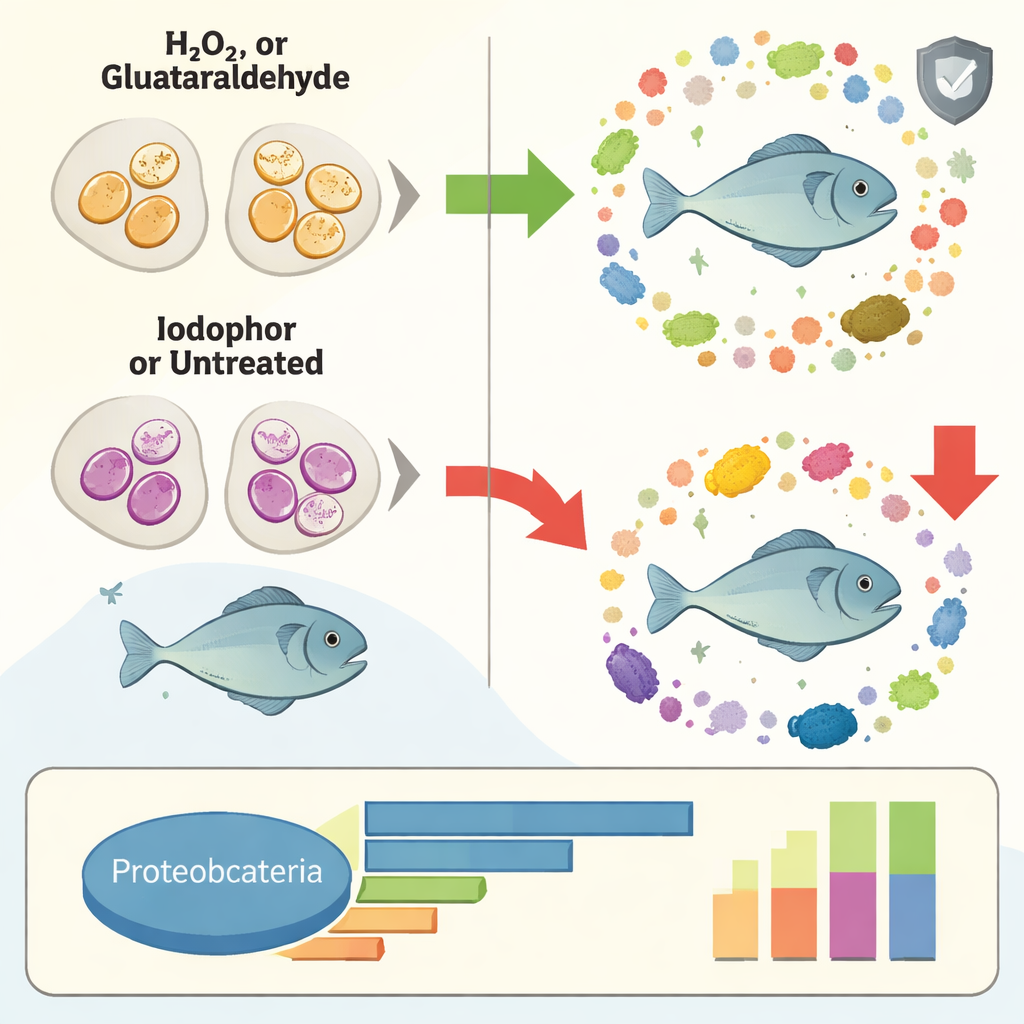
To understand how egg cleaning affected the larvae’s microscopic companions, the researchers sequenced bacterial DNA from whole larvae at ten days after hatching, when feeding is well established and survival differences had already appeared. Larvae from glutaraldehyde- and hydrogen-peroxide–treated eggs hosted more diverse and even microbial communities, along with a broader range of predicted metabolic functions. These groups also showed higher levels of bacterial families previously linked to healthy aquaculture systems and potential probiotic effects. In contrast, larvae from iodophor-treated eggs had less diverse microbiomes and microbial “signatures” associated with stress, such as an unfavorable balance between the dominant group Proteobacteria and other major bacterial phyla. Across treatments, higher microbial diversity and specific bacterial combinations were strongly associated with better larval survival.
What This Means for Fish Farming
For hatchery managers, the message is practical and encouraging: egg disinfection, when done with the right chemicals at the right doses, is more than just a safety step. In snubnose pompano, brief pre-hatch treatments with hydrogen peroxide or glutaraldehyde not only improved hatching but also fostered a richer, more balanced microbial community on the larvae, stronger antioxidant defenses, and higher survival. Iodophor, despite boosting hatching at one dose, appeared to disturb the microbial balance and reduced longer-term performance. In simple terms, carefully cleaning fish eggs can “set up” baby fish with better microscopic allies, helping more of them make it through their most vulnerable days and supporting more sustainable marine aquaculture.
Citation: Sumithra, T.G., Sharma, S.R.K., Gayathri, S. et al. Egg disinfection improves larval survival and shapes the microbial community in snubnose pompano (Trachinotus blochii). Sci Rep 16, 5761 (2026). https://doi.org/10.1038/s41598-026-35646-8
Keywords: aquaculture, fish larvae, microbiome, egg disinfection, pompano