Clear Sky Science · en
Chemosensory response to Pt-based chemotherapeutics via bitter taste receptors in vitro reveals a new mechanism for bitter taste disorders
Why cancer drugs can suddenly make everything taste awful
Cancer patients often report that food starts to taste strangely bitter or metallic soon after chemotherapy begins. This does more than spoil meals: it can reduce appetite, promote weight loss, and sap quality of life right when patients need strength the most. This study asks a deceptively simple question with big practical consequences: how exactly do common platinum-based chemotherapy drugs interfere with our sense of taste, and can that effect be safely dialed down without weakening the treatment?
The hidden role of “bitter sensors” in the gut and mouth
Our tongues and digestive tract are dotted with bitter taste receptors, built to warn us about potentially harmful substances. These sensors, known as TAS2Rs, are not limited to taste buds; they are also found in cells of the stomach. The researchers used a human gastric cell line (HGT-1) that behaves like an in vitro bitterness detector: when bitter receptors are activated, the cells pump out more protons (acid), which can be measured as a change in a readout called the intracellular proton index. By exposing these cells to two widely used platinum-based cancer drugs—carboplatin and cisplatin—the team could safely probe how “bitter” these drugs appear to human cells without ever asking a person to taste a toxic compound. 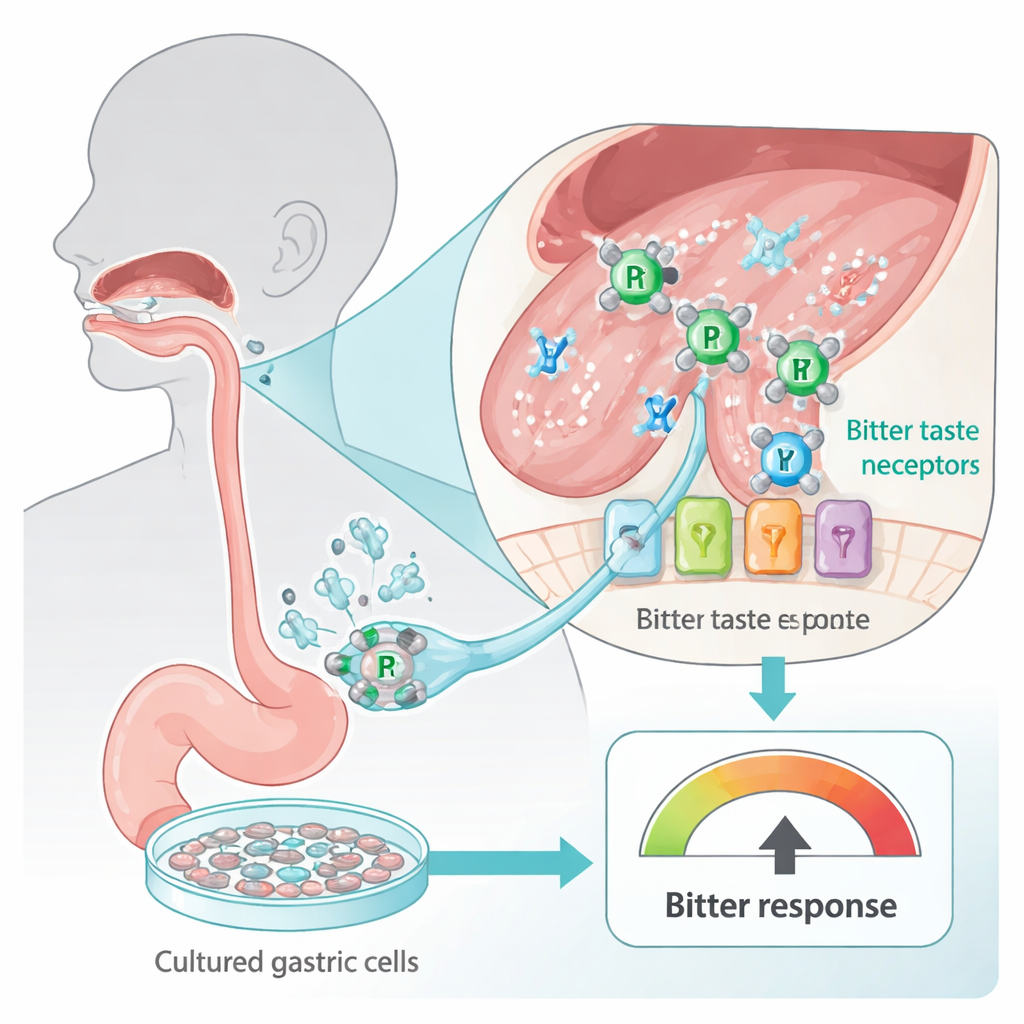
Chemotherapy drugs that taste bitter to cells
When the gastric cells were treated with clinically relevant concentrations of carboplatin and cisplatin, both drugs triggered a clear, dose-dependent bitter-like response: the higher the dose, the stronger the cellular reaction. Cisplatin, however, produced a more intense response than carboplatin when their usual therapeutic dose ratio (about 1:4) was taken into account, suggesting it may contribute more strongly to bitter taste problems in patients. At the genetic level, exposure to these drugs changed the activity of multiple bitter receptor genes in the cells, indicating that platinum drugs do not act on a single “bitter switch” but broadly reshape the bitter-sensing system. Among these receptors, TAS2R4 and TAS2R5 stood out as both highly active and strongly affected by treatment.
Switching off bitter signals and testing a natural bitter blocker
To pinpoint which receptors matter most, the team selectively disabled specific bitter receptors. Knocking out TAS2R4 or knocking down TAS2R5 each reduced the bitter-like response to carboplatin and cisplatin, confirming that these receptors help sense the drugs. The scientists then tested a promising countermeasure: the sodium salt of homoeriodictyol (Na-HED), a flavanone originally isolated from the North American plant Herba Santa and already known to mask bitterness from other compounds. When Na-HED was added together with the platinum drugs, it markedly dampened the cellular bitter response—by roughly three-quarters for both carboplatin and cisplatin—without harming the cells on its own. This shows that Na-HED can act directly on bitter receptors to blunt the signal triggered by chemotherapy drugs.
When bitter sensing and drug uptake intersect
Beyond explaining why platinum chemotherapy may taste bitter, the study reveals an unexpected twist: the same bitter receptors also appear to influence how much of these drugs enter cells. Using highly sensitive mass spectrometry, the researchers measured the platinum content inside cells after treatment. Cells lacking certain receptors, such as TAS2R4 or TAS2R43, accumulated more platinum than normal cells, suggesting that intact receptors help limit cellular uptake or retention of these toxic agents. Na-HED did not change carboplatin uptake, but it did reduce how much cisplatin entered the cells and showed direct molecular interaction with cisplatin in solution. This hints that a bitter-masking compound might, in some cases, also modulate how strongly a drug affects local tissues, such as taste cells or salivary glands. 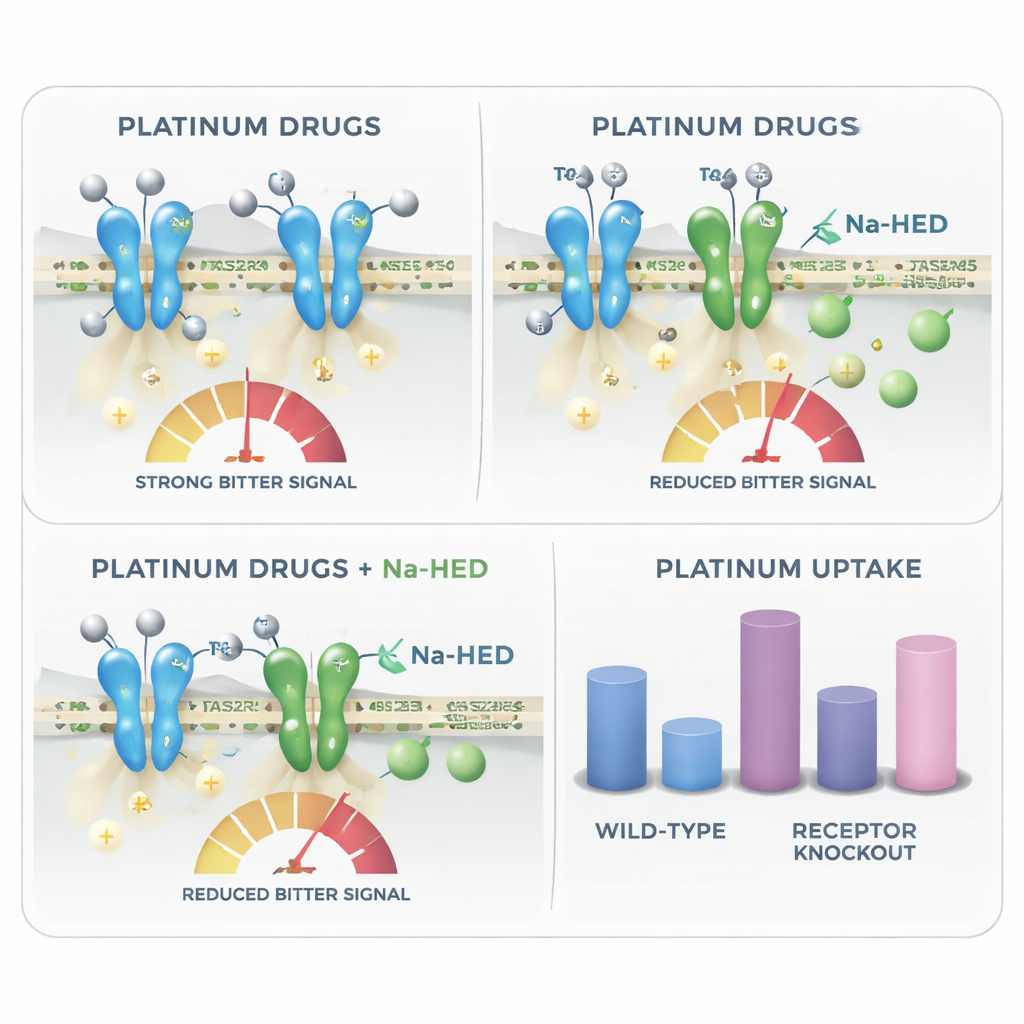
Toward gentler taste experiences during chemotherapy
For patients, the main takeaway is hopeful: platinum-based chemotherapy seems to trigger bitter taste problems by directly activating bitter receptors that exist not only on the tongue but also in gut-like cells. Cisplatin appears particularly potent in this regard. The study shows that Na-HED can substantially mute this bitter signal in a controlled cell system and may also limit local uptake of cisplatin. While these findings need to be confirmed in people, they point toward future “rinse-and-spit” mouth treatments containing Na-HED that could soften harsh bitter and metallic sensations without interfering with the cancer-fighting action of the drugs throughout the body.
Citation: Zehentner, S., Mistlberger-Reiner, A., Pirkwieser, P. et al. Chemosensory response to Pt-based chemotherapeutics via bitter taste receptors in vitro reveals a new mechanism for bitter taste disorders. Sci Rep 16, 2634 (2026). https://doi.org/10.1038/s41598-026-35636-w
Keywords: chemotherapy taste changes, bitter taste receptors, cisplatin and carboplatin, bitter masking compounds, cancer patient nutrition