Clear Sky Science · en
Patient-reported health utility of stroke and gastrointestinal bleeding related to DOACs in atrial fibrillation: a vignette-based substudy of a randomized controlled trial
Why this matters to people on blood thinners
Many older adults take modern blood thinners, called direct oral anticoagulants (DOACs), to prevent strokes caused by an irregular heartbeat known as atrial fibrillation. These medicines can be lifesaving, but they also raise the chance of serious bleeding in the digestive tract. This study asks a simple but powerful question: how do patients themselves feel about living through a stroke versus a major stomach bleed, and how much do these events change their everyday quality of life?
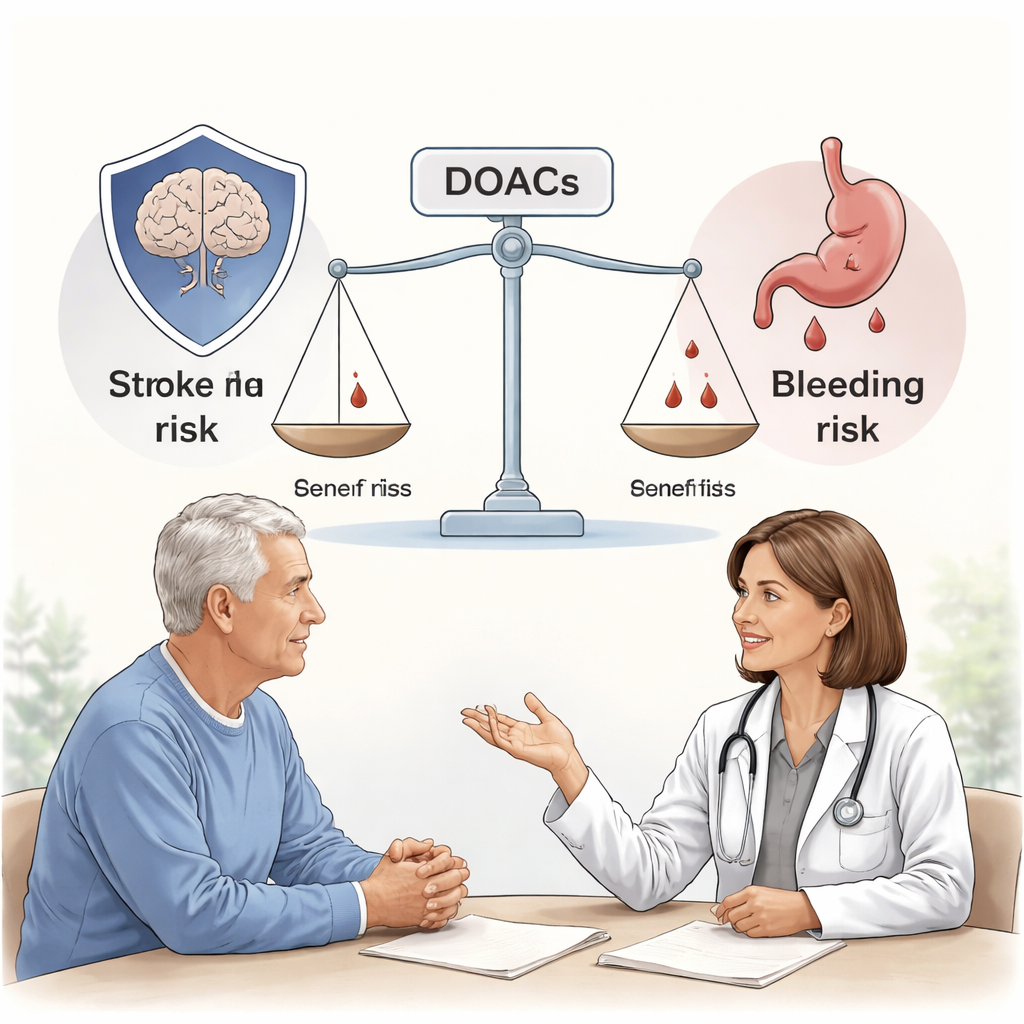
Balancing clotting and bleeding in everyday life
People with atrial fibrillation have a higher risk of forming blood clots that can travel to the brain and cause disabling or fatal strokes. DOACs lower that risk, but at the cost of more bleeding, especially in the upper part of the digestive system, such as the esophagus and stomach. Doctors constantly weigh these trade-offs, yet most of the numbers they use come from clinical trials and cost models—not from how patients imagine their own lives would change after such events. The authors set out to capture these patient perspectives in a structured, measurable way.
Imagining health states through short stories
Instead of waiting for real strokes or gastrointestinal bleeds to occur—which are unpredictable and relatively rare—the researchers used short written stories, or vignettes, to describe four possible health states: having a stroke, living after a stroke, having an episode of upper gastrointestinal bleeding (UGIB), and living after that bleeding has been treated. A total of 391 older adults with atrial fibrillation who were already taking DOACs read these vignettes during a one-year follow-up visit. After each story, they rated how they would expect to feel using a standard questionnaire called EQ‑5D‑5L, which scores health on a scale where 1 represents perfect health and lower numbers reflect greater problems with movement, self-care, daily activities, pain, and anxiety or depression.
How patients rated stroke versus stomach bleeding
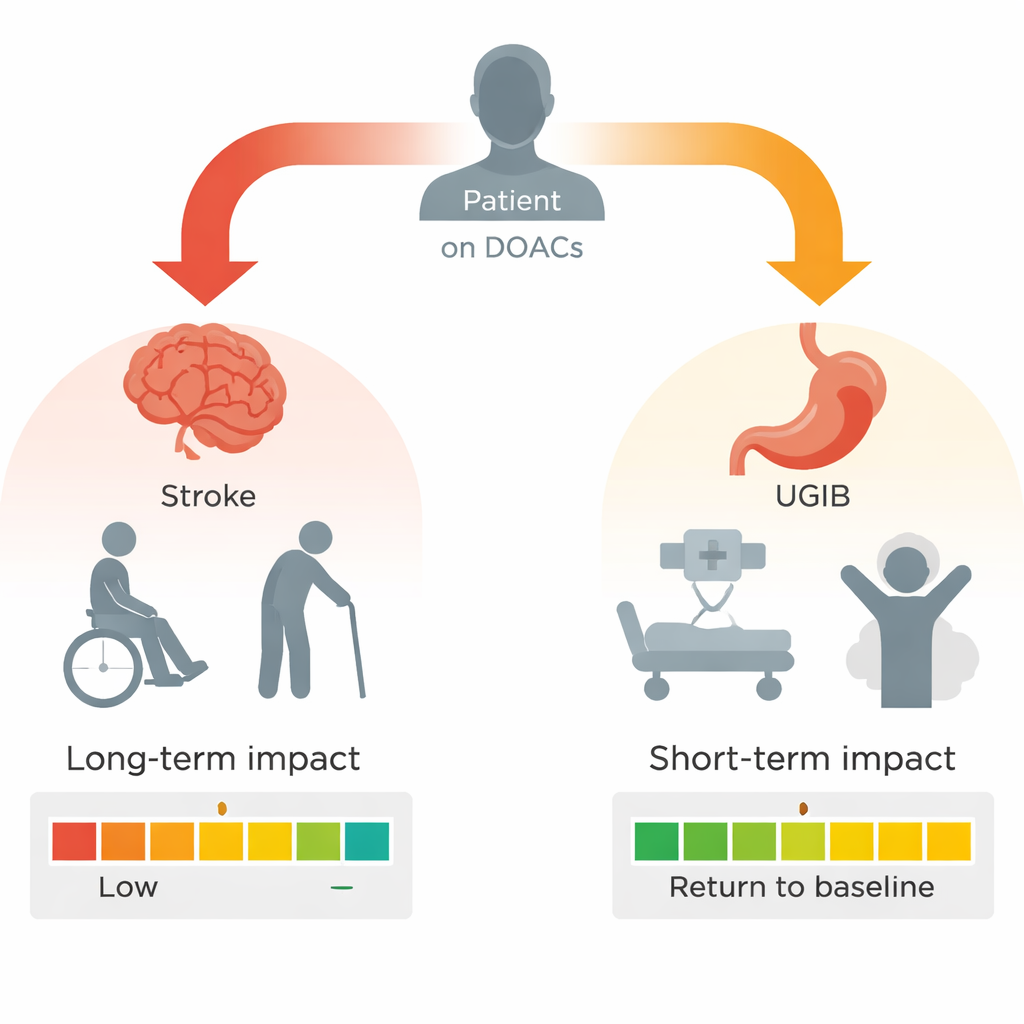
On average, patients rated their current health quite highly, with a typical EQ‑5D score of 0.90. When they imagined having a stroke, that score dropped dramatically to 0.41, meaning they expected a very large loss in independence and daily functioning. Living in a post-stroke state improved the score to 0.73, but it still remained well below their current health. In contrast, imagining a serious upper gastrointestinal bleed led to a smaller drop, to 0.73, and ratings in the post‑bleeding state almost bounced back to baseline at 0.90. Nearly all patients (about 90–95%) felt that stroke would worsen their abilities in self-care and usual activities, while about 70% thought stroke would worsen their overall health score. For bleeding, fewer patients saw large physical setbacks, but more than half reported increased fear, worry, or low mood in the anxiety and depression category.
Who feels the impact most strongly
The study also explored which personal factors go hand in hand with lower quality of life among people with atrial fibrillation. Older age, higher body weight, more bleeding risk, and signs of memory or thinking problems were all linked with lower EQ‑5D scores. Women tended to report slightly worse quality of life than men, and those with more noticeable atrial fibrillation symptoms also felt less well overall. Interestingly, whether patients were also taking a stomach-protecting drug called a proton pump inhibitor did not change how they imagined the impact of bleeding, suggesting that worry about bleeding may persist even when prevention strategies are in place.
What this means for treatment decisions
For someone living with atrial fibrillation, this study underscores that a stroke is seen as a devastating, long-term blow to independence and quality of life, while a serious stomach bleed is viewed as very frightening but more temporary. Patients expected to recover much of their usual functioning after a bleed, but not after a stroke. At the same time, bleeding events were strongly tied to emotional distress. These results suggest that conversations about blood thinners should not only focus on survival or hospitalizations, but also on how each possible outcome might shape everyday living and peace of mind. By quantifying how patients value these different futures, the study provides numbers that can guide shared decision-making between patients and clinicians and inform health policy models that compare anticoagulant strategies.
Citation: Kwon, SH., Ahn, HJ., Nam, J.H. et al. Patient-reported health utility of stroke and gastrointestinal bleeding related to DOACs in atrial fibrillation: a vignette-based substudy of a randomized controlled trial. Sci Rep 16, 5328 (2026). https://doi.org/10.1038/s41598-026-35628-w
Keywords: atrial fibrillation, blood thinners, stroke, gastrointestinal bleeding, quality of life