Clear Sky Science · en
Hepatitis B immune escape and drug resistance mutations among blood donors in Gabon during the year 2022
Why the Safety of Donated Blood Matters
Every time someone receives a blood transfusion, they trust that the blood is safe. In countries where hepatitis B virus (HBV) is common, that trust can be harder to guarantee. This study from Gabon, in Central Africa, looks closely at how often hepatitis B is found in blood donors, including hidden forms of the virus that routine tests can miss. The findings shed light on an invisible threat to transfusion safety and on how the virus is changing in ways that may weaken vaccines and treatments.
Hidden Risks in the Blood Supply
Hepatitis B infects hundreds of millions of people worldwide and is a major cause of liver cirrhosis and liver cancer. In Gabon, the infection is already known to be common in the general population. Blood transfusion is essential for treating many conditions, but if donated blood carries HBV, it can silently pass the virus on to patients. Standard screening relies mainly on detecting a viral surface protein in the blood. However, some people carry HBV without showing this protein, a condition known as occult infection. This study set out to measure both obvious and hidden hepatitis B infections among blood donors at Gabon’s National Blood Transfusion Centre in 2022, and to examine which versions of the virus are circulating.
Who Donated Blood and What Was Found
Researchers followed more than 3,600 people who came forward as blood donation candidates; after medical checks and exclusions, 283 donors were included in the study, most of them young adult men. Blood samples were tested for markers of hepatitis B exposure and for the presence of viral genetic material. About one in four donors (25.1%) had an overt infection, meaning clear signs of active HBV. An additional 5.7% had evidence of past or current infection without the usual surface marker, fitting the profile of occult infection. None of the donors tested positive for HIV or hepatitis C virus, but the overall level of hepatitis B in this donor group was much higher than estimates for the general Gabonese population, raising concern about transfusion risk.
The Virus That Hides From Tests
To understand how well the virus could be detected, the scientists measured how much HBV DNA was present in selected samples. All occult cases had extremely low amounts of virus in the blood, far below what is usually seen in clear-cut infections. In contrast, donors with overt infection showed a wide range of viral levels, and those with higher levels were more likely to yield enough genetic material for detailed analysis. This pattern mirrors reports from other African countries: hidden infections often carry very little virus, making them harder to spot with standard tools. It also suggests that relying only on routine surface antigen tests may not be enough to ensure safe blood in regions where HBV is widespread.
Changing Viruses, Weaker Shields
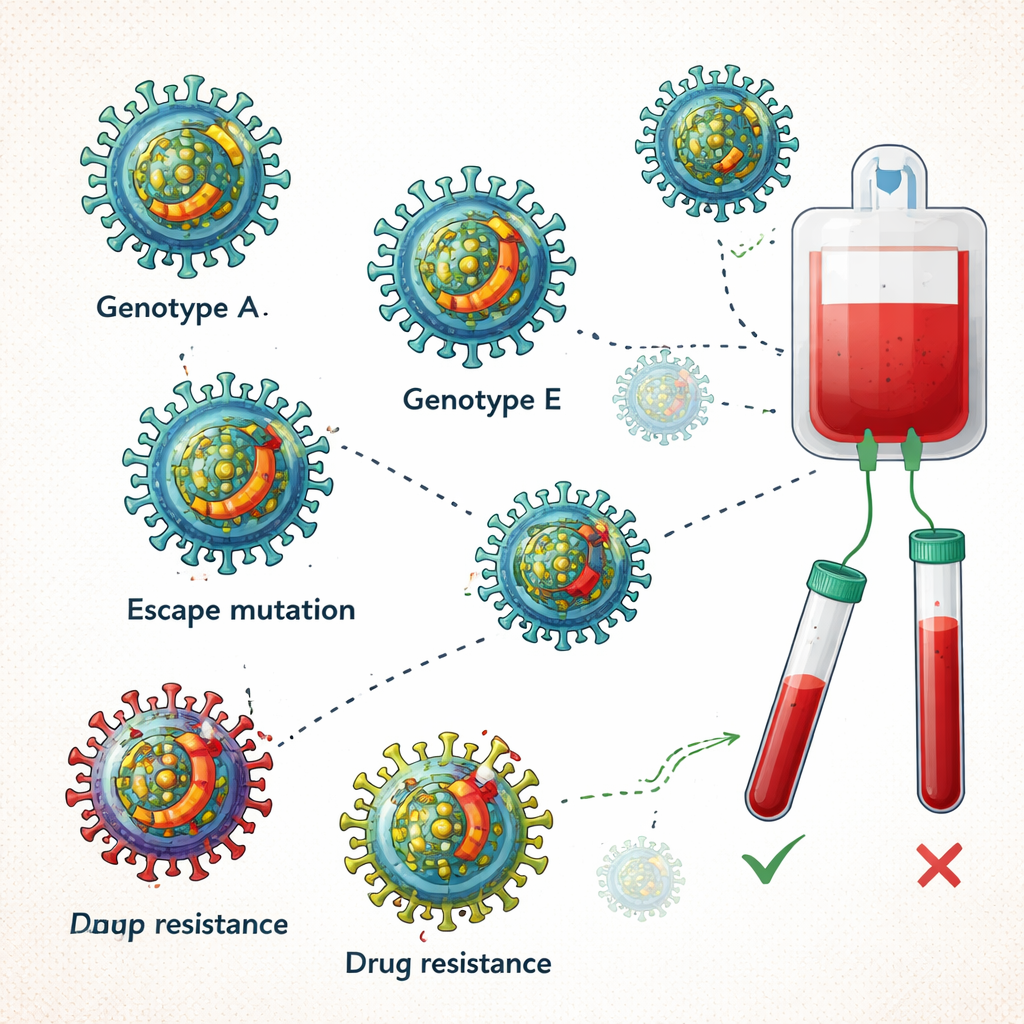
The team was able to decode part of the viral genome in five donors whose blood contained higher amounts of HBV. They found mainly genotype A (subtypes A1 and A3) and, less often, genotype E—types already known to circulate widely in Africa. Strikingly, four of the five donors carried mutations that help the virus dodge the immune system, including changes in the very region targeted by vaccines. One donor also carried a mutation linked to reduced response to the antiviral drug entecavir, even though donors themselves had not been treated. These findings hint that vaccine-escape and drug-resistant versions of the virus are already moving through the broader population, likely driven by past infections, incomplete vaccination, and treatment pressures.
What This Means for Patients and Policy
For a layperson, the main message is straightforward: in this Gabonese blood center, hepatitis B was common among donors, and a smaller but important fraction carried a hidden form of the virus that standard tests can miss. Some of these viruses also show early signs of adapting to slip past immune defenses and medicines. To better protect transfusion recipients, the authors argue that blood banks in such settings should combine traditional antibody tests with direct detection of viral DNA whenever possible, and that national vaccination strategies need to be reviewed to ensure stronger, lasting protection. Strengthening these defenses could reduce new infections, slow the march toward liver disease and cancer, and make donated blood safer for everyone who depends on it.
Citation: Maulot-Bangola, D., Fokam, J., Ngoufack Jagni Semengue, E. et al. Hepatitis B immune escape and drug resistance mutations among blood donors in Gabon during the year 2022. Sci Rep 16, 5186 (2026). https://doi.org/10.1038/s41598-026-35616-0
Keywords: hepatitis B, blood transfusion, occult infection, drug resistance, Gabon