Clear Sky Science · en
Surface pretreatments and erosive aging effects on the bond strength of CAD/CAM resin-based materials with a self-adhesive resin cement
Why What Eats at Your Teeth Also Eats at Your Dental Work
Acidic drinks, citrus fruits, and even stomach acid from reflux can slowly wear away our teeth. But they can also undermine modern dental restorations, such as crowns and bridges made with high-tech computer‑guided systems. This study asks a simple but important question: how well do these advanced materials stay glued in place when they face years of acid attack inside the mouth?
Two High-Tech Ways to Make a Crown
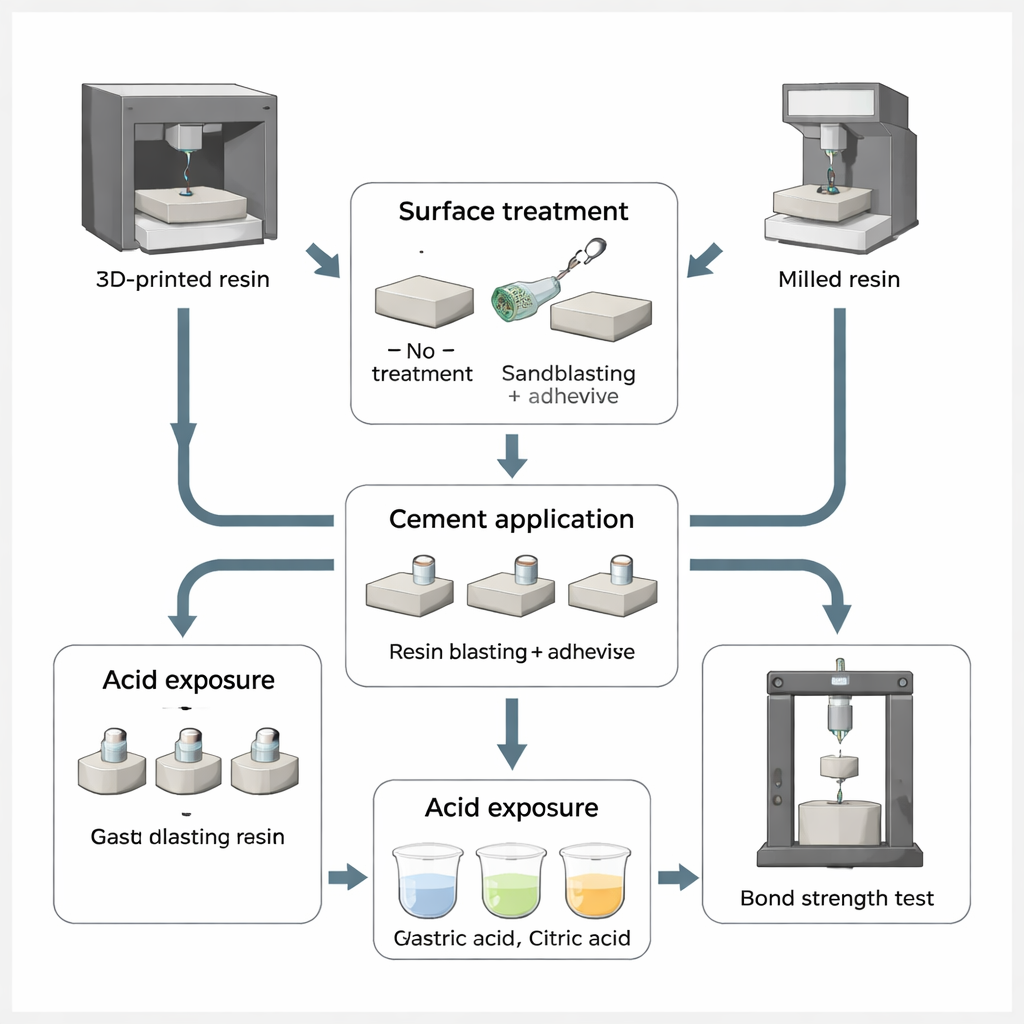
Today, many permanent crowns are made not by hand, but by computer‑aided design and manufacturing, known as CAD/CAM. Dentists and technicians can either mill a crown from a solid block or build it layer by layer with a 3D printer. The milled option uses dense, factory‑made blocks that are carved into shape. The 3D‑printed option starts with a liquid resin that hardens under light, allowing very precise shapes and less wasted material. Both aim to look natural and last for years, but their internal structure is different, and that might change how well they bond to the glue that holds them onto teeth.
How the Researchers Put These Crowns to the Test
The team compared two popular resin‑based crown materials: a 3D‑printed permanent crown resin (Crowntec) and a milled nanoceramic resin block (Cerasmart 270). They attached small cylinders of a commonly used self‑adhesive resin cement to flat pieces of each material. Before gluing, some samples were left untouched, some were roughened with a sandblasting step, and others received sandblasting plus a thin coat of a so‑called universal adhesive. Then the researchers soaked the bonded samples for four days in one of three liquids: plain water, a strong artificial gastric acid that mimics long‑term reflux, or a citric acid solution similar to what comes from juices and sodas. Finally, they measured how much force was needed to shear the cement off and examined how the bond failed under a microscope.
What Acid and Material Type Really Do
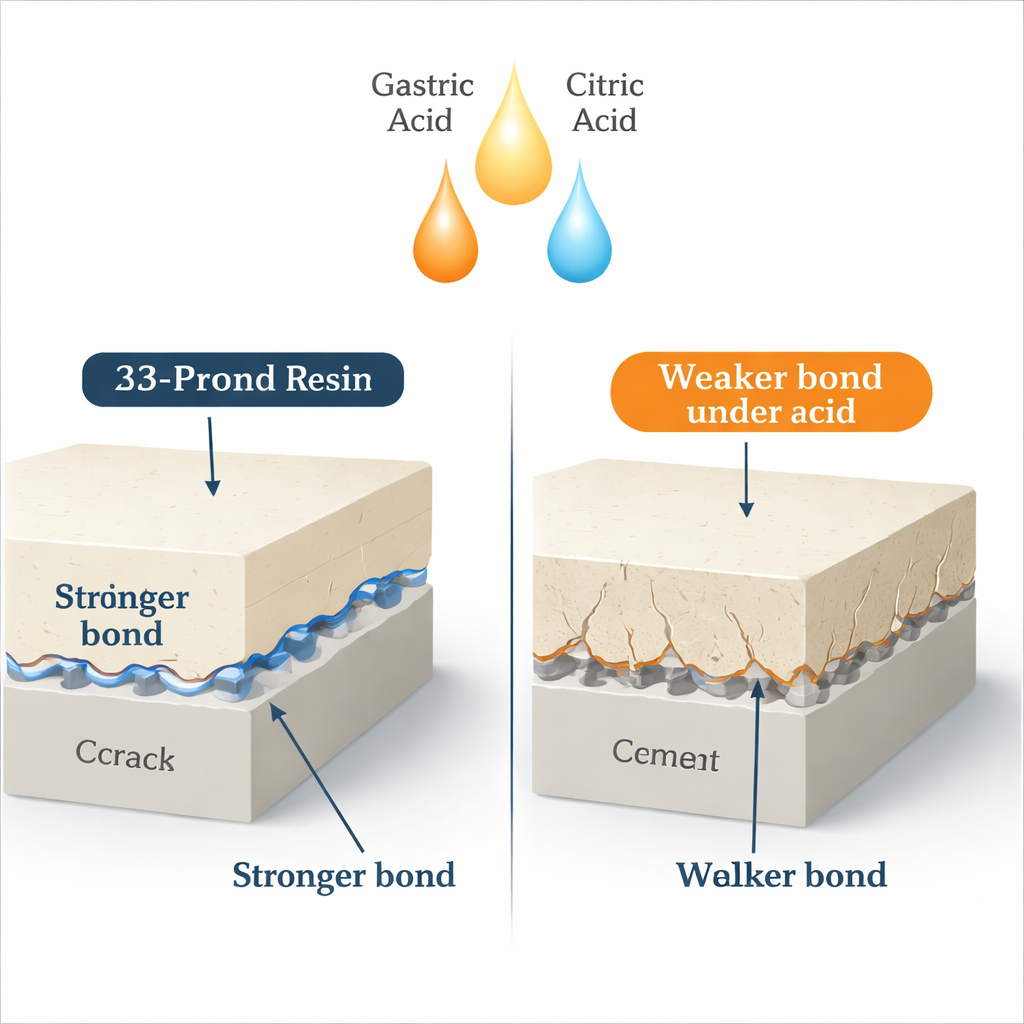
The results showed that not all crown materials behave the same way under acid stress. Overall, the 3D‑printed Crowntec bonded more strongly to the self‑adhesive cement than the milled Cerasmart, and its bond held up better after erosion. Most Crowntec samples failed by cracking within the crown material itself rather than at the glue line, a sign of a robust bond. By contrast, Cerasmart usually failed right at the interface, meaning the glue‑to‑crown connection was the weak link. When exposed to gastric acid, Cerasmart’s bond strength dropped in every group, sometimes to levels considered too low for long‑term clinical safety. For Crowntec, the strong stomach‑like acid only clearly weakened the bond when sandblasting was combined with an extra adhesive layer, suggesting that this extra coating may itself be vulnerable to harsh acid.
Do Extra Surface Treatments Help?
It might seem that more surface preparation should always improve bonding, but this study suggests it is not that simple. Roughening the surface with sandblasting and adding a universal adhesive did not produce a clear, consistent increase in bond strength for either material, even though these steps did change how and where the failures occurred. For the milled material, adding the adhesive tended to shift failures from the glue line into the material, hinting at some local benefit. However, the overall strength numbers did not rise enough to be statistically convincing. The authors note that overly aggressive sandblasting pressures, thick or unstable adhesive layers, and the specific chemical mix of the materials can all limit the benefits of these extra steps.
What This Means for Patients and Dentists
For people receiving crowns made from these kinds of resins, the study carries a practical message: the choice of crown material and the realities of acid exposure may matter more than elaborate surface treatments when a self‑adhesive cement is used. In this laboratory model, the 3D‑printed Crowntec material formed a stronger, more durable bond with the self‑adhesive cement than the milled Cerasmart, particularly under simulated years of exposure to stomach and dietary acids. While additional adhesive layers offered only modest and inconsistent gains, ongoing acid challenges—especially from gastric reflux—could significantly weaken some crown–cement combinations. The takeaway for the general reader is that advanced dental materials are not all equally resistant to the harsh chemistry of the mouth, and for patients with high acid exposure, dentists may need to be especially thoughtful about both the crown material and the type of cement they choose.
Citation: Karademir, S.A., Atasoy, S., Akarsu, S. et al. Surface pretreatments and erosive aging effects on the bond strength of CAD/CAM resin-based materials with a self-adhesive resin cement. Sci Rep 16, 5246 (2026). https://doi.org/10.1038/s41598-026-35612-4
Keywords: dental crowns, acid erosion, 3D-printed restorations, resin cement bonding, CAD/CAM dentistry