Clear Sky Science · en
Comparative study between female patients with functional dyspepsia accompanied by abnormal urinalysis and those with urinary tract infections: a retrospective case-control study
Why stomach troubles can look like bladder infections
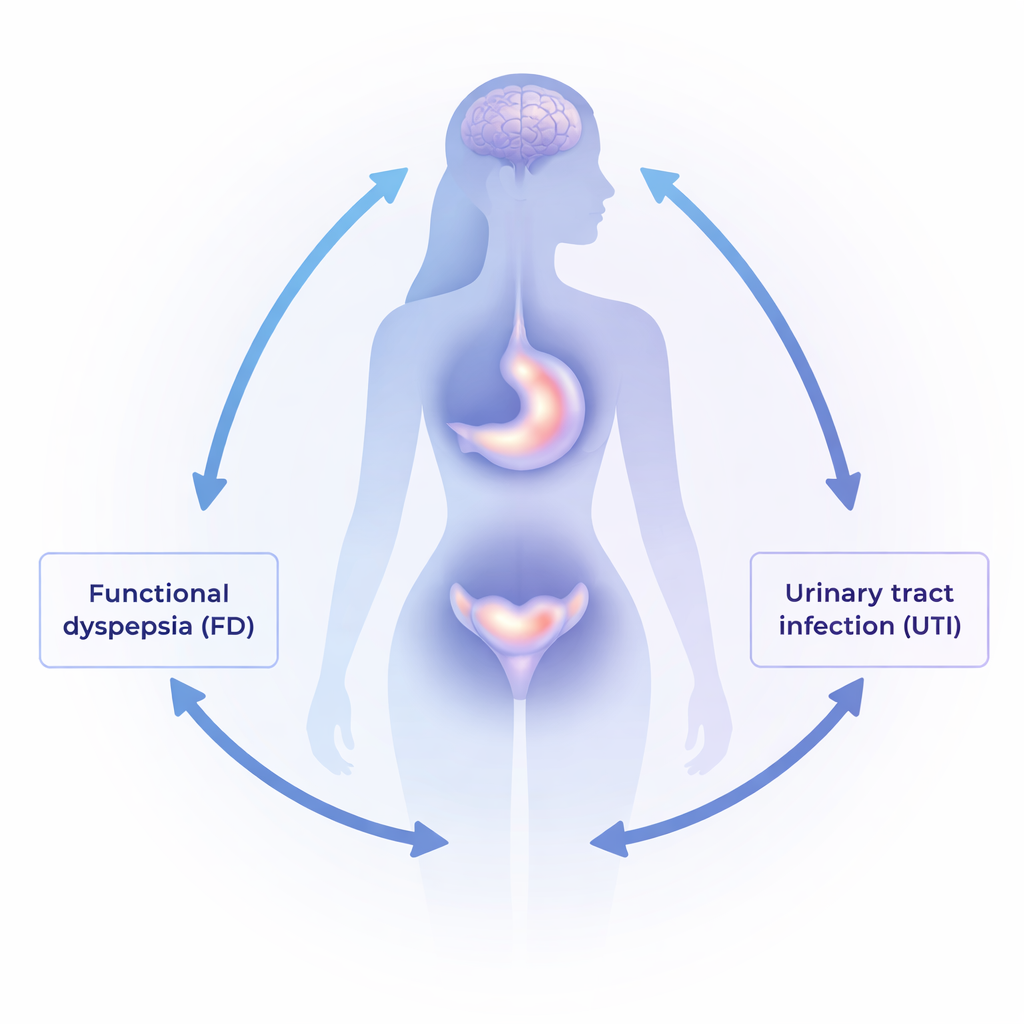
Many women know the frustration of recurring urinary problems and vague upper‑abdominal discomfort, only to bounce between clinics and antibiotic prescriptions. This study explores an under‑recognized twist: some women with stubborn stomach complaints called functional dyspepsia also show abnormal urine test results that can be mistaken for a urinary tract infection. Understanding the difference matters, because mixing them up can lead to needless antibiotics and missed opportunities to treat the real underlying problem in the brain–gut–bladder network.
Two common problems that often overlap
Functional dyspepsia is a long‑lasting pattern of upper‑abdominal symptoms such as burning, pain, early fullness, or discomfort after meals, without an obvious structural cause like an ulcer or tumor. It is now thought of as a disorder of communication between the gut and the brain rather than a simple stomach disease. Urinary tract infections, by contrast, are genuine bacterial infections of the bladder or nearby structures, typically causing frequent, urgent, or painful urination. Because both are common in women and both can be linked to stress, mood changes, and subtle inflammation, it is easy for doctors and patients to confuse one for the other—especially when a quick urine test comes back abnormal.
How the researchers compared stomach and bladder cases
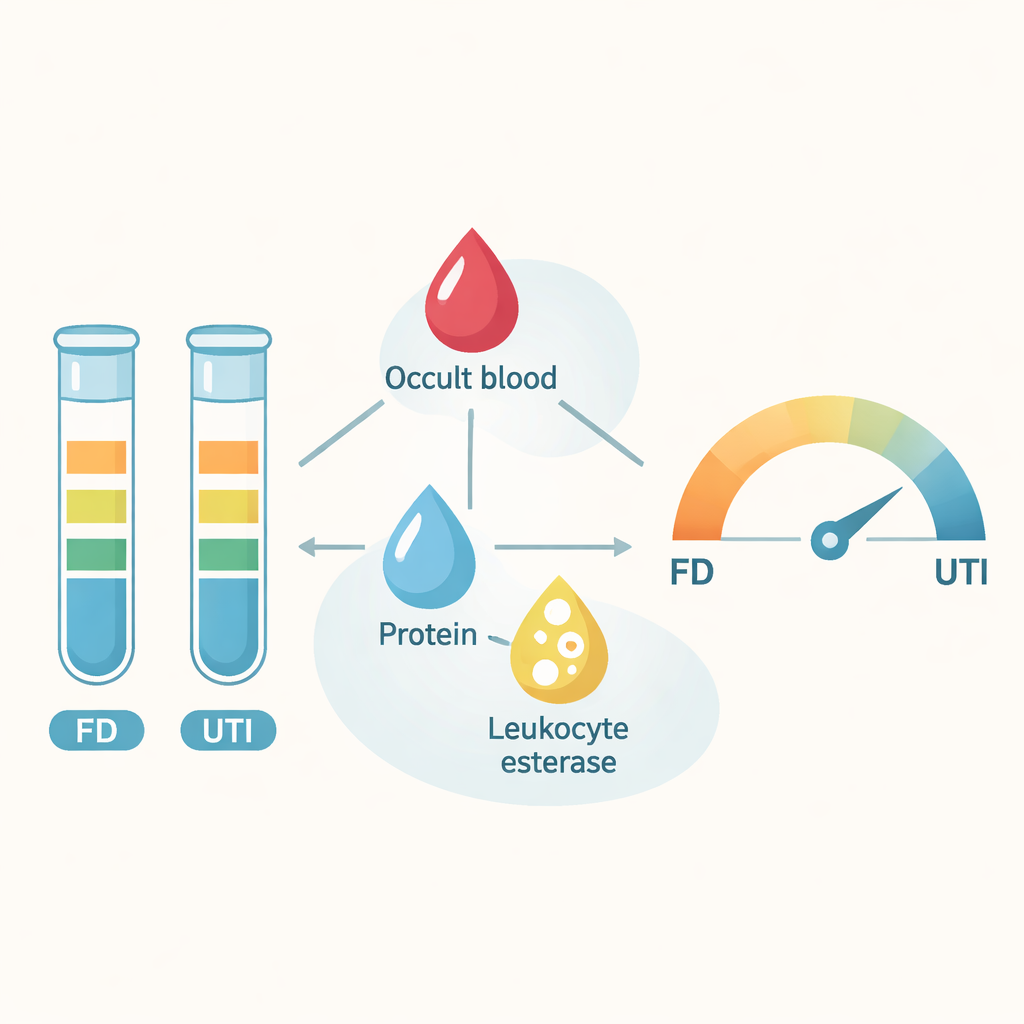
To untangle this confusion, the researchers reviewed records from 120 women treated at a single hospital between 2022 and 2024. Half had been diagnosed with functional dyspepsia and half with confirmed urinary tract infections based on urine cultures. All had abnormal urine tests at some point. For the dyspepsia group, women with kidney disease, other major digestive disorders, recent antibiotic use, or worsening urine results after treatment were excluded. Importantly, their abnormal urine findings had to improve after taking acid‑suppressing drugs together with anti‑anxiety or antidepressant medication, without any antibiotics. The team then compared several routine urine markers—red and white blood cells, protein, occult (hidden) blood, epithelial cells, and an enzyme called leukocyte esterase—between the two groups.
What urine tests reveal about the real culprit
The two groups of women were similar in age, mostly over 50, but their symptoms and urine patterns were strikingly different. More than two‑thirds of women with urinary tract infections had classic urinary complaints, compared with only a few in the dyspepsia group. On testing, women with infections showed clearly higher levels of protein, occult blood, leukocyte esterase, and both red and white blood cells in the urine. In contrast, women with functional dyspepsia often had only mild changes, and their urine protein was usually negative. One especially telling pattern was the presence of excess red blood cells but normal white blood cells: this occurred in nearly a quarter of dyspepsia patients but in none of the infection cases, arguing strongly against an active infection when seen in isolation.
Building a simple score to guide decisions
Using statistical tools similar to those behind medical risk calculators, the authors tested how well each urine marker—and combinations of markers—could distinguish infection from dyspepsia. White blood cell counts alone were the strongest single clue for infection, especially above a specific threshold. However, when they combined three simple indicators—occult blood, protein, and leukocyte esterase—the ability to tell the two conditions apart improved further. The team turned these findings into a visual “ruler,” or nomogram, that lets a clinician line up a woman’s urine values and estimate the likelihood that she truly has a urinary tract infection rather than functional dyspepsia with bladder irritation.
What this means for women with recurring symptoms
For patients and clinicians, the study’s message is that not every abnormal urine test in a woman with upper‑abdominal symptoms signals an infection needing antibiotics. When urinary complaints are minimal, protein is negative, and white blood cells are not markedly elevated—especially if red blood cells are raised alone—functional dyspepsia and a disrupted brain–gut–bladder connection may be the better explanation. In such cases, focusing on managing stress, mood, stomach function, and possible low‑grade bladder inflammation may relieve both stomach and urinary findings while avoiding unnecessary antibiotic courses. Larger studies will be needed to confirm these results, but they already offer a practical way to look beyond the test strip and treat the whole person.
Citation: Liao, Y., Li, Y., Wang, X. et al. Comparative study between female patients with functional dyspepsia accompanied by abnormal urinalysis and those with urinary tract infections: a retrospective case-control study. Sci Rep 16, 4934 (2026). https://doi.org/10.1038/s41598-026-35609-z
Keywords: functional dyspepsia, urinary tract infection, urine test, brain gut bladder axis, women's health