Clear Sky Science · en
Complete genome sequence and functional characterization of Bacillus amyloliquefaciens NJF-55: a sheep-derived probiotic candidate
Why a Sheep’s Gut Bacteria Matter to Us
Behind the scenes of every healthy animal is a bustling community of gut microbes that help digest food, train the immune system, and keep harmful germs at bay. This study zooms in on one such microbe, a strain of Bacillus amyloliquefaciens called NJF-55, discovered in the colon of a healthy sheep. By reading its entire genetic instruction book, the authors ask a practical question with big implications for farming and food production: could this naturally occurring bacterium be developed into a safe, effective probiotic that helps livestock stay healthy without relying so heavily on antibiotics?
A Hardy Helper from a Sheep’s Intestine
The researchers began by isolating NJF-55 from the distal colon of a healthy ram and confirming its identity using DNA-based methods. They then sequenced its complete genome, assembling a single circular chromosome and a tiny plasmid—an extra ring of DNA—both of which looked typical for this group of Bacillus. Quality checks showed the sequence was nearly complete and free of major errors. When they compared NJF-55 to well-known relatives, it clustered tightly with other B. amyloliquefaciens strains that have already attracted attention as probiotics and plant-friendly microbes.
Built for Life in a Tough Gut Environment
A detailed look at the genes revealed that NJF-55 is a metabolic all-rounder. It carries all the core machinery needed to turn sugars, amino acids, and other nutrients into energy, and it encodes numerous transport systems for bringing those substances into the cell. Just as important for a probiotic, it has a rich toolkit for surviving stress: genes for forming hardy spores, repairing DNA damage, dealing with oxygen-related stress, and coping with changes in temperature and salt. The genome also contains many genes tied to movement, adhesion, and biofilm formation, suggesting NJF-55 can swim toward favorable niches, stick to gut surfaces, and build protective communities once it arrives. 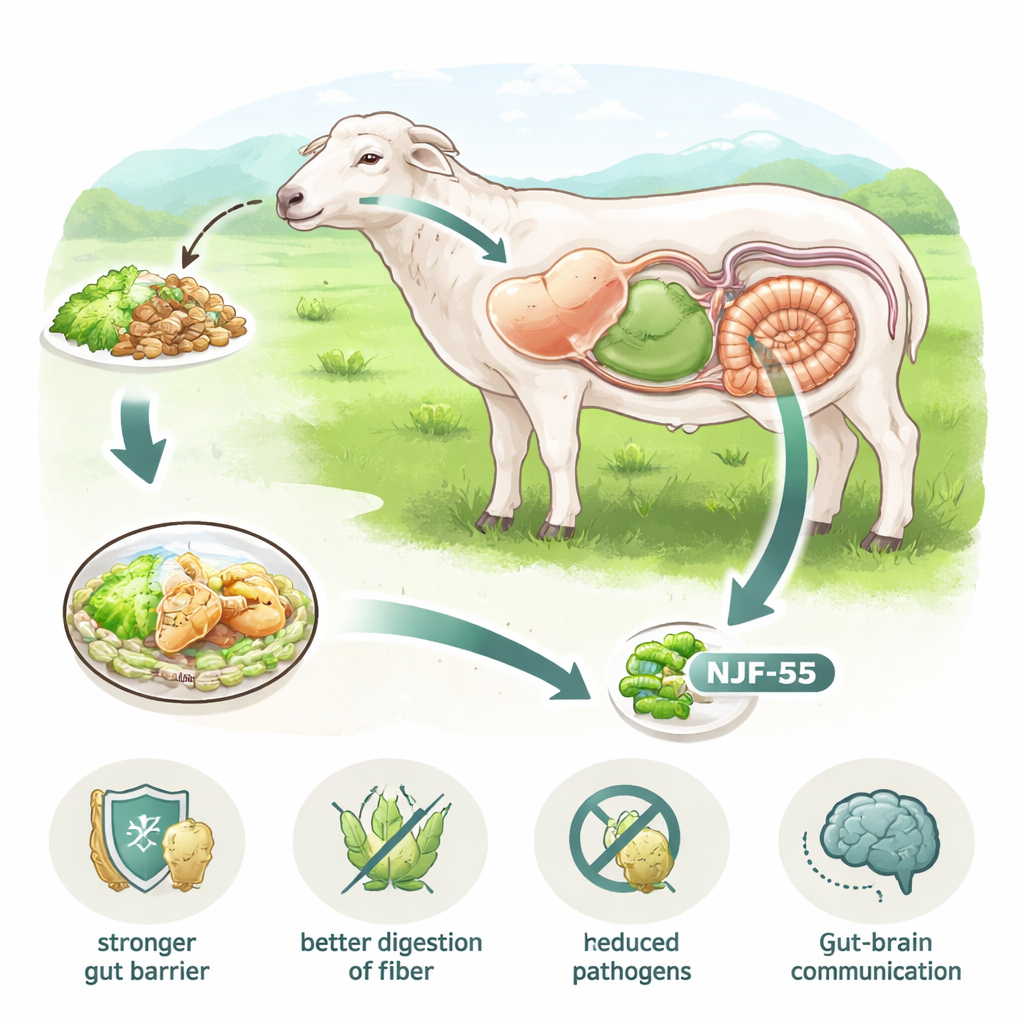
Feeding the Host and Fighting Off Germs
The strain’s genome hints that it does more than just look after itself. NJF-55 carries genes for producing digestive enzymes that can help break down complex plant fibers, a key task in the rumen and intestines of herbivores. It also has complete pathways for making several B vitamins, including riboflavin, folate, biotin, and forms of vitamin B12. These vitamins are important for energy metabolism and nervous system function, tying NJF-55 to the emerging idea that gut microbes can influence the gut–brain axis. On the defensive side, the bacterium harbors gene clusters for famous Bacillus lipopeptides and polyketides—surfactin, fengycin, bacillaene, and macrolactin—compounds known to disrupt competing microbes and shape immune responses. It also contains several regions predicted to make bacteriocins, small protein antibiotics that can selectively inhibit rival bacteria.
Safety First: What the Genome Does Not Contain
Because probiotics are given to large numbers of animals, safety is crucial. The authors used multiple databases and screening tools to search NJF-55’s genome for classic toxin genes and acquired antibiotic resistance elements. They found none of the hallmark virulence factors associated with disease-causing Bacillus strains, and no resistance genes linked to medically critical drugs such as beta-lactams or fluoroquinolones. The four viral remnants (prophages) embedded in the chromosome lacked obvious toxin or resistance cargo, and the small plasmid appeared to be a simple maintenance element without risky traits. Comparison with four other Bacillus genomes showed that most probiotic-related features—such as bile tolerance, stress responses, and iron-scavenging systems—belong to a shared core, while NJF-55 stands out mainly by carrying extra copies of certain beneficial gene families, including enzymes that make antimicrobial compounds and factors that bolster stress resilience. 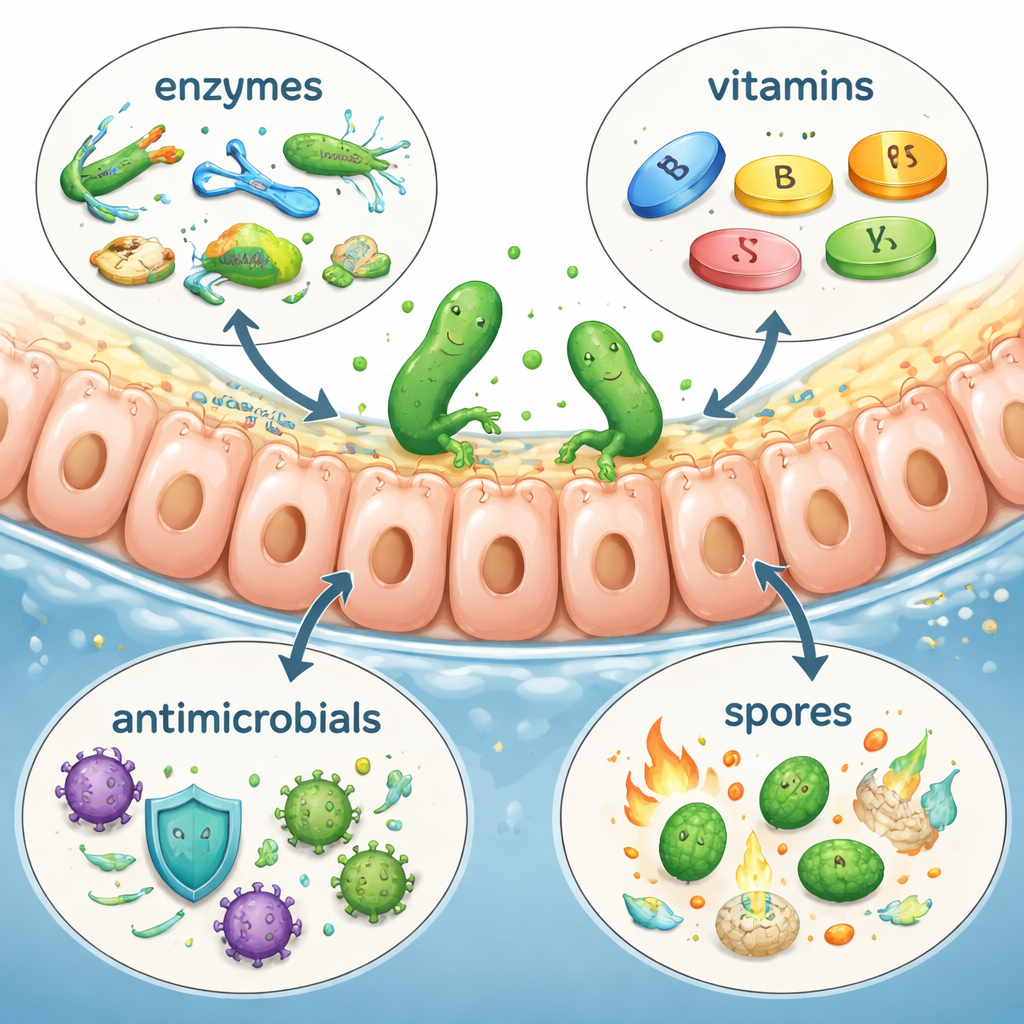
From Genome Map to Barnyard Use
Taken together, the genetic profile of Bacillus amyloliquefaciens NJF-55 paints a picture of a tough, adaptable microbe well suited to life in the ruminant gut. It appears capable of helping its host digest fibrous feed, providing vitamins, competing with harmful microbes, and withstanding the harsh journey through the stomach and intestines—all while lacking obvious red flags for virulence or problematic antibiotic resistance. The authors caution that these conclusions are based on predictions from DNA data and lab tests; real-world feeding trials and detailed chemical analyses are still needed. But if those studies confirm the promise seen in its genome, NJF-55 could become part of next-generation probiotic formulations that support animal health and productivity while reducing reliance on antibiotics.
Citation: Al-Hasan, B.A., Janabi, A.H.D. & Helmer, C. Complete genome sequence and functional characterization of Bacillus amyloliquefaciens NJF-55: a sheep-derived probiotic candidate. Sci Rep 16, 6408 (2026). https://doi.org/10.1038/s41598-026-35600-8
Keywords: probiotic bacteria, ruminant gut health, Bacillus amyloliquefaciens, livestock microbiome, antibiotic alternatives