Clear Sky Science · en
Assessing post-conflict electric power supply reliability in low voltage distribution networks of Aksum Ethiopia
Why Electricity After War Matters to Everyday Life
When fighting ends, people expect lights, refrigerators, clinics, and phone chargers to come back on. But in many towns, the power grid has been bombed, looted, or left to rust. This study looks closely at Aksum, a historic town in northern Ethiopia, and asks a simple question with big implications: after years of conflict, how reliable is the electricity that now reaches homes, shops, and factories, and what still needs to be fixed to keep it on?
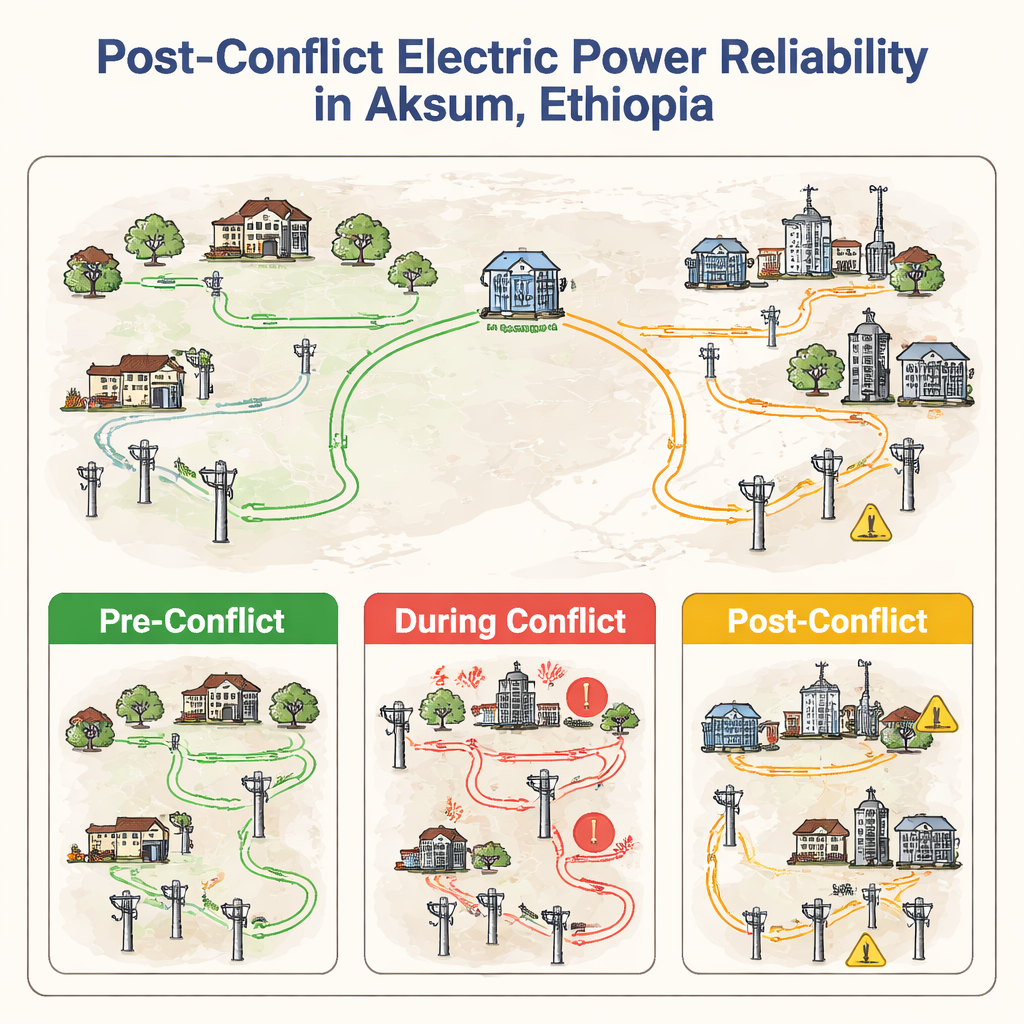
What Happened to the Wires and Poles
The war in Tigray, which began in late 2020, tore through Aksum’s electric network. More than a thousand poles and dozens of transformers were destroyed across the district, along with the switches, insulators, and fuses that protect them. Photographs from the field show shattered concrete poles, burned wooden supports, broken bush insulators, and transformer fuse boxes blown apart. Many repairs could not be done during the fighting, so temporary faults turned into long failures. As a result, whole neighborhoods experienced frequent and sometimes days‑long blackouts, damaging appliances and making customers deeply dissatisfied.
Measuring How Often the Lights Go Out
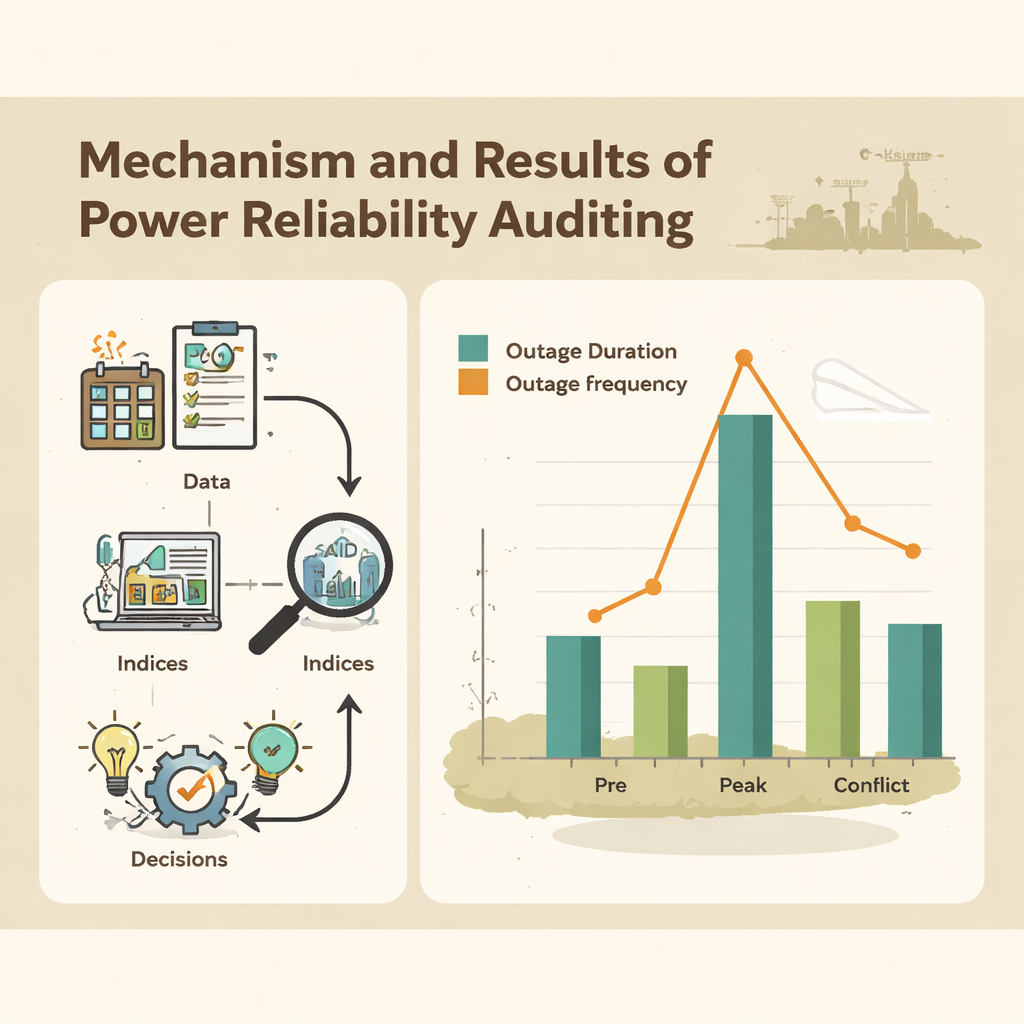
To move beyond anecdotes, the researchers used standard reliability yardsticks widely applied by power companies. One index adds up how many hours a typical customer is without power over a year; another counts how many separate outages they experience; a third divides the two to show how long a typical outage lasts; and a fourth estimates how much energy customers wanted to use but could not, because the grid was down. Using data from Aksum’s substation and its two main feeder lines—which serve about 97% of the town and nearby communities—they calculated these numbers for three periods: just before the conflict, during it, and in the first six months afterward.
Before, During, and After the Conflict
Before the fighting, Aksum’s power system was far from perfect but more or less manageable. Outages were fairly frequent because of aging equipment and weak maintenance, yet the total time without power and the amount of lost energy remained moderate. During the conflict, something striking happened: the number of recorded outages per customer actually fell slightly, but the total hours without power soared. In 2020 and especially 2022, when damage and neglect were worst, customers endured extremely long blackouts, and the energy they could not use jumped from a few dozen megawatt‑hours to tens of thousands. In other words, the grid was often simply off for long stretches, rather than flickering on and off.
Recovery Gains and Remaining Gaps
Six months after the formal end of the conflict, repairs and renewed maintenance began to pay off. The total time without power per customer dropped sharply compared with the war years, and the amount of lost energy also fell close to pre‑war levels. However, the number of outages per customer remained high, reflecting a fragile system where equipment is still failing and many components are only partially restored. When the authors compared Aksum’s post‑conflict performance with international benchmarks—from wealthy countries, emerging economies, and other African systems—they found that outage durations and restoration times were still many times worse than typical values.
What This Means for People and Policy
In plain terms, the study shows that war does not just knock down a few poles; it converts an already strained grid into one that people cannot count on, even years after the shooting stops. Aksum’s experience suggests that rebuilding must go beyond reconnecting lines. It needs stronger poles and transformers, better protection devices, and above all a routine “health check” of the system using clear reliability measures. By tracking how often and how long customers lose power, utilities and governments can target repairs, justify investment, and steadily push the town’s electricity toward global standards, making daily life and economic recovery far more secure.
Citation: Berhe, H.G., Tuka, M.B. & Kebedew, G.M. Assessing post-conflict electric power supply reliability in low voltage distribution networks of Aksum Ethiopia. Sci Rep 16, 4924 (2026). https://doi.org/10.1038/s41598-026-35599-y
Keywords: power reliability, post-conflict infrastructure, electric grid Ethiopia, low voltage distribution, energy resilience