Clear Sky Science · en
Research on design strategy of one-piece ski suit driven by demand
Why smarter ski suits matter
Skiing is no longer a niche pastime: in China alone, hundreds of millions have tried ice and snow sports. Yet many recreational skiers still struggle with stiff, leaky, or awkward clothing that makes a day on the slopes colder, clumsier, and less safe than it needs to be. This study asks a simple question with big practical consequences: if we start from what skiers actually experience and care about, can we design a one-piece ski suit that is warmer, easier to use, safer, and more enjoyable to wear?
Listening to skiers on the mountain
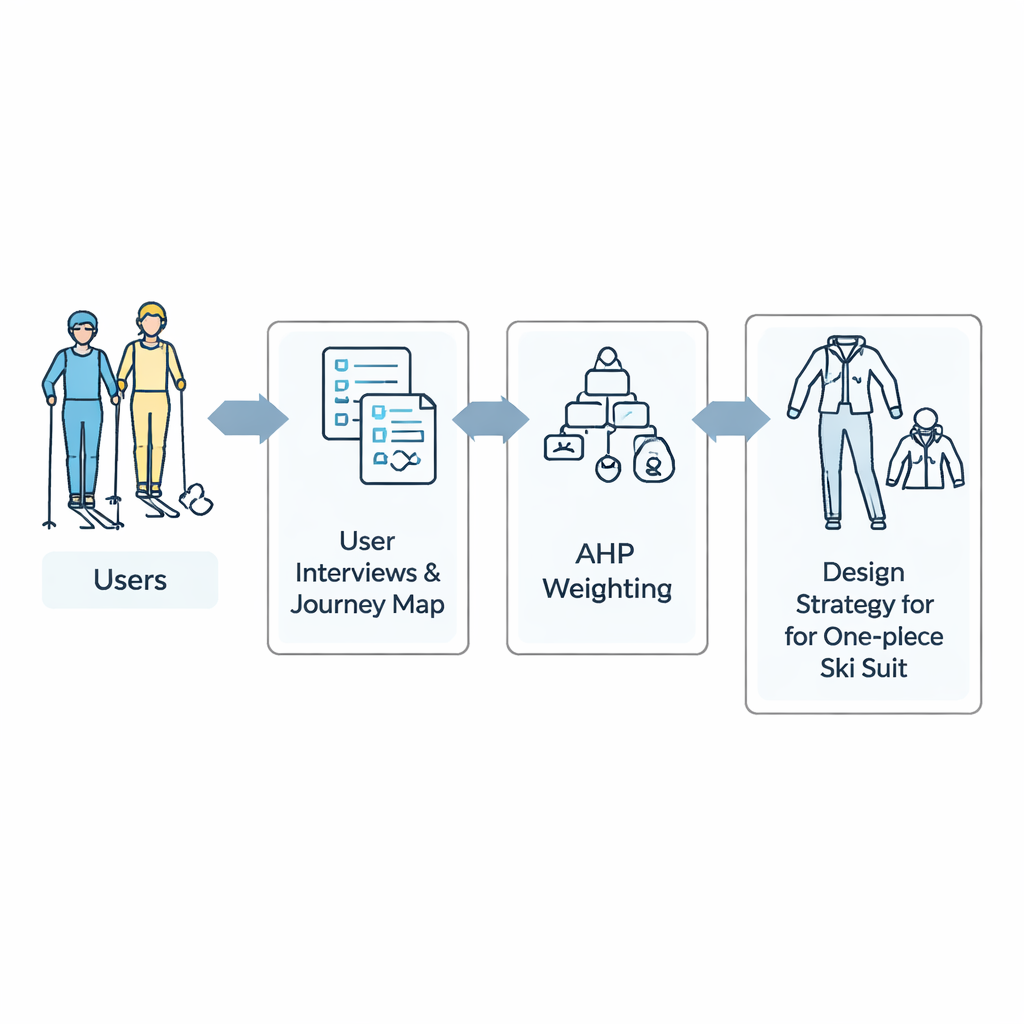
The research team began not in a lab, but on real slopes and in equipment shops. They interviewed 30 people aged 18 to 40 with solid skiing experience, including designers, professional athletes, and keen amateurs. By tracking everything that happens from gearing up, to riding lifts and skiing in different weather, to resting and finally packing away equipment, they built a “journey map” of how a one-piece suit is used. At each step they noted where the body touches the garment, where irritation and discomfort arise, and what skiers wish their suits could do better. From this map and national standards for ski clothing, they distilled 24 concrete needs, grouped into basic performance (warmth, wind protection, breathability), structural details (zippers, openings, pockets), appearance, safety, and environmental aspects.
Sorting must‑haves from nice‑to‑haves
To understand which of these needs truly shape satisfaction, the team used a method known as the Kano model, which looks at how the presence or absence of a feature changes how users feel. In a survey of 190 people who had worn ski suits, respondents rated each of the 24 items twice: how they felt if a feature was present, and how they felt if it was missing. This revealed four key types of features. Some are “musts”: if they are absent, people are very unhappy, but adding more does not delight them. For one-piece ski suits, solid warmth, strong wind resistance, decent breathability, and basic protection against abrasion and cuts fell into this category. Others are “linear”: every improvement directly boosts satisfaction. These included full body coverage that stays in place, freedom of movement, practical layout of pockets and controls, easy-to-use openings, visible safety markings, and skin-safe materials.
Finding the hidden delights
A third group of features turned out to be “delighters” — extras that skiers do not expect, but that make them noticeably happier when they appear. Adjustable vents for fine-tuning temperature, skin-friendly linings, an easy on‑and‑off structure, enlarged zippers and pullers that work well with gloves, a clear field of vision, and appealing overall look all fell into this camp. If such features are missing, people are not particularly angry; but when they are thoughtfully added, they elevate the feeling of quality and care. A few items, such as detachable parts or heavy use of recycled fabrics, were rated as indifferent or even negative by many users, suggesting that poorly explained sustainability choices or overly complex designs can backfire unless integrated carefully.
Weighing what matters most
Knowing the categories is only part of the story; designers also need to know how strongly each item should influence their choices when budgets and materials are limited. To do this, the researchers invited 15 experts — including a professional skier, dedicated ski-wear designers, and fashion academics — to compare the importance of each feature pair by pair. Using a technique called Analytic Hierarchy Process, they converted these judgments into numerical weights that add up to a clear priority list. The heaviest weights went to keeping the wearer warm and shielded from wind, followed by easy toilet and access openings, then breathability and overall coverage. Next came fine-tuning of vents, flexibility of movement, and convenient pocket and control layouts. Visual appeal, non-toxic materials, and good visibility ranked as important but secondary, while some comfort and detailing features were identified as priorities mainly for high-end models.
Turning insights into a real ski suit
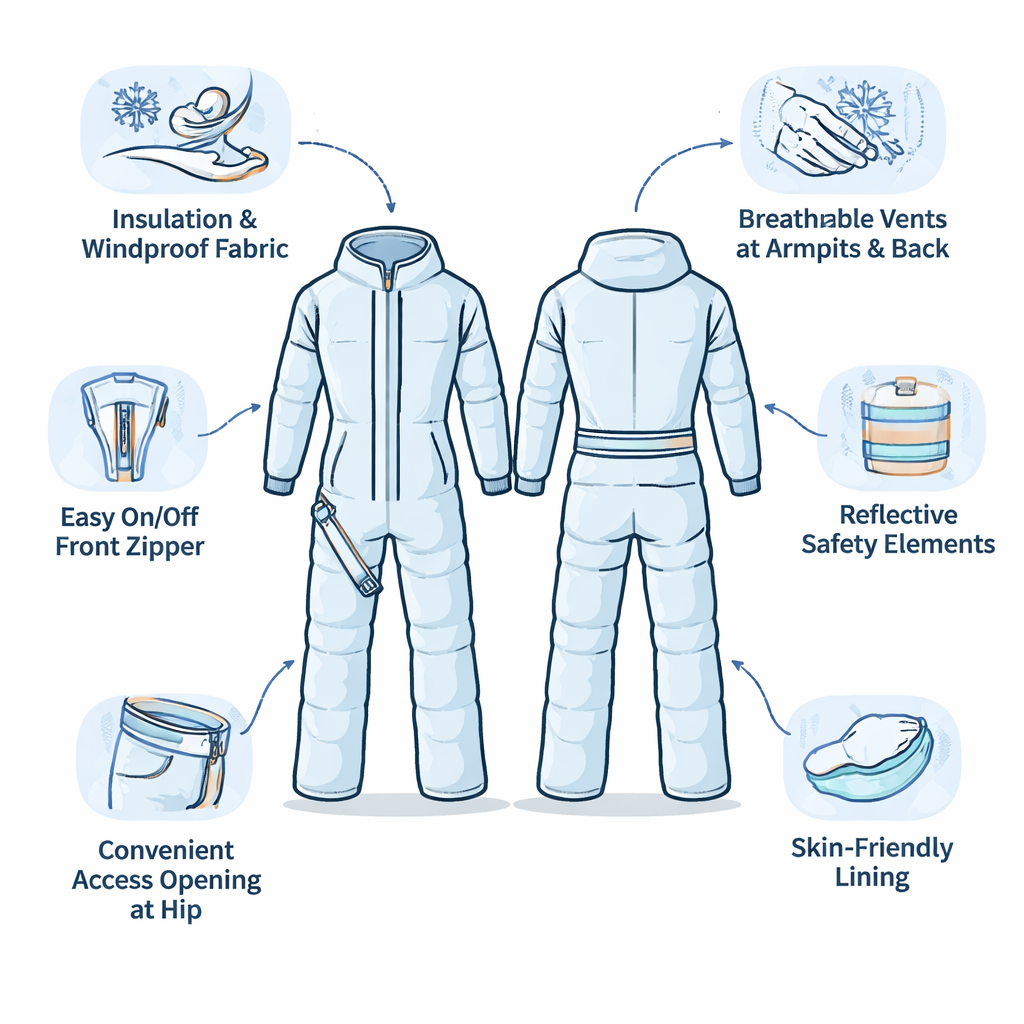
Armed with this ranked list, the team designed an actual one-piece suit to test the method. The prototype uses a one-piece shell with a long double zipper for easier dressing, drawstrings and loops at hood, collar, waist, and cuffs to balance warmth and airflow, windproof inner sleeves, and reinforced areas prone to abrasion. Breathable openings under the arms and at the lower back, plus mesh-lined chest pockets, help manage heat and moisture. The outer shell is a high-performance waterproof and breathable fabric, with down and reflective layers providing insulation and soft fleece at skin-contact points. Bright color blocking and reflective strips enhance appearance and visibility. When 15 experts scored this design using a fuzzy evaluation method that blends all the weighted criteria, the suit earned an overall rating in the “good” range, suggesting that the demand-driven approach does translate into a more satisfying product.
What this means for everyday skiers
For non-specialists, the main message is straightforward: better ski suits start with listening closely to skiers. By carefully mapping how people use their clothing, separating basic needs from added pleasures, and then giving each element a clear importance score, the authors show how to move from guesswork to evidence-based design. The resulting strategy tells manufacturers to first guarantee warmth, wind protection, breathability, and safety, then solve major convenience issues such as bathroom access and ease of movement, and only after that compete on style and extra comforts. This structured, user-centered method can help brands build one-piece ski suits that keep more people warm, comfortable, and confident on the slopes, while also nudging the industry toward safer and more sustainable choices.
Citation: Luo, X., Zhang, Z., Qiang, W. et al. Research on design strategy of one-piece ski suit driven by demand. Sci Rep 16, 5609 (2026). https://doi.org/10.1038/s41598-026-35593-4
Keywords: ski clothing design, user-centered design, one-piece ski suit, sportswear comfort, Kano AHP method