Clear Sky Science · en
The impact of constraints-based ball games on the control skills of children with developmental coordination disorder
Why this matters for kids who struggle with movement
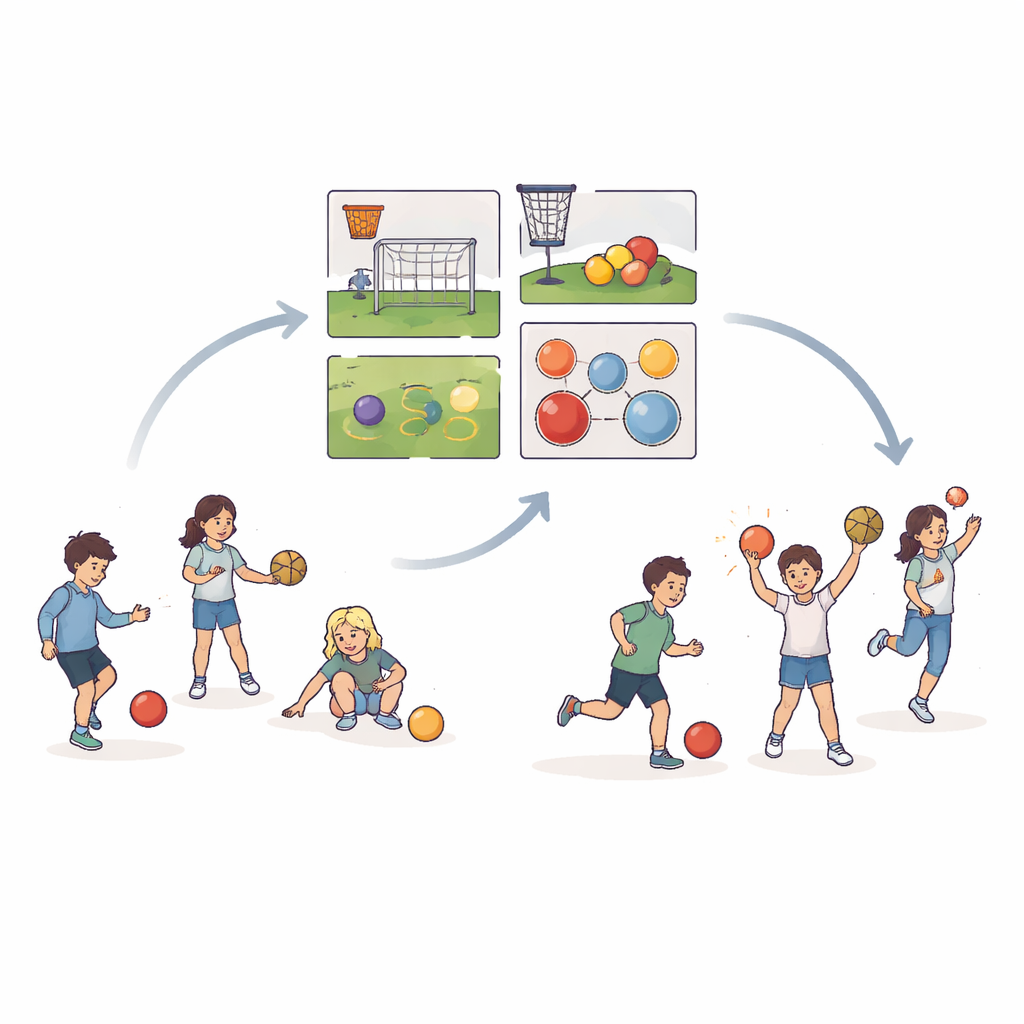
Some children seem clumsy no matter how hard they try: they drop balls, miss kicks, and tire quickly in games. Many of these children have Developmental Coordination Disorder (DCD), a common condition that affects how their brains and bodies work together. This study asked a hopeful question: instead of simply making these children repeat standard sports drills, what if we cleverly redesigned the games themselves—changing balls, rules, and distances—to better fit how these children move and learn?
When everyday movements feel like an uphill climb
Children with DCD have trouble coordinating their bodies in time and space. Simple actions like throwing, catching, or kicking can feel confusing and exhausting, and they often move more slowly and less accurately than their peers. These problems affect both small movements, such as handwriting, and big ones, such as running or riding a bike. Because ball skills are at the heart of playground games and team sports, weakness in these “object control” skills can shut children out of social play and physical activity, with knock-on effects on confidence, health, and happiness. With DCD becoming more commonly recognized, there is an urgent need for interventions that genuinely help these children participate more fully.
Rethinking games by tweaking the rules
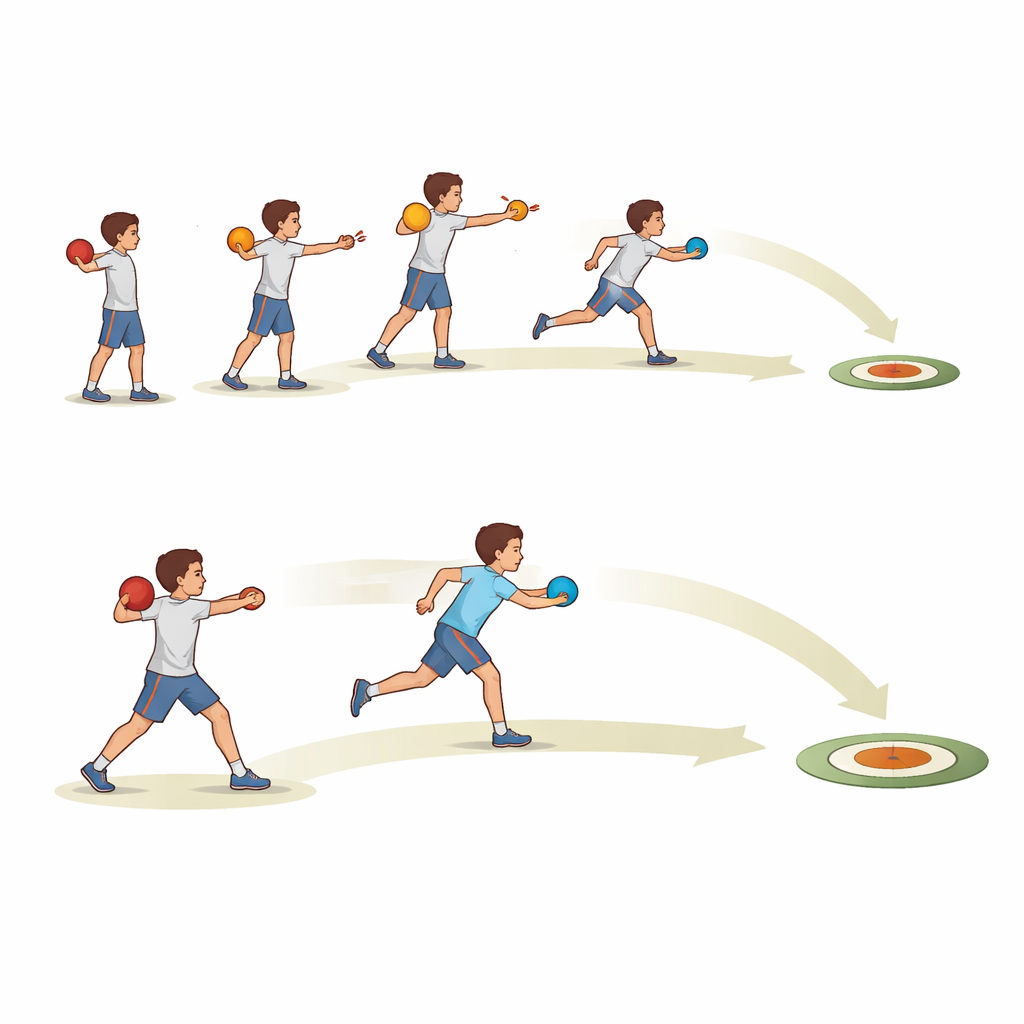
Modern theories of movement suggest that skills develop through the constant interaction of the child, the environment, and the task at hand. Building on this idea, the researchers used a method called constraints-based task analysis. Instead of asking children to adapt to a fixed game, they systematically adjusted the “constraints” of ball games: the kind of ball, its size and weight, the distance to a target, whether children stood still or took a run‑up, and how success was defined. For example, in a throwing game, they shortened the distance to the target, allowed a running start, and provided bags of different weights, so children had to explore how much force to use. These tailored games were designed to stretch, but not overwhelm, the children—offering just the right level of challenge.
Putting tailored ball games to the test
The study followed 22 eight‑year‑old children with DCD, divided into an experimental group and a control group. Both groups practiced ball skills three times a week for eight weeks, led by the same instructors. The control group played conventional skill‑based ball games, focusing on repeated practice of throws, catches, and kicks. The experimental group played the redesigned, constraints‑based games. Researchers measured seven core ball skills—such as overhand throws, underhand tosses, and two‑handed catches—before training, right after the eight‑week program, and again 16 weeks later. Standardized motor tests ensured that, at the start, the two groups were similar in ability, age, and other key characteristics.
Stronger and longer‑lasting gains
Both groups improved their ball control over time, suggesting that structured practice alone can help children with DCD. But the group who played constraints‑based ball games improved much more. Immediately after the program, their total ball skill scores were clearly higher than those of the control group, and this gap widened even further by the 16‑week follow‑up. Notably, the experimental group’s skills continued to edge upward after training ended, while the control group’s gains leveled off and showed a slight, though not statistically meaningful, decline. The authors argue that manipulating equipment and rules forced children to explore new movement patterns, sharpen their body awareness, and gradually refine how they sense and control their limbs, leading to more robust learning.
What this means for children and their play
In plain terms, the study shows that smarter game design beats more of the same drills for children with DCD. When balls, distances, and rules are purposefully adjusted, children not only learn to throw, catch, and kick better than with traditional games, but they also keep those gains over time. Thoughtfully tailored ball games can therefore act like a “movement scaffold,” helping the brain and body work together more smoothly. For parents, teachers, and therapists, the message is encouraging: by reshaping the games rather than blaming the child, we can open the door to more confident movement, richer play, and fuller participation in everyday physical life.
Citation: Guo, Z., Cheng, W. The impact of constraints-based ball games on the control skills of children with developmental coordination disorder. Sci Rep 16, 5977 (2026). https://doi.org/10.1038/s41598-026-35582-7
Keywords: developmental coordination disorder, children’s motor skills, ball games, movement therapy, adaptive physical education