Clear Sky Science · en
Application of the expanded theory of planned behavior in predicting Iranian students’ intention to use probiotic products
Why your gut matters in student life
Long study hours, exam stress, and fast food can quietly wear down students’ bodies and minds. This paper looks at a simple daily habit that might help: eating probiotic foods, such as certain yogurts and drinks that contain live “good” bacteria for the gut. The researchers asked: what really drives Iranian university students to decide whether or not to use these products—and how much do friends, worries about health, and social media shape that choice?
The idea behind the study
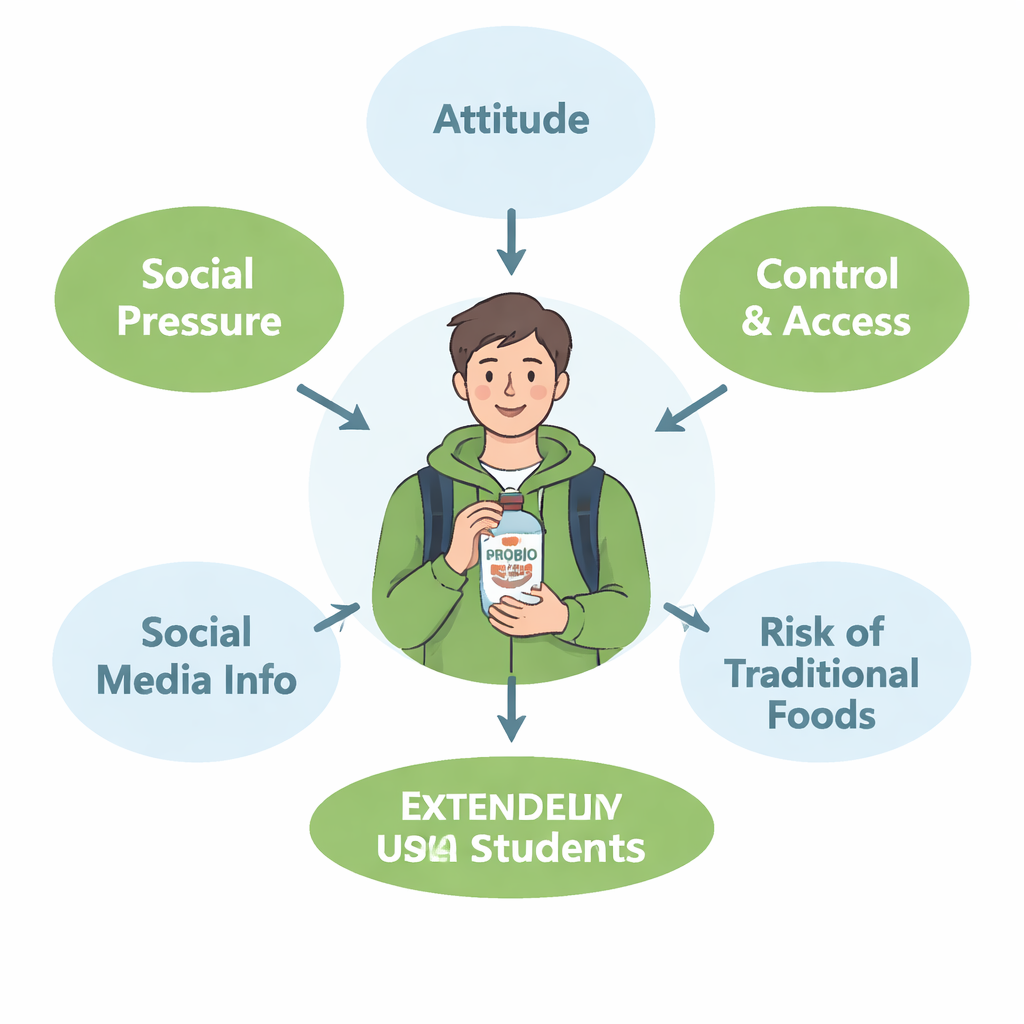
The team focused on students at the Agricultural Sciences and Natural Resources University of Khuzestan in southwestern Iran. These students, drawn from many regions and cultures, often know the basics of nutrition but still face heavy academic and emotional stress. Earlier research suggests that probiotics can support digestion, immunity, and even mood through the gut–brain connection. Yet, real-world use lags behind the science. To understand why, the authors used a well-known psychology framework called the Theory of Planned Behavior, which says that our actions grow from three main roots: our personal attitude toward a behavior, the social pressure we feel, and how much control we think we have over doing it.
Adding modern concerns: risk and social media
The researchers suspected that two very modern forces might be missing from the classic framework: fear of harm from traditional foods and the pull of social media. Many young people worry about food safety, stomach troubles, or hidden contaminants, and they also spend much of their day scrolling through health tips, ads, and influencer posts. The authors therefore expanded the model by adding “risk perception” (how risky students think ordinary, non-probiotic foods are for their health) and “social media influence” (how much online content shapes their views about probiotics). They then designed a detailed questionnaire covering attitude, social pressure, control and access, risk, social media, and intention to use probiotics, and collected responses from 350 students.
What the survey revealed
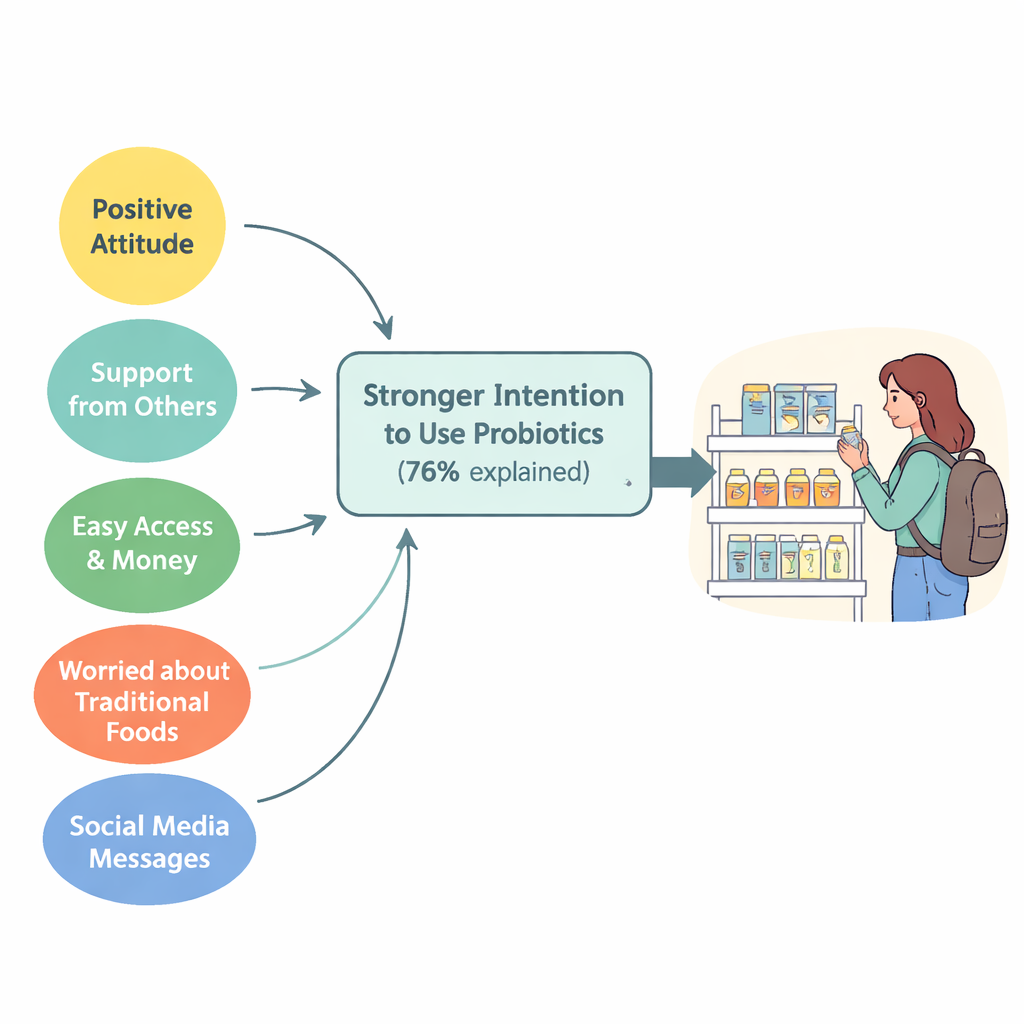
Using a statistical approach called structural equation modeling, the team tested how strongly each factor pointed toward a student’s intention to consume probiotic products. The classic three factors—attitude, social pressure from important people, and perceived control over buying and using probiotics—all had clear, positive effects. Together they explained about half of the differences in students’ intentions. When risk perception and social media were added, the picture sharpened dramatically: the expanded model accounted for more than three quarters of the variation. In plain terms, knowing how students feel about health risks and what they see online allows researchers to predict their probiotic intentions much more accurately.
The surprising power of risk and online influence
In the original model, the strongest driver was social pressure—what family, friends, doctors, and broader society seemed to approve of. In the expanded version, however, concern about the downsides of traditional foods rose to the top. Students who believed that ordinary products could cause issues like bloating, constipation, or reduced energy were more inclined to see probiotics as a safer, smarter option. Social media also played a major role: posts, comments, and ads that explained benefits, showed trusted brands, or shared personal experiences all nudged students toward trying probiotics. These online messages did more than spread information; they quietly reshaped what students viewed as “normal” and desirable eating habits.
What it means for everyday choices
For a non-specialist reader, the takeaway is straightforward. Students are more likely to reach for probiotic foods when they believe these products genuinely help health, feel that people they respect approve, can easily afford and find them, worry about the harms of less controlled traditional foods, and repeatedly encounter positive messages on social media. The study suggests that universities and health agencies that want to promote better gut health should not rely only on classroom lessons or labels. They should also address students’ fears about ordinary foods and use trusted online channels and voices to make probiotics familiar, appealing, and easy to adopt as part of a daily routine.
Citation: Jooyandeh, H., Savari, M. & Bavi Hassanpouri, S. Application of the expanded theory of planned behavior in predicting Iranian students’ intention to use probiotic products. Sci Rep 16, 6172 (2026). https://doi.org/10.1038/s41598-026-35577-4
Keywords: probiotic foods, university students, social media influence, health behavior, gut health