Clear Sky Science · en
Transforming extracted cashew nut shell into biochar and its application as soil amender for jute mallow (Corchorus olitorius L.) cultivation
Turning Farm Waste into a Hidden Resource
Every year, cashew processing leaves behind mountains of hard shells that are usually thrown away, creating disposal headaches for farmers and factories. This study shows how that “worthless” waste can be turned into biochar—a charcoal-like material—that not only cleans up the waste stream but also helps grow a popular leafy vegetable, jute mallow, more abundantly and with better nutritional quality. For communities that rely on affordable vegetables and have limited access to expensive fertilizers, this approach could turn an environmental problem into a valuable tool for healthier soils and diets.
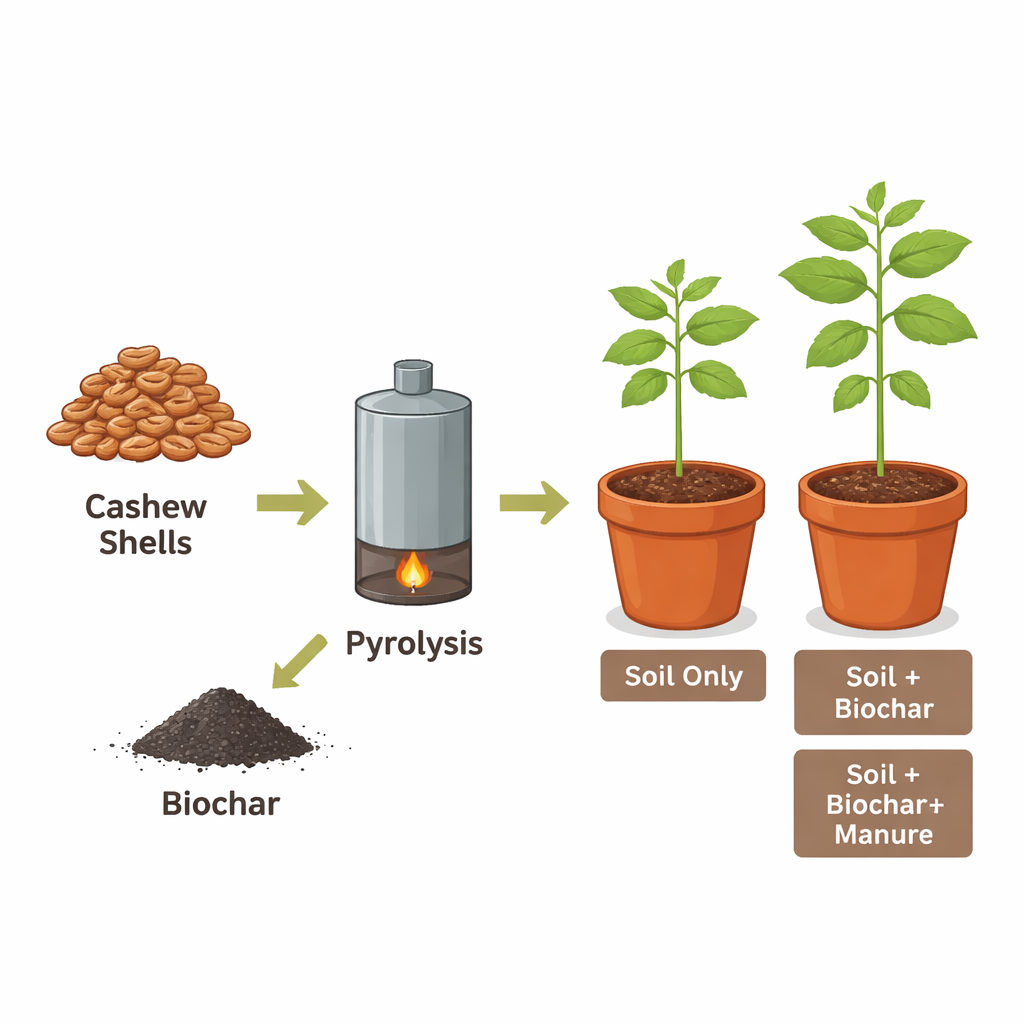
From Cashew Shells to Plant-Friendly Charcoal
The researchers worked with extracted cashew nut shells, the dry residue left after valuable cashew shell oil is removed for use in products such as coatings and biomedical materials. Instead of discarding this bulky secondary waste, they heated it in a specially built reactor in the absence of oxygen, a process called pyrolysis. By carefully setting the temperature to 450, 550, or 650 °C, they produced different versions of biochar and measured how much solid, liquid, and gas came out at each setting. Lower temperatures gave more solid product, while higher temperatures produced more gases, but all the biochars had very low moisture and volatile content, high fixed carbon, and modest ash levels—traits that make them both stable in soil and potentially useful as a clean-burning solid fuel.
What Makes This Biochar Special
Detailed testing revealed that the cashew-shell biochars were rich in carbon—around 90 percent—and contained small amounts of nutrients and minerals like potassium, calcium, and magnesium. As the heating temperature increased, the biochar became even more carbon‑dense, with fewer hydrogen- and oxygen‑rich compounds that tend to break down quickly. Compared with biochars made from other farm residues, the ash content remained relatively low, which is important because too much ash can upset soil chemistry. The combination of high carbon, low volatile components, and controlled ash points to a biochar that is both environmentally safe and long‑lasting when added to farmland.
Helping a Staple Leafy Vegetable Thrive
To see how this material performs in real plants, the team grew jute mallow—an important leafy vegetable in Nigeria—under different soil treatments: soil alone, soil with biochar from each temperature, and soil with biochar plus poultry manure. They found that biochar alone already boosted plant growth; for example, the number of leaves increased by about half compared with untreated plants. When biochar was combined with manure, the improvements were even more striking, especially for biochar produced at 550 °C. Plants grew taller shoots and longer leaves, produced many more leaves, and developed stronger roots. These changes matter because they translate directly into more harvestable vegetable for farmers and families.
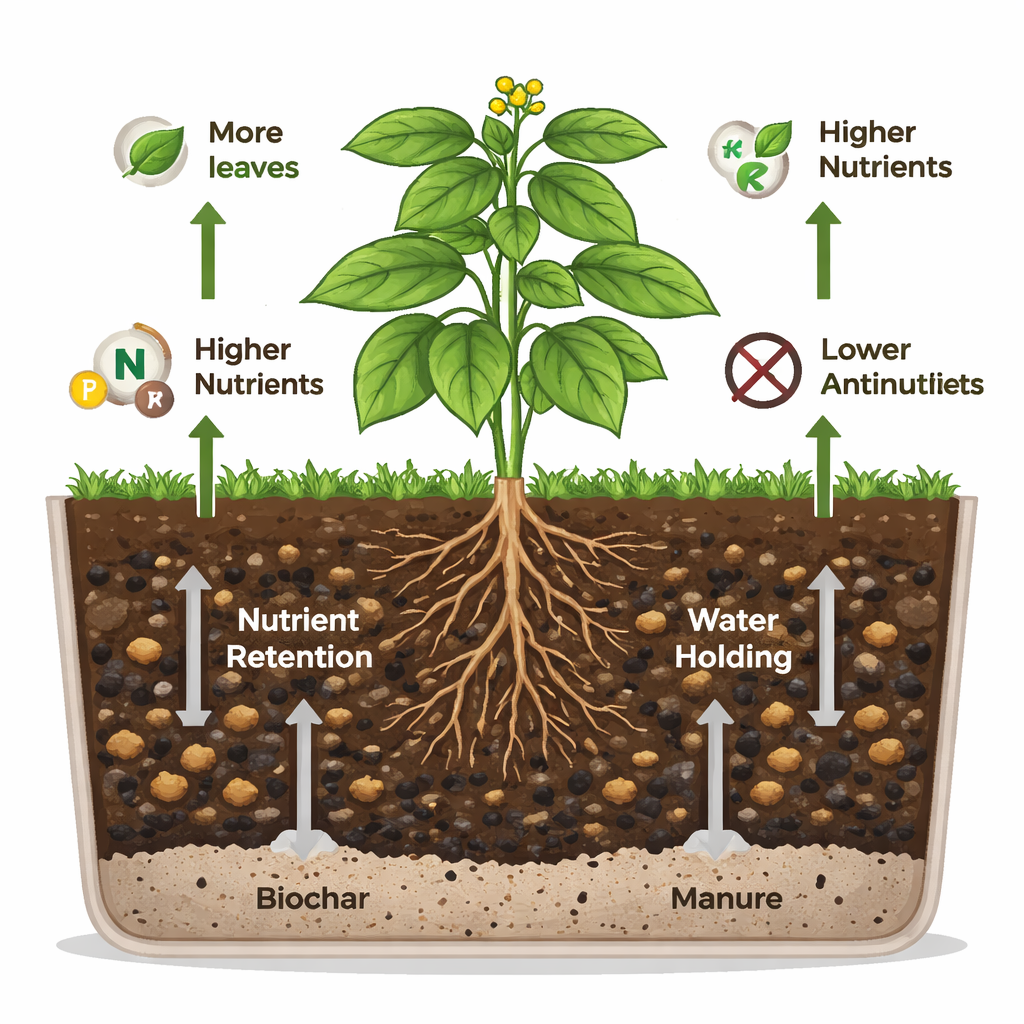
Better Soils and More Nutritious Harvests
The benefits were not limited to plant size. After harvest, the soils treated with cashew-shell biochar contained much higher levels of key nutrients, including phosphorus, nitrogen, nitrate, and organic matter, and their acidity shifted toward a gentle, near‑neutral range that suits many crops. The jute mallow leaves themselves became more nutritious: protein, healthy fats, and dietary fiber all increased, while carbohydrates and total ash declined. Importantly, levels of certain “antinutrients” that can interfere with mineral absorption—such as phytates and saponins—fell sharply, especially when biochar made at 450 °C was used together with manure. At the same time, the plants took up more beneficial minerals like calcium, potassium, magnesium, and zinc, and tended to accumulate fewer potentially harmful metals.
A Simple Path to Cleaner Farms and Healthier Food
In everyday terms, this study shows that waste from cashew processing can be safely transformed into a soil‑friendly charcoal that helps vegetables grow better and become more nutritious, especially when paired with ordinary poultry manure. Farmers gain a low‑cost alternative to chemical fertilizers, soils become richer and more resilient, and a troublesome waste stream is turned into a long‑lasting store of carbon instead of a disposal problem. For regions where both cashew farming and vegetable consumption are central to daily life, this approach points toward a practical, circular system that supports food security, protects the environment, and makes better use of every part of the cashew harvest.
Citation: Alaka, M.O., Ogunjobi, J.K., Omoruyi, O.E. et al. Transforming extracted cashew nut shell into biochar and its application as soil amender for jute mallow (Corchorus olitorius L.) cultivation. Sci Rep 16, 5101 (2026). https://doi.org/10.1038/s41598-026-35559-6
Keywords: biochar, cashew shell waste, soil fertility, jute mallow, sustainable agriculture