Clear Sky Science · en
Health-related quality of life in poverty-alleviated individuals living with chronic conditions: a cross-sectional survey from an impoverished county in China
Why Health After Poverty Still Matters
Escaping poverty is a major milestone, but it does not automatically bring good health. This study looks at people in a poor rural county in China who recently rose above the official poverty line yet continue to live with long‑lasting illnesses such as heart disease, diabetes and lung problems. By asking them detailed questions about pain, mobility and emotional well‑being, the researchers show that life after poverty relief can still be marked by serious health struggles—especially for older women, people with multiple diseases and those with disabilities.
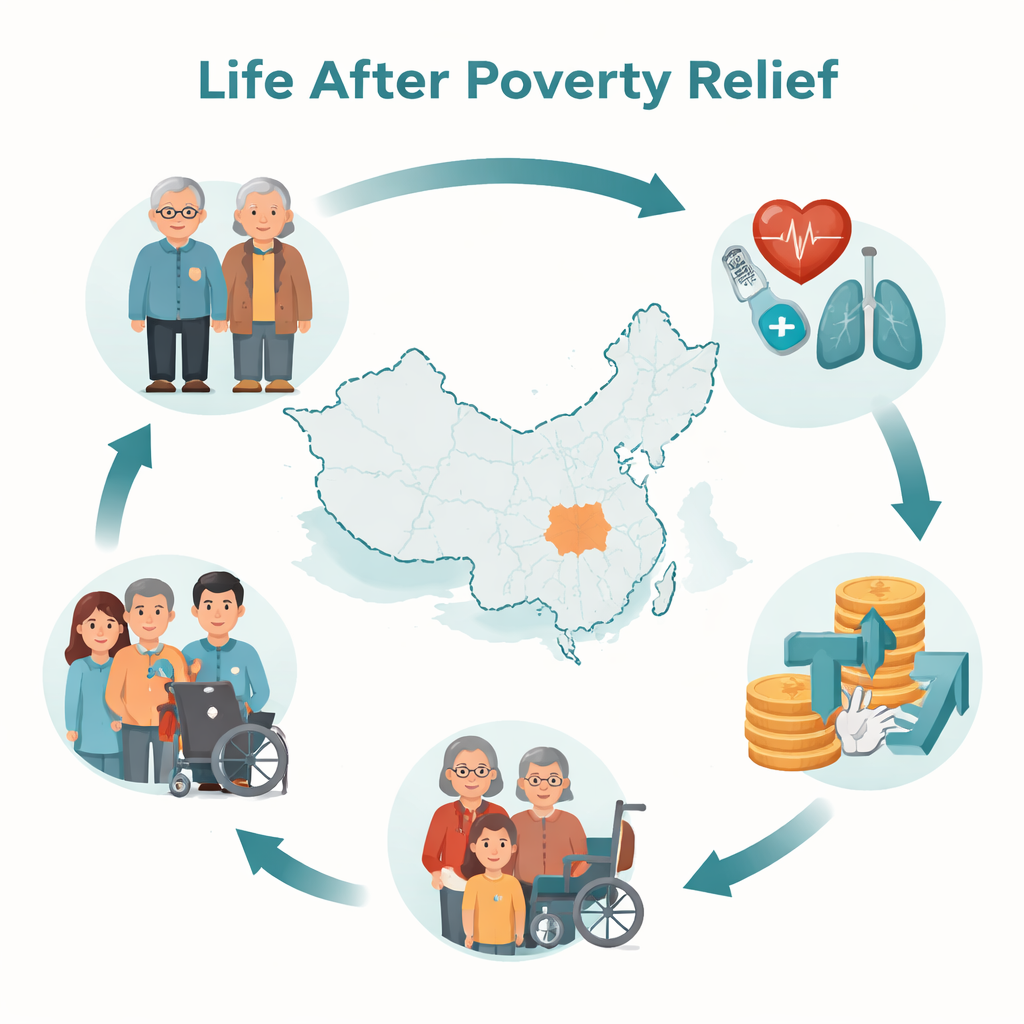
Life in a Changing Rural County
The research took place in Linquan County, a largely agricultural area in northwestern Anhui Province that was officially removed from China’s list of impoverished counties in 2020. Although incomes have risen, many residents left behind are older adults with limited ability to work. From July to September 2024, the researchers surveyed 1,750 villagers aged 15 and above who had at least one doctor‑diagnosed chronic disease and had been formally registered as poor in the past. Participants came from 23 townships chosen to reflect different economic and population levels, and all gave written consent to take part.
Measuring Everyday Health and Well‑Being
To understand how people actually feel in daily life, the team used a short questionnaire known as EQ‑5D. It asks about five basic areas: getting around, washing and dressing, doing usual activities, pain or discomfort and feelings of anxiety or depression. Each area is scored at three levels—from no problems to extreme problems—and then converted into a single “health utility” score ranging from worse than death to perfect health. On average, the study group scored 0.69, noticeably below full health and slightly lower than values seen in other Chinese studies, suggesting that this supposedly “lifted out of poverty” population still carries a heavy health burden.
Who Is Struggling the Most
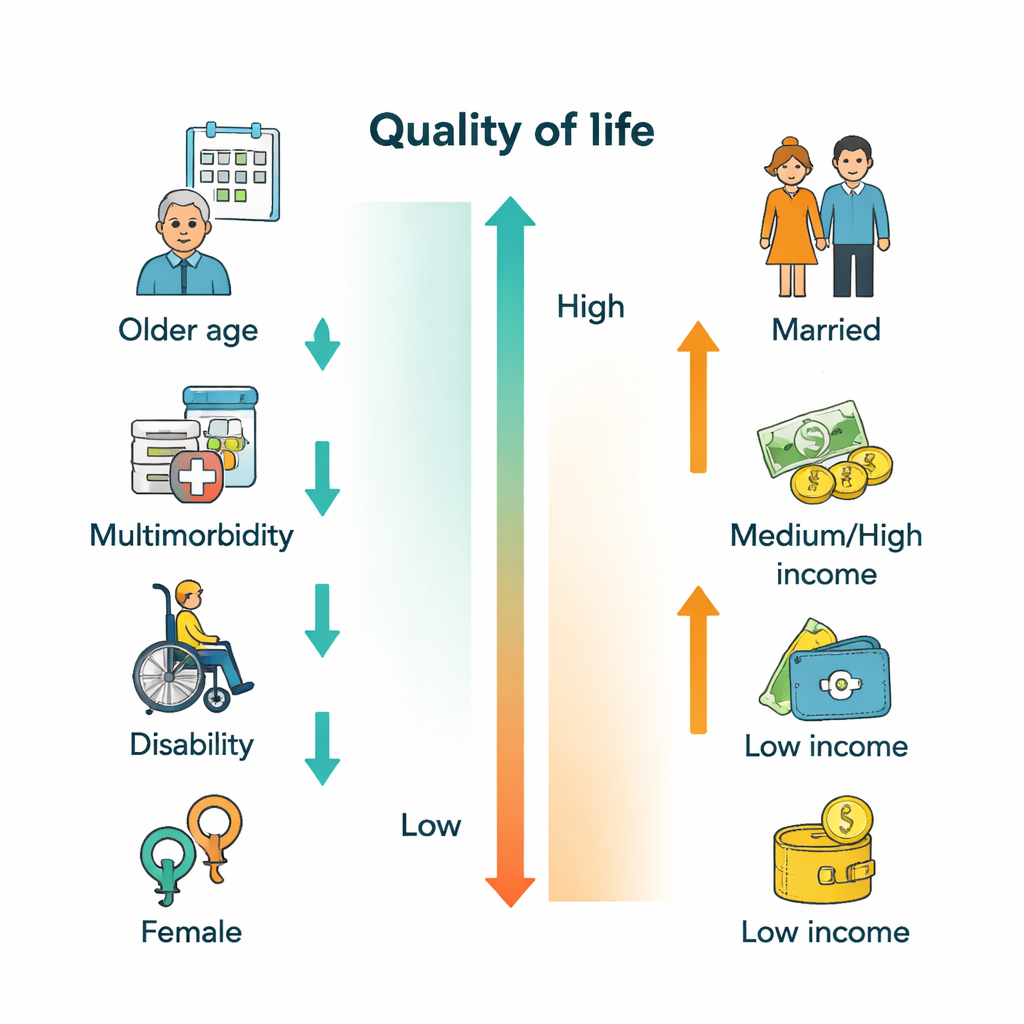
The numbers reveal a stark picture. Nearly three out of four participants reported pain or discomfort, over half reported anxiety or depression and about half had trouble walking or doing everyday activities. Women reported more problems than men in every area. Older age, disability and having more than one chronic disease were all strongly linked to poorer scores. People with three or more chronic conditions had much lower quality of life than those with just one. Statistical tests showed that differences between men and women were largely explained by women being older on average and more likely to have multiple illnesses and lower income.
Money, Family and Support
Economic and social conditions also made a clear difference. Almost half of the participants were still in the “low‑income” category by national standards. Those in the middle‑ and high‑income groups had notably better health scores, even after taking age and disease into account. Being married was another protective factor, linked to higher quality of life and lower odds of having clearly impaired health. In contrast, disability and multimorbidity—living with two or more chronic diseases—were tied to much worse outcomes across all five health areas, including mental health.
What These Findings Mean Going Forward
For people in rural China who have recently escaped official poverty, the story is far from over. This study shows that many still live with constant pain, limited mobility and emotional distress. Health gaps run along familiar lines: older age, being female, low income, disability and multiple chronic diseases all drag quality of life down, while stable income and family support help lift it up. The authors argue that poverty‑reduction programs must go beyond raising income. Long‑term success will depend on integrating health care, disability support and mental‑health services into rural development, so that leaving poverty also means gaining a real chance at a healthier, more comfortable life.
Citation: Chang, L., Zhang, L. Health-related quality of life in poverty-alleviated individuals living with chronic conditions: a cross-sectional survey from an impoverished county in China. Sci Rep 16, 5107 (2026). https://doi.org/10.1038/s41598-026-35543-0
Keywords: rural health, poverty alleviation, chronic disease, quality of life, China