Clear Sky Science · en
Mustard derived compounds as insecticides and modulators of human metabolism
Spice Rack Defenders
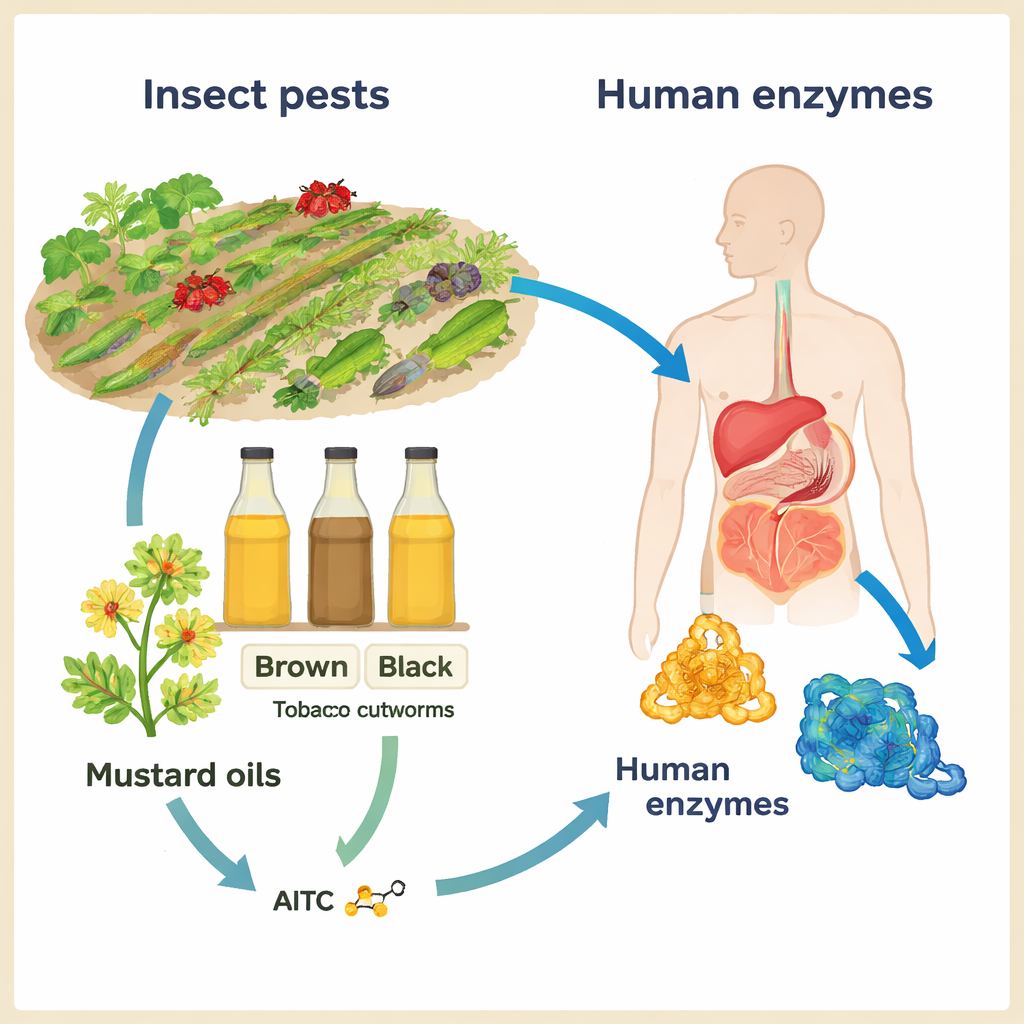
Mustard is best known as a tangy condiment, but the same sharp chemicals that make your eyes water may help farmers protect crops and could even interact helpfully with our own bodies. This study looks at allyl isothiocyanate (AITC) – the pungent compound released when mustard seeds are crushed – and compares purified AITC and three common mustard oils as natural insect deterrents, while also testing how these substances behave with key human metabolic enzymes.
How Mustard Fights Hungry Insects
Many plants defend themselves with built‑in chemistry. Mustard seeds store glucosinolates and an enzyme, myrosinase, in separate compartments; when the tissue is damaged, the enzyme snaps glucosinolates into reactive products such as AITC. The researchers focused on two major crop pests: the red pumpkin beetle, which can destroy more than 80% of cucurbit crops like gourds and cucumbers, and the tobacco cutworm, a caterpillar that attacks cereals, fruits, and vegetables. They asked a simple question with big implications for sustainable agriculture: can the natural chemicals in mustard seeds and oils reduce feeding and kill these pests strongly enough to serve as practical, plant‑based insecticides?
Mustard Oils Versus Purified Pungency
In controlled lab tests, the team dipped leaf pieces in either purified AITC or oils pressed from brown, black, or white mustard seeds and then offered these leaves to the insects. All mustard‑derived treatments reduced feeding, but purified AITC was the strongest deterrent: at the highest dose, it cut feeding by around 86–88% in both species. Among the edible oils, brown mustard oil consistently worked best, followed by black and then white mustard. This ranking closely followed how much glucosinolate and AITC each seed type naturally contained, with brown mustard having up to 77% more glucosinolates than white mustard. Even at the lowest oil doses, insects ate much less than on untreated leaves, showing that common culinary oils can meaningfully discourage pest feeding.
From Repellent to Lethal
Beyond simply putting insects off their food, the scientists measured how much of each treatment was needed to kill half of the test insects – a standard benchmark called LC50 – and how long that took (LT50). Brown mustard oil again stood out: it killed red pumpkin beetles at lower doses and in less time than black or white oils, and it was particularly potent against tobacco cutworm larvae. Interestingly, purified AITC required higher concentrations than the oils to reach similar mortality, even though it acted faster once doses were high enough. The authors suggest that this may be because mustard oils carry a cocktail of active ingredients, including fatty acids, that work together to disrupt insect metabolism and behavior.
Why It’s Tough on Bugs but Gentle on Us
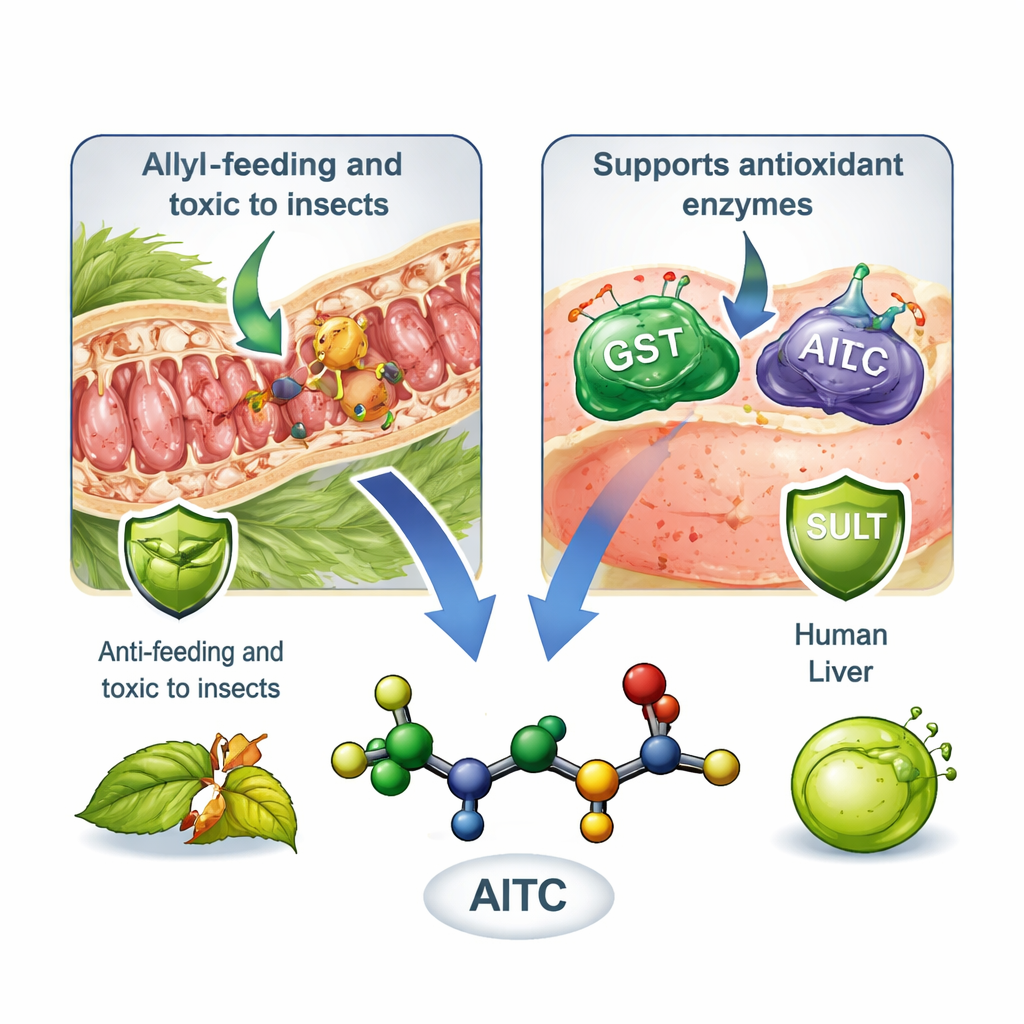
A key concern with any pesticide is safety for people. To explore this, the researchers used computer‑based “docking” simulations to see how AITC might interact with two human detox enzymes, glutathione‑S‑transferase (GST) and sulfotransferase (SULT), and with pepsin, a major digestive enzyme. The models showed that AITC binds only weakly to GST and SULT, engaging specific amino acids (notably leucine in GST and aspartic acid in SULT) without blocking their normal antioxidant roles. This supports existing evidence that, at dietary levels, AITC can act as an antioxidant rather than a toxin in humans. Separate simulations indicated that common mustard seed proteins, napin and cruciferin, can form stable complexes with pepsin, suggesting that once anti‑nutritional glucosinolates are controlled, mustard protein could serve as a digestible food ingredient.
From Kitchen Staple to Field Tool
Overall, the study paints mustard as a promising source of eco‑friendly pest control agents. Mustard oils, especially brown mustard oil, are relatively cheap and already widely used in cooking, yet they significantly reduce feeding and survival of major crop pests. Purified AITC is even more potent per molecule but is costly and technically challenging to formulate for field use. The authors argue that with further work—including field trials, careful evaluation of impacts on beneficial insects, and improved formulations to stabilize these volatile compounds—mustard‑based products could help farmers cut back on synthetic pesticides. For lay readers, the takeaway is that a familiar kitchen flavor may one day help protect food security while remaining compatible with human health.
Citation: Garg, S., Punetha, H., Gangola, S. et al. Mustard derived compounds as insecticides and modulators of human metabolism. Sci Rep 16, 5783 (2026). https://doi.org/10.1038/s41598-026-35536-z
Keywords: mustard oil, natural insecticide, allyl isothiocyanate, sustainable agriculture, plant defense chemicals