Clear Sky Science · en
Therapeutic efficacy of Annona muricata in counteracting nephrolithiasis-induced electrolyte imbalance and antioxidant disruption in ethylene glycol-treated rats
Why a tropical fruit tree matters for your kidneys
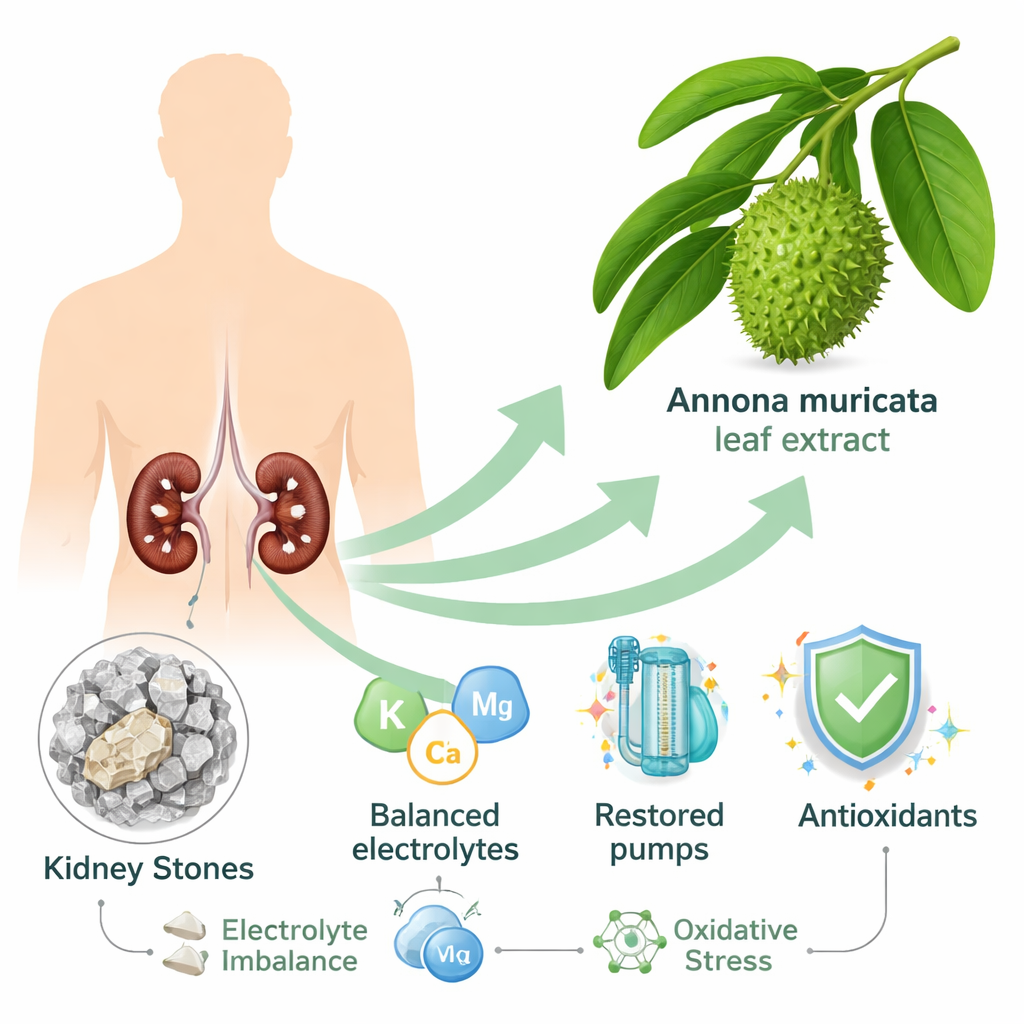
Kidney stones are notoriously painful and can keep coming back, and current treatments—like surgery or shock waves—can be costly and hard on the body. This study asks a down-to-earth question: could the leaves of a common tropical fruit tree, Annona muricata (often called soursop or graviola), help protect kidneys from the kinds of damage that lead to stones and long-term kidney trouble?
Kidney stones and hidden chemical imbalances
Kidney stones form when minerals, especially calcium and oxalate, crystallize inside the kidneys. Doctors see the agony of stones, but much of the danger is invisible: damage to kidney tissue, disturbed levels of salts in the blood, and a buildup of waste products like urea and creatinine. In the lab, scientists can mimic this process in rats by giving them ethylene glycol, a chemical found in antifreeze. The animals then develop calcium oxalate crystals, electrolyte imbalance, and signs of kidney failure similar to those seen in people with severe stone disease.
Testing a traditional remedy in the lab
Annona muricata has a long history in folk medicine for treating infections, high blood pressure, diabetes, and inflammation. Its leaves are rich in plant chemicals with antioxidant and anti-inflammatory activity. To see whether this plant could protect kidneys under severe stress, the researchers divided 25 rats into five groups. One group stayed healthy, while four others were given ethylene glycol in their drinking water to trigger stone formation. After stones had been induced, some rats received only water, some a standard anti-stone drug (allopurinol, sold as Zyloric), and others low or high doses of an ethanol extract of A. muricata leaves by mouth for three weeks.
Restoring salts, waste removal, and cell “pumps”
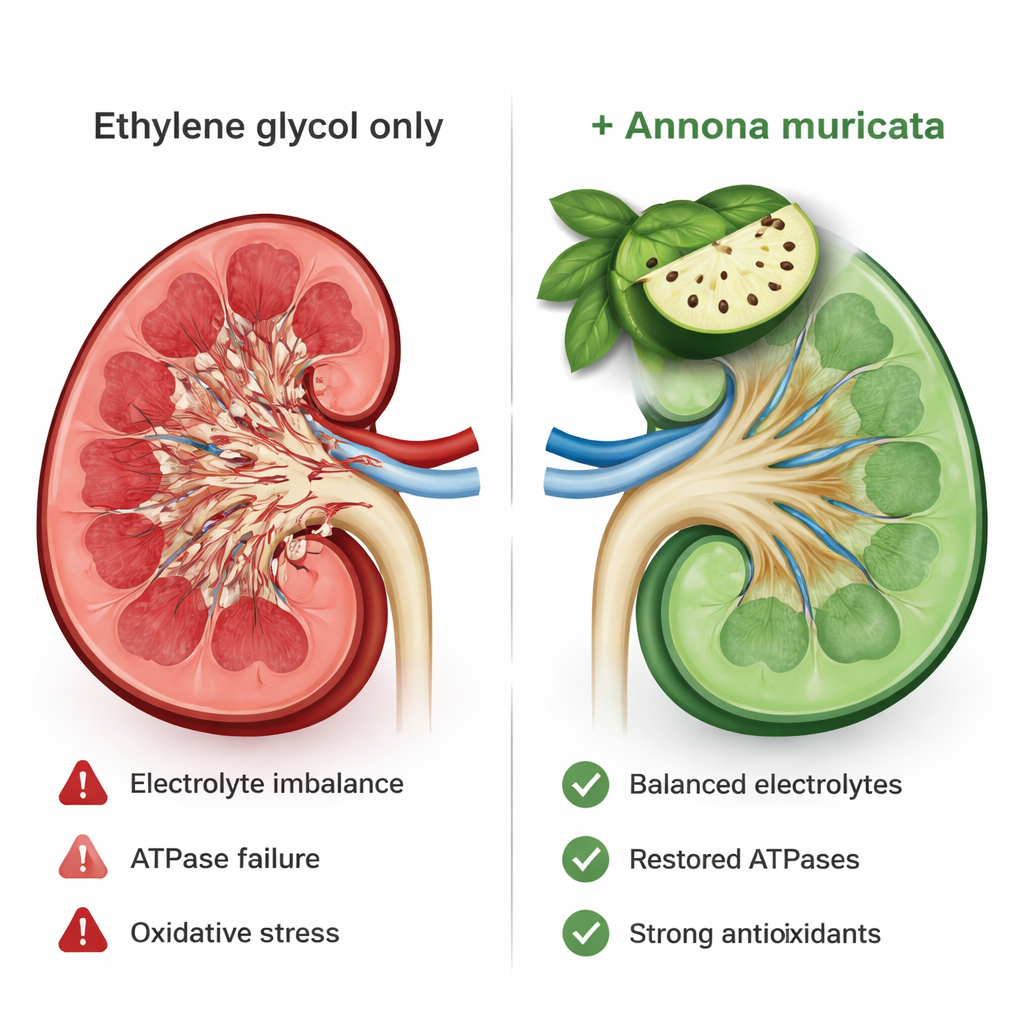
Ethylene glycol alone badly disrupted basic kidney tasks. Blood levels of waste products (urea, creatinine, and uric acid) shot up, and a key blood protein, albumin, fell—classic signs of kidney injury. The balance of salts such as sodium, potassium, calcium, magnesium, and chloride also went off track. At the microscopic level, the activity of vital membrane pumps (Na⁺/K⁺-ATPase and Ca²⁺/Mg²⁺-ATPase), which move ions in and out of cells, dropped sharply. These pumps help keep water balance, blood pressure, and cell function steady. Treatment with A. muricata leaf extract pulled many of these measures back toward normal. The higher dose often matched or even approached the protective effects of the standard drug, particularly in restoring calcium and magnesium levels and improving the activity of the damaged pumps.
Fighting oxidative stress and tissue damage
Kidney stone disease is not just about minerals; it is also fueled by oxidative stress—an excess of reactive oxygen molecules that damage cells. In the ethylene glycol–only rats, the normal antioxidant defenses were thrown off balance: some enzymes fell while others rose in a way that signaled intense stress. High-dose A. muricata treatment largely reset these defenses, normalizing key antioxidant markers. When the team examined the kidneys under the microscope, the untreated stone-forming rats showed heavy inflammatory cell invasion and deposits consistent with crystal damage. Rats given A. muricata had far less inflammation and more normal-looking kidney structure, with the high dose offering the greatest protection.
What this could mean for people with kidney stones
In simple terms, the study shows that A. muricata leaf extract helped rat kidneys weather a powerful chemical insult that mimics human kidney stone disease. It reduced stone-related salt disturbances, improved the kidneys’ ability to clear waste, strengthened natural antioxidant defenses, and limited structural damage. While these results do not mean people should start self-medicating with soursop leaves—proper human trials, dosing studies, and safety checks are still needed—they point to this familiar tropical plant as a promising source of future kidney-protective treatments that might complement existing stone therapies.
Citation: Rahman, S.A., Sulaimon, L.A., Arogundade, O.L. et al. Therapeutic efficacy of Annona muricata in counteracting nephrolithiasis-induced electrolyte imbalance and antioxidant disruption in ethylene glycol-treated rats. Sci Rep 16, 5161 (2026). https://doi.org/10.1038/s41598-026-35535-0
Keywords: kidney stones, Annona muricata, soursop, nephroprotection, antioxidants