Clear Sky Science · en
Virtual reality to enhance risk management and safety in electrical substations
Why training with virtual worlds can save real lives
Electrical substations are the silent workhorses of our power system, but for the people who operate them, they are among the most dangerous workplaces on earth. A simple mistake near high‑voltage equipment can mean serious injury or death. This study explores whether fully immersive virtual reality (VR) can train substation workers more safely and effectively than traditional classroom lessons, and whether that training actually changes how people behave and cope with stress when things go wrong in real life.
The hidden dangers behind the fence
High‑voltage substations step electricity up and down so it can travel long distances and reach homes and factories. To do that, they concentrate enormous amounts of energy in transformers, cables, switches, and control panels. In Spain, official accident statistics show that electrical incidents still account for a troubling share of serious and fatal workplace injuries, including in substations linked to large solar farms. Typical accidents involve contact with energized parts, short circuits that trigger fires or explosions, or misuse of protective equipment. Although companies invest heavily in safety rules and protective gear, workers often have limited chances to practice risky maneuvers in realistic but safe conditions, so many trainings remain largely theoretical.
From classroom talks to immersive practice
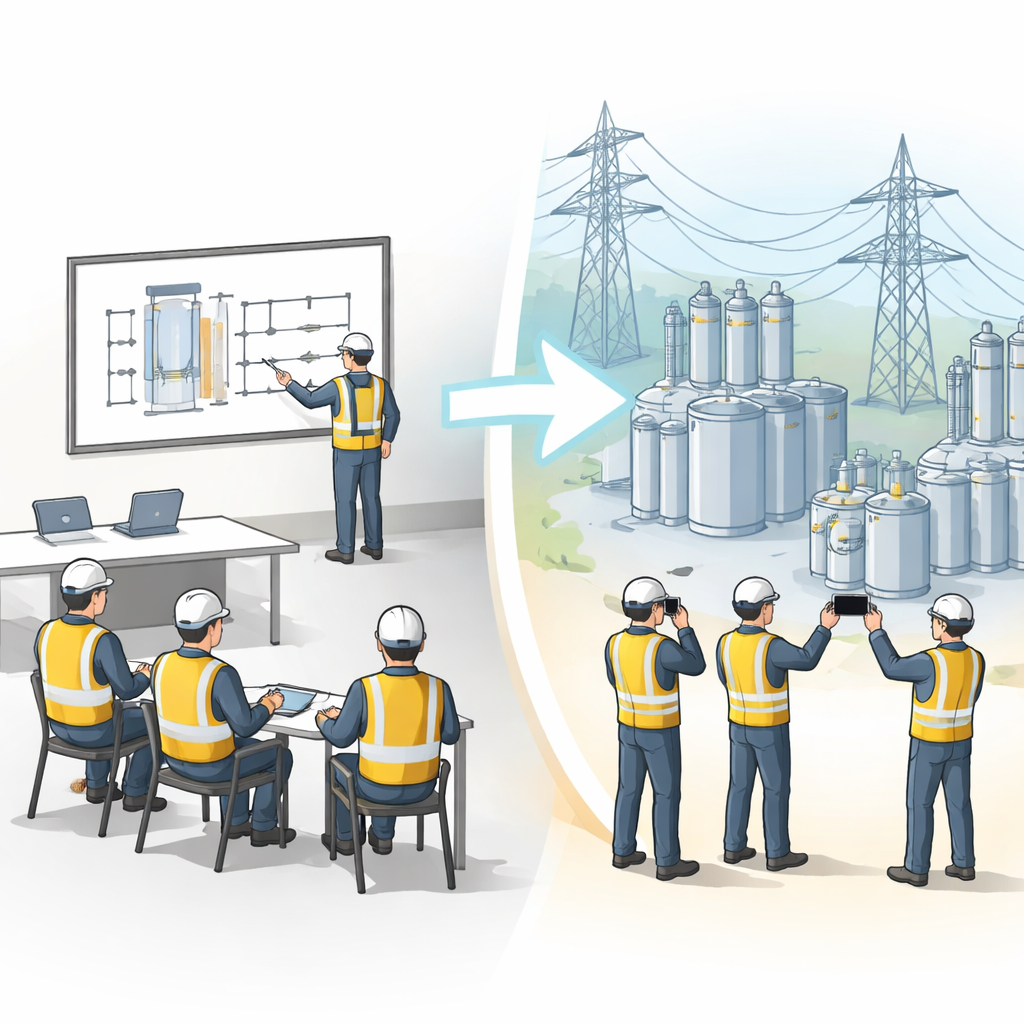
The researchers partnered with an energy and infrastructure company to compare its usual substation safety course with a new VR‑enhanced version. Twenty employees were divided into two small groups. Both groups received the same lessons on substation components, safe switching operations, and the “five golden rules” for working on de‑energized equipment, plus guidance on personal protective equipment such as insulating gloves and helmets. One group stopped there. The other group then entered a detailed virtual replica of a real photovoltaic substation, built from the project’s engineering models and run on VR headsets.
Inside a virtual substation
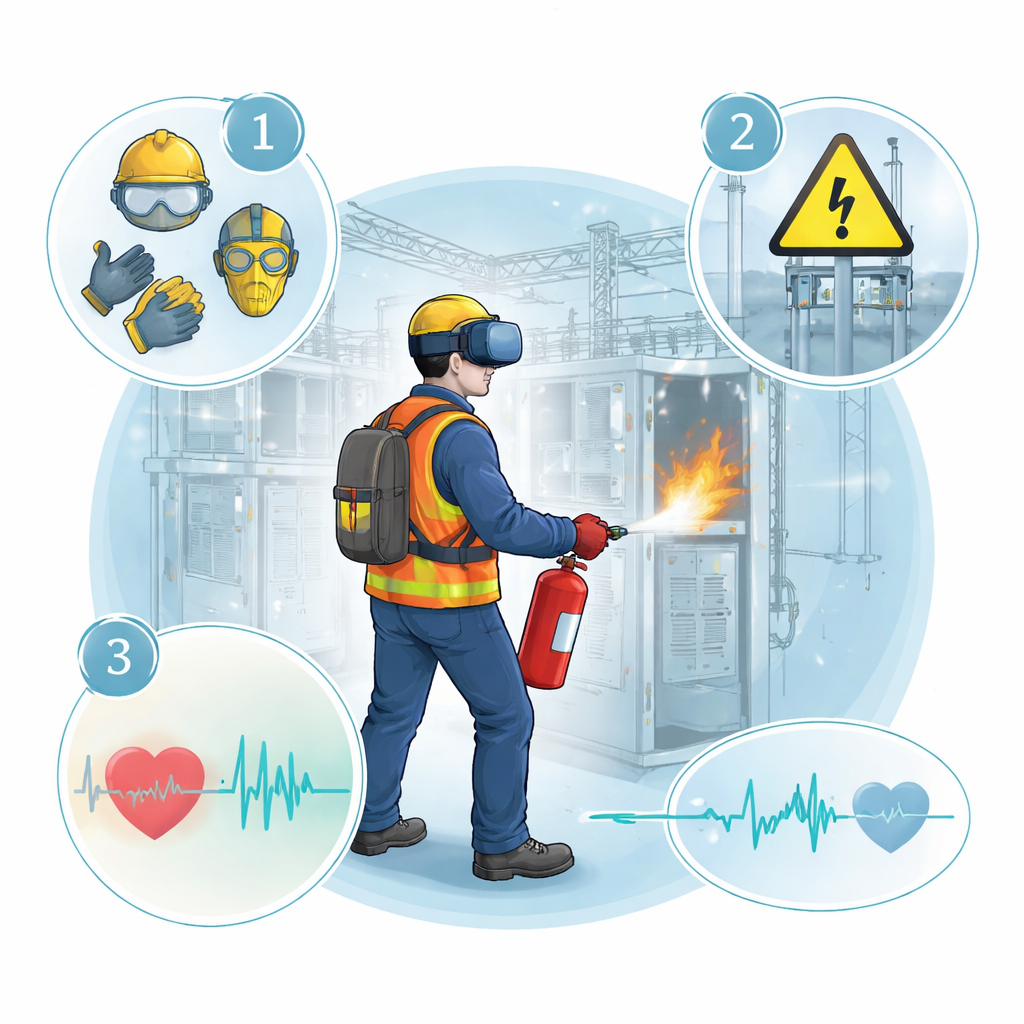
In the headset, trainees could walk through the digital yard, inspect transformers and switchgear, and physically carry out safety steps using hand controllers: putting on protective gear, checking clear distances from live lines, and following the correct order to isolate and ground equipment. The simulation also threw emergencies at them, such as short‑circuit flashes or a fire inside an electrical panel, requiring quick decisions and correct use of extinguishers. The training was “gamified” with levels, tasks, and instant feedback, so workers could repeat scenarios several times, learn from mistakes, and build confidence without facing real danger.
Testing knowledge, awareness, and calm under pressure
To see whether VR made a difference, the team ran three types of tests. Right after training, everyone completed written exams on equipment, procedures, and protective rules, and filled in satisfaction surveys. Then, all participants toured the actual substation. Observers used a detailed checklist to score how well each person recognized risky areas, respected safety distances, and followed correct sequences in front of the real machines. Finally, in a controlled exercise led by professional firefighters, workers tackled two live‑fire drills—a fuel tray and an electrical‑panel fire—while wearing heart‑rate monitors. The researchers tracked how quickly they detected hazards, acted on them, and how much their pulse spiked and stayed elevated during the drills.
What changed when workers trained in VR
Across written tests, on‑site observations, and fire exercises, the VR group consistently outperformed the classroom‑only group. They scored higher on all three exams and reported greater satisfaction with the course. During the visit to the real substation, VR‑trained workers more often achieved top scores for correctly identifying components, spotting dangers, and applying safety steps without prompting. In the fire drills, both groups completed the tasks, but the VR group tended to show slightly smaller and more stable increases in heart rate, and those who stayed calmer generally reacted faster and made fewer errors. Statistical analyses indicated that these differences were unlikely to be due to chance, even though the study was small. The authors note that extra training time and the specific company setting limit how broadly the results can be generalized, but the pattern aligns with previous research on VR in other high‑risk industries.
What this means for everyday safety
For non‑specialists, the message is straightforward: practicing dangerous work in a realistic virtual world can help people understand their tasks better, recognize risks sooner, and keep a cooler head when real emergencies occur. By letting workers “pre‑experience” worst‑case scenarios without harm, VR training strengthens both knowledge and reflexes. The authors argue that, despite the upfront cost of headsets and software, this approach can pay off by preventing accidents, reducing downtime, and ultimately saving lives in electrical substations and other hazardous workplaces.
Citation: del Pozo, J.M.G., Segovia, E.R. Virtual reality to enhance risk management and safety in electrical substations. Sci Rep 16, 8024 (2026). https://doi.org/10.1038/s41598-026-35534-1
Keywords: virtual reality training, electrical safety, occupational risk prevention, high voltage substations, industrial emergency response