Clear Sky Science · en
Enhancing the techno-functional properties of Quinoa protein isolate through cold plasma treatment: a comprehensive study on pH effects
Why a Tiny Seed Matters for Big Food Changes
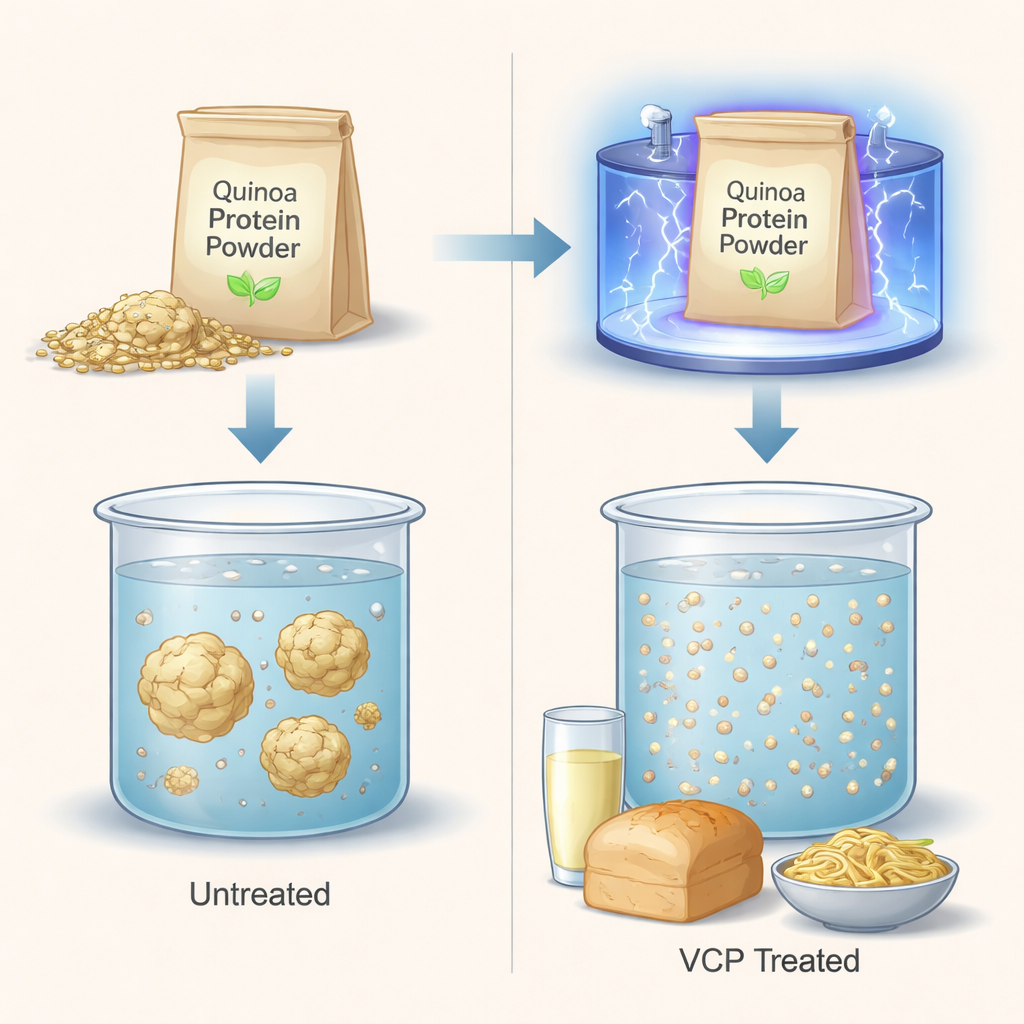
Quinoa has gone from health‑food niche to supermarket staple because it is rich in high‑quality protein and naturally gluten‑free. But when food makers try to use quinoa protein in products like plant milks, breads, or meat alternatives, they run into a problem: the protein does not dissolve or mix very well. This study explores a gentle, non‑heating technology called vacuum‑cold plasma to see whether it can "tune" quinoa protein so it behaves better in real foods, without cooking it or stripping away its nutrition.
A New Way to Tweak Plant Proteins
Most of us are familiar with heating or drying as ways to process food. Vacuum‑cold plasma is quite different. Inside a special chamber, a low‑pressure gas is energized so that it becomes a mix of active particles, yet the overall temperature stays low. When quinoa protein powder is exposed to this active gas, the outer surface of its protein particles can be gently modified. The scientists tested quinoa protein across a wide acidity range (pH 2 to 10, from very sour to quite alkaline) because foods such as yogurt, breads, and drinks all sit at different points on this scale. Their central question was simple: can this cold plasma step make quinoa protein easier to dissolve, mix, and hold water and oil—all key traits for building appealing plant‑based foods?
From Stubborn Clumps to Easy Mixing
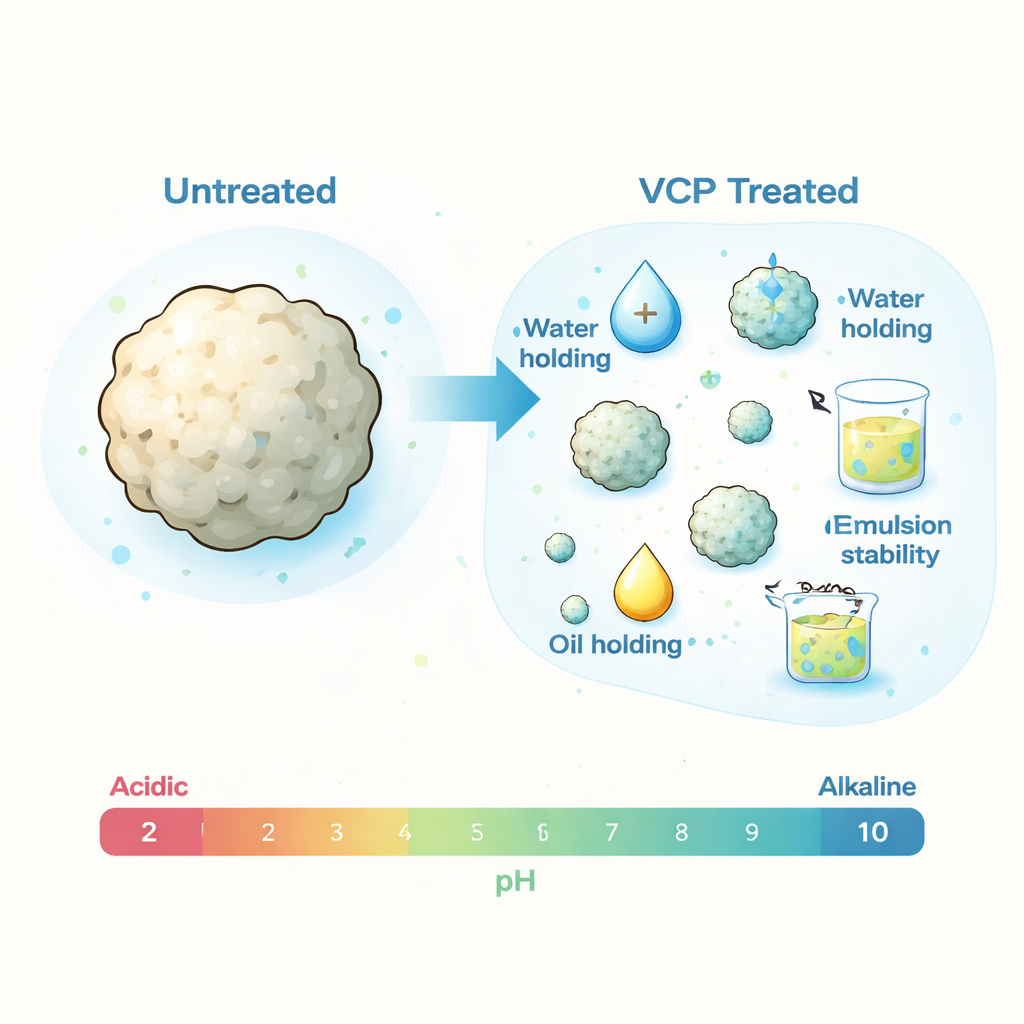
The team found that untreated quinoa protein was hardest to dissolve near its natural "neutral point" (around pH 4.5), where it carried almost no electrical charge and tended to clump. There, only about 4% of the protein went into solution. After plasma treatment, solubility at this point roughly doubled, and at alkaline pH values (similar to some drink bases) it shot up to more than 70%. Dispersibility—how well the powder spreads out instead of forming lumps—also rose, from about a quarter of the powder volume to more than half. Measurements of particle size and electrical charge showed why: plasma‑treated samples contained smaller protein aggregates with stronger repulsive charges, so particles were less likely to stick together and more likely to stay evenly suspended in water.
Helping Foods Hold Water, Oil, and Air
Beyond simply dissolving, proteins are valued because they can trap water, bind oil, and stabilize tiny air bubbles or fat droplets. These abilities shape the texture of breads, plant‑based meats, whipped toppings, and creamy sauces. In this study, plasma‑treated quinoa protein held more water and oil than the untreated version, especially at higher pH levels where its solubility was greatest. Water‑holding capacity climbed to about 5.9 grams of water per 100 grams of protein, and oil‑holding reached about 3.2 grams per 100 grams. The protein also proved capable of forming and stabilizing foams: foaming capacity increased from roughly 44% to nearly 79%, and foam stability could approach 90% under favorable conditions. Emulsion tests—similar to making a stable salad dressing—showed that while the ability to start an emulsion was modest, plasma treatment and suitable pH greatly improved how long those emulsions remained stable without separating.
Peeking Inside the Protein
To understand what was changing at a deeper level, the researchers used tools that probe protein structure and surface behavior. Infrared spectroscopy indicated that the overall backbone of the quinoa protein stayed largely intact, meaning the treatment did not destroy the protein. However, some bands associated with hydrogen bonding became stronger, suggesting more subtle rearrangements and new interactions on the protein surface. Fluorescence tests and measures of "surface hydrophobicity" showed that buried regions of the protein became more exposed, slightly increasing the balance of water‑loving and water‑repelling patches in ways that favor better mixing at oil‑water and air‑water interfaces. Microscopy images confirmed that the original rough, clumped particles became more evenly sized and better dispersed after plasma exposure.
What This Means for the Foods on Your Plate
For everyday eaters, the message is that quinoa protein can be made more versatile without heavy processing or added chemicals. By using vacuum‑cold plasma, manufacturers could create gluten‑free, plant‑based products—such as breads, noodles, drinks, and meat alternatives—that have better texture, creaminess, and stability, while still relying on a nutritious, familiar seed. Because the treatment is non‑thermal, it helps preserve vitamins and other sensitive compounds. The study suggests that, as scientists fine‑tune the plasma conditions, quinoa protein could become a go‑to ingredient in the next generation of high‑protein, allergen‑friendly foods aimed at vegans, people with celiac disease, and anyone interested in more sustainable eating.
Citation: Yousefi, L., Arianfar, A., Mahdian, E. et al. Enhancing the techno-functional properties of Quinoa protein isolate through cold plasma treatment: a comprehensive study on pH effects. Sci Rep 16, 6608 (2026). https://doi.org/10.1038/s41598-026-35526-1
Keywords: quinoa protein, cold plasma processing, plant-based foods, food texture, gluten-free ingredients