Clear Sky Science · en
Prior pulmonary tuberculosis deteriorated all-cause mortality in AECOPD patients after discharge
Why scars from old lung infections still matter
Many people survive tuberculosis and later live with chronic obstructive pulmonary disease (COPD), a long‑lasting illness that makes breathing difficult. This study asks a simple but crucial question for these patients and their doctors: do old tuberculosis scars in the lungs make future COPD flare‑ups more deadly, and if so, can modern inhaled medicines safely improve survival without waking tuberculosis again?
A closer look at a high‑risk group
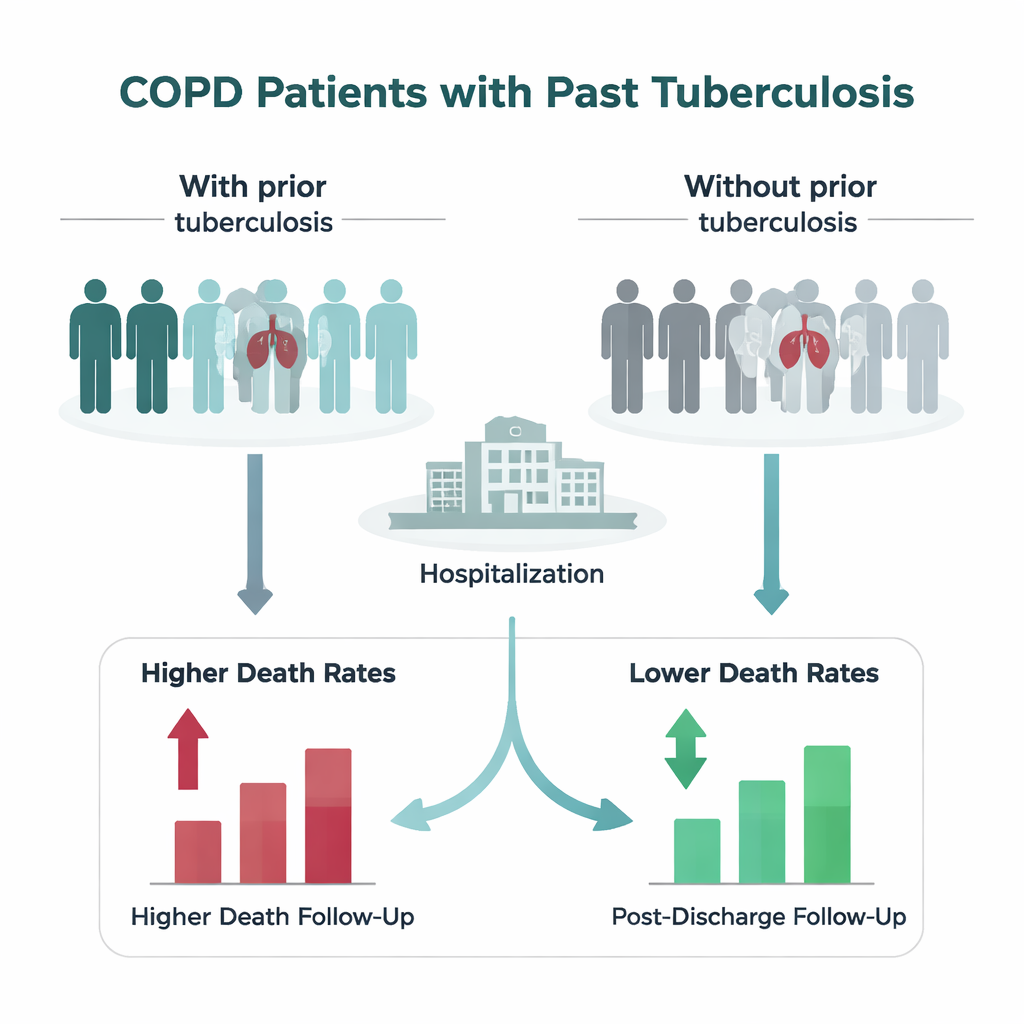
The researchers followed 740 people in China who were hospitalized because of a sudden worsening of COPD, known as an acute exacerbation. All these patients were severely ill—sick enough to need hospital care. About one in three (31.2%) showed clear signs of past pulmonary tuberculosis on scans or in their medical history. The team compared those with and without this history, tracking how they were treated in the hospital, which medicines they used after going home, and whether they survived in the months and years that followed.
Old tuberculosis, new danger after going home
During the hospital stay, patients with and without prior tuberculosis looked surprisingly similar in terms of symptoms, blood tests, and lung function. In fact, those with past tuberculosis were slightly less likely to arrive with respiratory failure, though they stayed in the hospital a bit longer. The real difference emerged only after discharge. Within six months, about 13% of patients with prior tuberculosis had died, compared with 5% of those without. After one year, nearly one in five with prior tuberculosis had died versus roughly one in ten without. Over longer follow‑up, almost half of the patients with past tuberculosis died, compared with one‑third of those without. Even after accounting for age, sex, body weight, lung function, and other factors, a history of tuberculosis remained an independent warning sign for higher death risk.
Short‑term steroids in the hospital: helpful, not harmful
Doctors often give glucocorticoids (steroid medicines) during COPD flare‑ups to calm airway inflammation. However, steroids can weaken immune defenses and, in theory, raise the risk that tuberculosis returns. In this study, patients with prior tuberculosis who were sicker at admission were more likely to receive steroids in the hospital. Despite being in worse shape, their chances of dying after discharge were similar to those who did not receive steroids, and the rate of new or returning tuberculosis was not higher. This suggests that short courses of steroids during a severe COPD attack can be used safely in patients with old tuberculosis scars when they are clearly needed.
Daily inhalers and long‑term survival
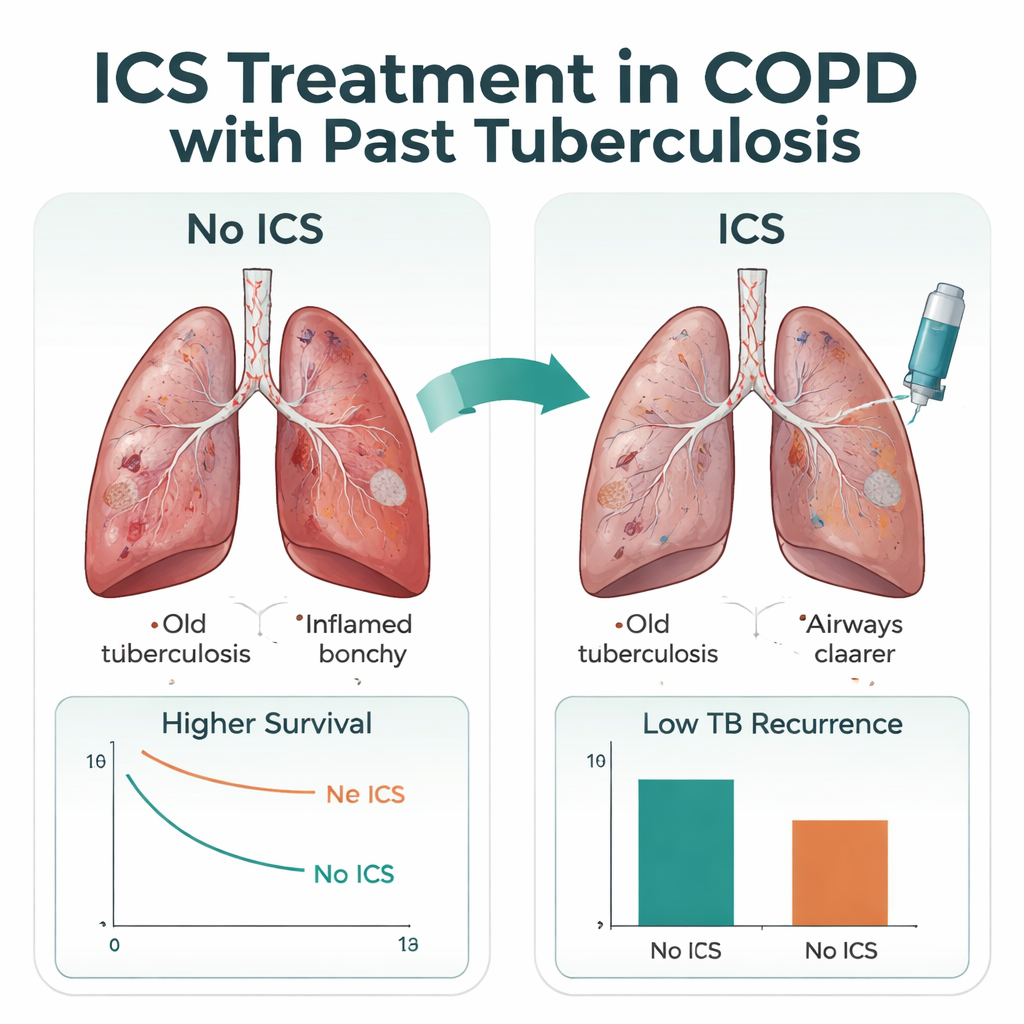
The team also looked at inhaled corticosteroids (ICS)—the steroid medicines delivered directly into the lungs by an inhaler and used long‑term to prevent new flare‑ups. Guidelines are cautious about starting ICS in people with a history of mycobacterial infection, including tuberculosis, because of concerns about infection risk. Yet in this real‑world group of high‑risk patients, those with prior tuberculosis who used ICS during their stable phase actually had better survival than those who did not. Their six‑month, one‑year, and long‑term death rates were all significantly lower, even though they started out with more severe disease, more past flare‑ups, and worse walking distance. Importantly, tuberculosis did not recur more often in ICS users than in non‑users. The survival benefit was strongest in subgroups with more severe symptoms and limitations, especially patients scoring 20 or higher on the COPD Assessment Test—a questionnaire that captures daily impact on breathing and activity.
What this means for patients and doctors
For people living with COPD and old tuberculosis scars, this study delivers two clear messages. First, a history of tuberculosis is more than a mark on a scan—it signals a higher risk of death after a serious COPD flare‑up, so these patients need close follow‑up and careful long‑term planning. Second, both short‑term steroid treatment in the hospital and well‑chosen inhaled steroid therapy afterward may not only be safe but life‑prolonging in selected patients, without clearly increasing tuberculosis recurrence. While more large, controlled trials are needed, especially to sort out which specific drugs and doses are best, the results support a more confident and individualized use of steroid treatments in COPD patients who also carry the legacy of past tuberculosis.
Citation: Xiong, R., Zhao, Z., Cui, Y. et al. Prior pulmonary tuberculosis deteriorated all-cause mortality in AECOPD patients after discharge. Sci Rep 16, 4970 (2026). https://doi.org/10.1038/s41598-026-35523-4
Keywords: COPD, tuberculosis, inhaled corticosteroids, lung disease, respiratory medicine